
Automobiles
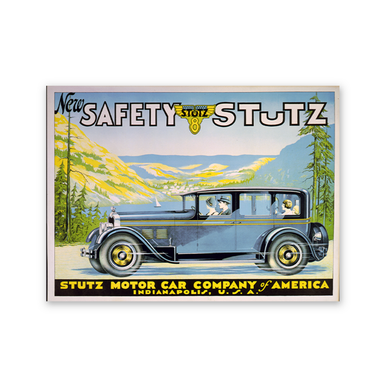
In 1900 there were about eight thousand automobiles in the United States and almost no roads worth driving them on. Outside city limits the surface was dirt, which meant dust in summer, mud in spring, and impassable in either extreme. The photographs from the first two decades are full of cars stuck to the axles with men standing around them, and that is not a joke about early cars. That was motoring.
The Good Roads movement had actually started with bicycles. Cyclists organized in the 1880s and 1890s to demand paved surfaces, and the automobile inherited both the argument and the organization. The Lincoln Highway, promoted from 1913, was the first attempt at a marked transcontinental route, and for years large stretches of it were graded dirt with painted poles for signage.
Endurance runs sold the idea that a car could be depended on. The Glidden Tours ran from 1905 to 1913, hundreds of miles over bad roads with observers riding along to score reliability, and they were photographed at every stop because the whole point was publicity. A car that finished was a car worth buying.
Alice Ramsey settled a different argument in 1909. She drove a Maxwell from New York to San Francisco in fifty-nine days with three women companions, none of whom could drive, changing her own tires and repairing her own brake pedal. The trip was sponsored by the manufacturer and covered by the press, and the intended message was that the car was easy enough for a woman. What it actually demonstrated was Ramsey.
The Model T is the reason the rest happened. Built from 1908 to 1927, about fifteen million of them, priced under three hundred dollars by the early 1920s. It sat high on purpose because the roads were bad, and it was simple enough that a farmer could keep it running with the tools in his barn. Half the cars in the world were Fords for a stretch of the 1920s.
Then came the infrastructure, and it is all in the photographs. Curbside pumps outside hardware stores first, then purpose-built stations with canopies and restrooms, then stations designed to look like cottages or Greek temples so towns would permit them in residential areas. Auto camps for tin can tourists — people who traveled with their own food in tins and camped free at the edge of town — became municipal campgrounds and eventually motels.
Women drove in numbers from early on, which the advertising of the day worked hard to obscure. Electric cars in particular were marketed to women because they started with a switch instead of a hand crank, ran quietly and needed no gear shifting — and they sold well in cities until the electric starter arrived in 1912 and removed the one real objection to gasoline.
For dating, the details are reliable. Wooden spoke wheels give way to steel disc wheels in the mid-1920s. Open touring bodies dominate until about 1925, then closed sedans take over quickly. And a car with the steering wheel on the right is pre-1915 American, not an import.
What the Cameras Were Allowed to Show





-

 Snapshots of the Past
Decatur House, National Trust for Historic Preservation, 748 Jack, Washington, District of Columbia, DC - 7, Historic Print
Drawn from the Library of Congress archive, this print depicts Decatur House, National Trust for Historic Preservation, 748 Jack, Washington, District of Columbia, DC - 7. The Library holds one of...$57.00 -
 Snapshots of the Past
Decatur House, National Trust for Historic Preservation, 748 Jack, Washington, District of Columbia, DC - 6, Vintage Print
Step back in time with this striking reproduction of Decatur House, National Trust for Historic Preservation, 748 Jack, Washington, District of Columbia, DC - 6. Sourced from the United States...$57.00 -
 Snapshots of the Past
Decatur House, National Trust for Historic Preservation, 748 Jack, Washington, District of Columbia, DC - 5 Classic, Vintage Wall Art
Originally preserved in the Library of Congress, this print of Decatur House, National Trust for Historic Preservation, 748 Jack, Washington, District of Columbia, DC - 5 Classic is now available for...$57.00 -
 Snapshots of the Past
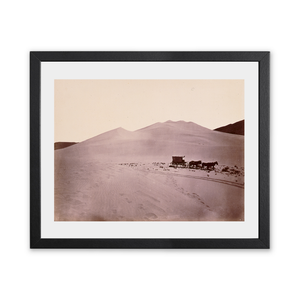
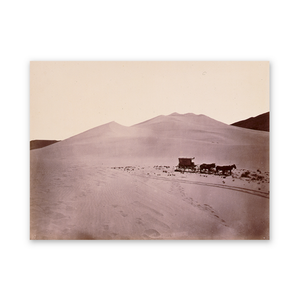
Vintage Americana Print - Sand dunes Carson Desert Nevada.T.H
Drawn from the Library of Congress archive, this print depicts Sand dunes Carson Desert Nevada.T.H. O'Sullivan, phot. - 2. The Library holds one of the most comprehensive collections of American and...$57.00 -
 Snapshots of the Past
Vintage Americana Print - Since the beginning careful Ford owners have
Originally preserved in the Library of Congress, this print of Since the beginning careful Ford owners have used Mobiloil. The new Mobiloil is here is now available for your home or office. The...$57.00 -
 Snapshots of the Past
Black & White Photo - Austro Daimler.A.E.N. Paul Neumann
Historic Framed Print, Austro Daimler.A.E.N. Paul Neumann., 17-7/8" x 21-7/8", Image: 16" x 20"Beautiful historic reproduction print from the Library of Congress collections.Created 1918...$57.00 -
 Snapshots of the Past
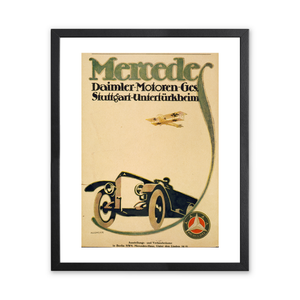
Black & White Photo - Mercedes. Daimler-motoren-ges
Historic Framed Print, Mercedes. Daimler-motoren-ges. Stuttgart-untertürkheim.Klusmeyer., 17-7/8" x 21-7/8", Image: 16" x 20"Beautiful historic reproduction print from the Library of Congress...$57.00 -
 Snapshots of the Past
Antique Photo Print - Benz.Carl Kreuzer, Frankfurt - Historic Wall Art Gift
Historic Framed Print, Benz.Carl Kreuzer, Frankfurt., 17-7/8" x 21-7/8", Image: 16" x 20"Beautiful historic reproduction print from the Library of Congress collections.Created 1917 or 1918...$57.00 -
 Snapshots of the Past
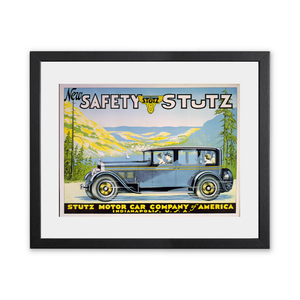
Black & White Photo - New safety Stutz. Stutz 8 - Vintage Wall Art Gift
Historic Framed Print, New safety Stutz. Stutz 8. Stutz Motor Car Company of America, Indianapolis, U.S.A., 17-7/8" x 21-7/8", Image: 16" x 20"Beautiful historic reproduction print from the Library...$57.00