Valentine's Day
Valentine’s Day became a mass American custom because postage got cheap. Before the 1840s a letter was paid for by the person receiving it and cost enough to matter. Once rates dropped and prepaid stamps arrived, an ordinary person could send a card to somebody across town for a penny, and anonymously.
The American industry starts with a college student in Worcester, Massachusetts. Esther Howland received an English lace valentine in 1847, decided she could make better ones, ordered paper lace and floral scraps from England, and took orders through her father’s stationery store. She expected a few hundred dollars of business and got several thousand. She then built an assembly line in the upper floor of the family house, employing young women who each added one element and passed the card along, and the New England Valentine Company was doing something on the order of a hundred thousand dollars a year by the 1870s. She is one of the earliest American women to build a manufacturing business of that size.
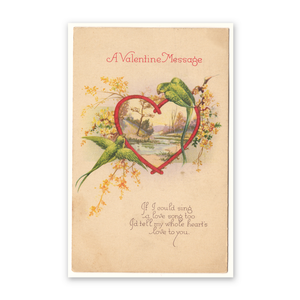
Her cards are the ones that survive in collections — layered paper lace, lifted on small paper springs so the design stands off the backing, with a colored insert showing through the cutwork.
The other half of the trade is the part nobody puts in the display case. Vinegar valentines were cheap single-sheet cards printed with a crude caricature and a few lines of verse insulting the recipient — mocking a woman for being unmarried, a man for being a drunk or a fool, a clerk for his airs. They sold in enormous numbers through the second half of the century, they were sent anonymously, and because postage was often paid on delivery the target could end up paying to be insulted. Postal officials complained about them. There are accounts of them provoking fistfights and at least one shooting.
So a photograph of a card counter in February is showing a business with two very different products on the same table.
The school exchange, where every child gives a card to every other child, is a twentieth-century development and it is the reason valentines got small, cheap and printed in sheets. Photographs of decorated classroom boxes belong to the 1920s and later.
The post office is again the best documented part. Larger cities ran a special valentine detail, and there are photographs of clerks sorting mountains of small envelopes. Some towns offered a hand cancellation with a local mark, which is a custom that survives in a few places.
Two other period customs turn up in the imagery and confuse people. Valentine writers were small booklets of ready-made verses sold to people who could not compose their own, with matching insults in the back for the vinegar trade. And a card was frequently sent to a friend or a relative rather than a sweetheart, so a nineteenth-century valentine addressed to a sister is entirely ordinary.
One dating note that helps. Cards with real lace paper, embossing and applied scraps are generally pre-1900 and expensive to produce. Flat chromolithographed cards with printed borders are turn of the century. Small die-cut cards with a punched slot for a lollipop are 1920s and later. The material tells you the decade faster than the sentiment does.
The Founder Spent Her Life Trying to Stop It


-

 Snapshots of the Past
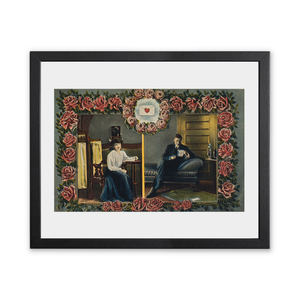
Historic Framed Print Vintage Valentine's Day Print - 10, 17-7/8" x 21-7/8"
Vintage Valentine's Day Print - 10, 17-7/8" x 21-7/8" , Image: 16" x 20"Note: Some images may show issues such as color bars or other artifacts from the digital scanning process at the Library. We...$57.00 -
 Snapshots of the Past
Historic Framed Print Vintage Valentine's Day Print - 9, 17-7/8" x 21-7/8"
Vintage Valentine's Day Print - 9, 17-7/8" x 21-7/8" , Image: 16" x 20"Note: Some images may show issues such as color bars or other artifacts from the digital scanning process at the Library. We...$57.00 -
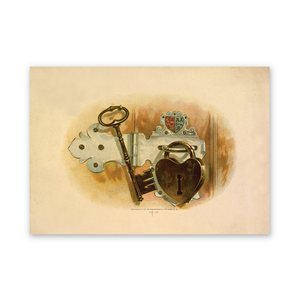 Snapshots of the Past
Historic Framed Print Vintage Valentine's Day Print - 8, 17-7/8" x 21-7/8"
Vintage Valentine's Day Print - 8, 17-7/8" x 21-7/8" , Image: 16" x 20"Note: Some images may show issues such as color bars or other artifacts from the digital scanning process at the Library. We...$57.00 -
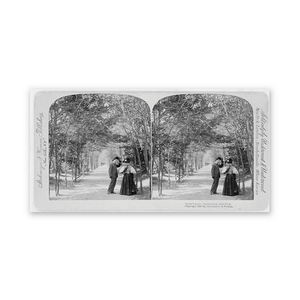 Snapshots of the Past
Historic Framed Print Vintage Valentine's Day Print - 7, 17-7/8" x 21-7/8"
Vintage Valentine's Day Print - 7, 17-7/8" x 21-7/8" , Image: 16" x 20"Note: Some images may show issues such as color bars or other artifacts from the digital scanning process at the Library. We...$57.00 -
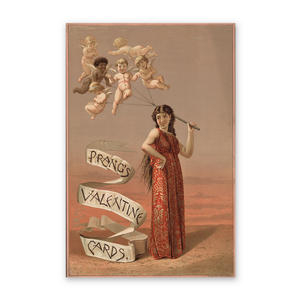 Snapshots of the Past
Historic Framed Print Vintage Valentine's Day Print - 6, 17-7/8" x 21-7/8"
Vintage Valentine's Day Print - 6, 17-7/8" x 21-7/8" , Image: 16" x 20"Note: Some images may show issues such as color bars or other artifacts from the digital scanning process at the Library. We...$57.00 -
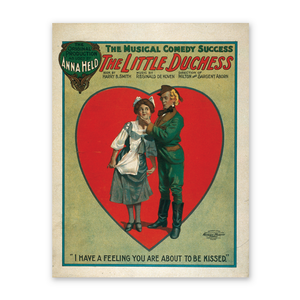 Snapshots of the Past
Historic Framed Print Vintage Valentine's Day Print - 5, 17-7/8" x 21-7/8"
Vintage Valentine's Day Print - 5, 17-7/8" x 21-7/8" , Image: 16" x 20"Note: Some images may show issues such as color bars or other artifacts from the digital scanning process at the Library. We...$57.00 -
 Snapshots of the Past
Historic Framed Print Vintage Valentine's Day Print - 4, 17-7/8" x 21-7/8"
Vintage Valentine's Day Print - 4, 17-7/8" x 21-7/8" , Image: 16" x 20"Note: Some images may show issues such as color bars or other artifacts from the digital scanning process at the Library. We...$57.00 -
 Snapshots of the Past
Historic Framed Print Vintage Valentine's Day Print - 3, 17-7/8" x 21-7/8"
Vintage Valentine's Day Print - 3, 17-7/8" x 21-7/8" , Image: 16" x 20"Note: Some images may show issues such as color bars or other artifacts from the digital scanning process at the Library. We...$57.00 -
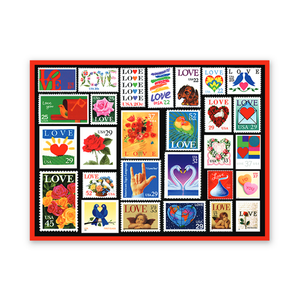 Snapshots of the Past
Historic Framed Print Vintage Valentine's Day Print - 2, 17-7/8" x 21-7/8"
Vintage Valentine's Day Print - 2, 17-7/8" x 21-7/8" , Image: 16" x 20"Note: Some images may show issues such as color bars or other artifacts from the digital scanning process at the Library. We...$57.00 -
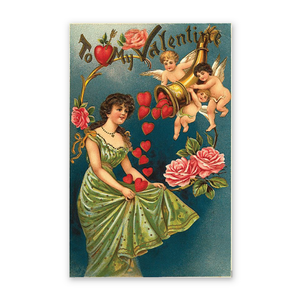 Snapshots of the Past
Historic Framed Print Vintage Valentine's Day Print - 1, 17-7/8" x 21-7/8"
Vintage Valentine's Day Print - 1, 17-7/8" x 21-7/8" , Image: 16" x 20"Note: Some images may show issues such as color bars or other artifacts from the digital scanning process at the Library. We...$57.00 -
 Snapshots of the Past
Antique Photochrom - Valentine's Day - St. Valentine on the Danube
Step back in time with this striking reproduction of St. Valentine on the Danube Haide with Haidersee and Ortergruppe Tyrol Austro-Hungary. Sourced from the United States Library of Congress.Library...$57.00 -
 Snapshots of the Past
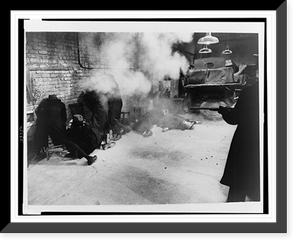
Historic Photo Print - Valentine's Day - Re-enactment of the St
Step back in time with this striking reproduction of Re-enactment of the St. Valentine's Day massacre from the film The St. Valntine's Day Massacre, showing man shooting gangsters Classic. Sourced...$57.00