Chicago
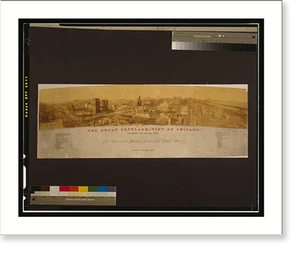
In October 1871 a fire crossed the Chicago River and burned for two days, taking roughly three and a half square miles and leaving a third of the city homeless. What happened afterward is the reason Chicago looks the way it does.
The rebuilding had to be fast and fireproof, which pushed architects toward steel frames and away from load-bearing masonry. The result was the Chicago School and, in 1885, the Home Insurance Building — usually called the first skyscraper, a claim historians still argue about but which is true enough in the way that matters. Photographs from the 1880s and 1890s show a downtown getting taller in a way no city had before.
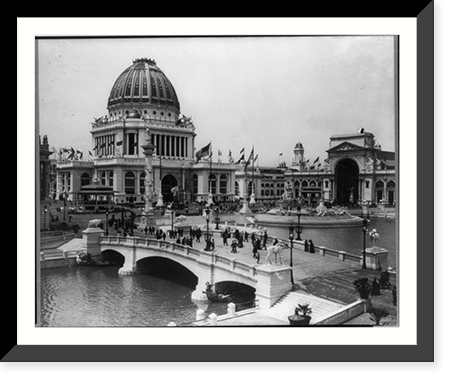
The World's Columbian Exposition of 1893 was the second rebuilding. Twenty-seven million people came — at a time when the country held sixty-three million. The fairgrounds were built in neoclassical white stucco and nicknamed the White City, and they were meant to be temporary. Almost all of it came down. What survives in photographs is a place that never really existed, which gives the images an odd quality once you know it.
The Ferris wheel was built for that fair, specifically to answer the Eiffel Tower. It carried two thousand people at a time. Photographs of it dwarf everything around them.
The elevated railway opened in 1892 and the downtown Loop took its name from the track that circles it. The L runs above the street on iron, and photographs taken beneath it have a particular character — permanent shade, riveted columns, light in stripes.
Then there are the stockyards, which is where a great deal of the period's Chicago photography was actually made. The Union Stock Yards processed more meat than anywhere on earth and were a tourist attraction; visitors took guided tours. Upton Sinclair published The Jungle in 1906 and the resulting scandal produced the Pure Food and Drug Act within months.
One engineering fact deserves mention because it is visible in the maps. In 1900 Chicago reversed the flow of the Chicago River, so that it ran away from Lake Michigan rather than into it, because the lake was the drinking water and the river was the sewer. Bird's-eye views made before and after show the same channel running in opposite directions.
Where the Ground Itself Was Invented


-

 Snapshots of the Past
Antique Architecture - Chicago - Rock Island & Pacific Railroad
Historic Framed Print, Chicago, Rock Island & Pacific Railroad, Illinois & Michigan Canal Bridge, Spanning I&M Canal, west of Manville Corporation f, Rockdale vicinity, Will County, IL, 17-7/8" x...$57.00 -
 Snapshots of the Past
Vintage Stereoview - Chicago - Magnificent home of Mrs
Drawn from the Library of Congress archive, this print depicts Magnificent home of Mrs. Potter Palmer on Lake Shore Drive Chicago. The Library holds one of the most comprehensive collections of...$57.00 -
 Snapshots of the Past
Antique Stereograph - Chicago - Lake - Framed Wall Art Gift Idea
This rare historical print captures Chicago Lake in remarkable detail. Sourced directly from the Library of Congress, it represents an authentic piece of documented history.Library of Congress...$57.00 -
 Snapshots of the Past
Vintage Photo Print - Chicago, Illinois - Medinah Temple, 1923
This rare historical print captures Medinah Temple, Chicago, Ill., 5/6/23 in remarkable detail. Sourced directly from the Library of Congress, it represents an authentic piece of documented history...$57.00 -
 Snapshots of the Past
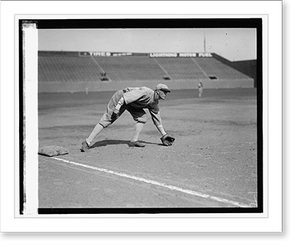
Vintage Americana Print - Chicago - sh, 1924 - Vintage Wall Art Gift
This rare historical print captures sh, Chicago, 1924 in remarkable detail. Sourced directly from the Library of Congress, it represents an authentic piece of documented history.Library of Congress...$57.00 -
 Snapshots of the Past
Antique Photo Print - Chicago - Lyons, 1924 - Vintage Home Decor Print
This rare historical print captures Lyons, Chicago, 1924 in remarkable detail. Sourced directly from the Library of Congress, it represents an authentic piece of documented history.Library of...$57.00 -
 Snapshots of the Past
Vintage Photo Print - Chicago - Bar Assn, 1922
Originally preserved in the Library of Congress, this print of Chicago Bar Assn., 10/17/22 Classic is now available for your home or office. The Library has preserved this image as part of its...$57.00 -
 Snapshots of the Past
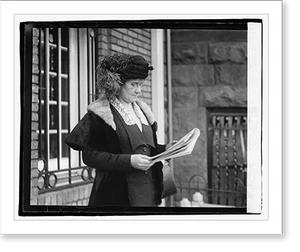
Antique Photo Print - Chicago - Miss Florence King of, 1921
Step back in time with this striking reproduction of Miss Florence King of Chicago, 3/23/21. Sourced from the United States Library of Congress.Library of Congress record: Created 1921 March 23 Title...$57.00 -
 Snapshots of the Past
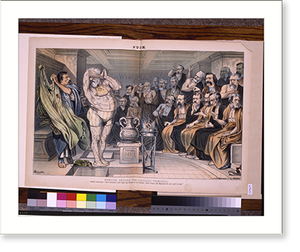
Historic Photo Print - Chicago - Phryne before the tribunal.Gillam
Step back in time with this striking reproduction of Phryne before the Chicago tribunal.Gillam, with apologies to J.L. Gerome. Sourced from the United States Library of Congress.Library of Congress...$57.00 -
 Snapshots of the Past
Historic Photo Print - Chicago - Kennel Club's dog show.Geo
Originally preserved in the Library of Congress, this print of Chicago Kennel Club's dog show.Geo. Ford Morris 02. - 2 is now available for your home or office. The Library has preserved this image...$57.00 -
 Snapshots of the Past
Black & White Photo - Chicago - The Great conflagration, 1871
Originally preserved in the Library of Congress, this print of The Great conflagration of Chicago. October 8th and 9th, 1871 - 2 is now available for your home or office. The Library has preserved...$57.00 -
 Snapshots of the Past
Vintage Landscape - Chicago - Rock Island at the World's, 1934
Step back in time with this striking reproduction of Rock Island at the 1934 World's Fair.Neely Printing Company, Chicago. Sourced from the United States Library of Congress.Library of Congress...$57.00