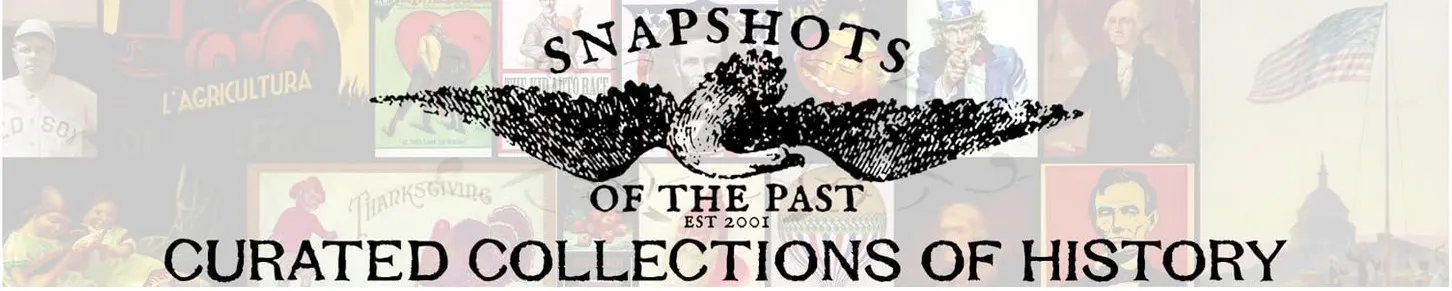
Vintage Theater Posters

American theater posters of the nineteenth century were among the most sophisticated color printing being done anywhere, and they were made to be pasted on a wall and covered over within a fortnight.
The industry ran on touring. Hundreds of companies moved between towns playing a night or two at each, and the poster arrived days ahead by rail. An advance man pasted it up, and when the company left, the next one pasted over it. Nothing was meant to survive.
The printing was stone lithography, and at that scale it was genuinely difficult. A large poster was printed as several sheets to be assembled on the wall, and each color required its own stone, kept in register across sheets that might be ten feet high when joined. The Strobridge Lithographing Company in Cincinnati was the finest of the American houses and its work stands comparison with anything from Paris.
Show printing was its own trade, separate from commercial lithography and largely invisible to the art world of its day. The houses that did it — Strobridge, Courier, Erie, Russell-Morgan — employed designers who never signed a piece and whose names survive only in company records, if at all.
The genres are distinct and they are what people searched for. Melodrama, with its rescues and villains and burning buildings. Minstrelsy, which was the dominant popular entertainment for decades and which the posters advertise without embarrassment. Magic, which produced the most inventive designs — devils whispering, levitations, vanishing women. Vaudeville and variety. Burlesque. And the enormous, endless business of Uncle Tom's Cabin, which had companies touring continuously for over seventy years.
The women who appear on these bills are worth a note. Touring theater was one of the few trades in nineteenth-century America where a woman could headline, earn well and travel independently, and the posters advertise the fact loudly. Whatever else the business was, and it was frequently exploitative, the top of the bill was open in a way almost nothing else then was.
The posters are not subtle and were not meant to be. They were read from across a street by someone walking past, so the type is enormous, the color is unmixed, and the image shows the single most exciting moment the show contained.
The reason a substantial number survive is copyright. A poster deposited with the Library of Congress for registration was filed flat, unpasted, and forgotten — which is why the best-preserved examples are the ones that never did their job.
The sheer scale of some of these is hard to grasp from a reproduction. A twenty-four-sheet poster stood roughly nine feet high and twenty feet wide when assembled, printed in twenty-four pieces and pasted up by a crew. What survives in an archive is usually a single sheet from a design that was never meant to be seen alone.
One note on reading them. The performer's name is usually larger than the play's, because audiences followed people rather than titles. Many of those names meant a great deal in 1890 and mean nothing now, which makes the genre the useful thing to look for rather than the star.
The Posters That Asked for Money and Men




-

 Snapshots of the Past
Vintage Stage Poster - Yon Yonson - Historic Wall Art Gift
This rare historical print captures Yon Yonson - 6 in remarkable detail. Sourced directly from the Library of Congress, it represents an authentic piece of documented history.Library of Congress...$57.00 -
 Snapshots of the Past
Vintage Stage Poster - Yon Yonson - Antique Wall Decor Print
Drawn from the Library of Congress archive, this print depicts Yon Yonson - 4. The Library holds one of the most comprehensive collections of American and international historical prints in the world...$57.00 -
 Snapshots of the Past
Vintage Stage Poster - Minstrel Show - Wm. H. Wests Big Minstrel Jubilee
Drawn from the Library of Congress archive, this print depicts Wm. H. Wests Big Minstrel Jubilee - 15. The Library holds one of the most comprehensive collections of American and international...$57.00 -
 Snapshots of the Past
Vintage Stage Poster - Minstrel Show - Wm. H. West the most popular
Step back in time with this striking reproduction of Wm. H. West the most popular minstrel in the world. Sourced from the United States Library of Congress.Library of Congress record: Created 1898...$57.00 -
 Snapshots of the Past
Antique Playbill - Wm. H. Crane. A Virginia courtship
Step back in time with this striking reproduction of Wm. H. Crane. A Virginia courtship. Sourced from the United States Library of Congress.Library of Congress record: Created 1898 Created and...$57.00 -
 Snapshots of the Past
Antique Playbill - Wm. Gillettes Held by the enemy - Historic Wall Art Gift
This rare historical print captures Wm. Gillettes Held by the enemy - 6 Classic in remarkable detail. Sourced directly from the Library of Congress, it represents an authentic piece of documented...$57.00 -
 Snapshots of the Past
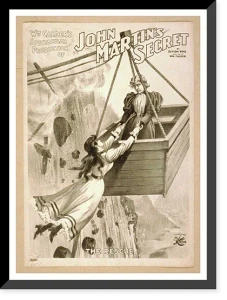
Antique Playbill - Wm. Calders spectacular production of John Martins
This rare historical print captures Wm. Calders spectacular production of John Martins secret by Sutton Vane. Classic in remarkable detail. Sourced directly from the Library of Congress, it...$57.00 -
 Snapshots of the Past
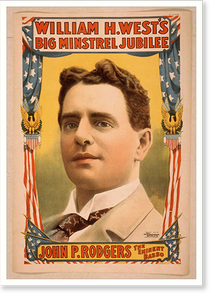
Vintage Theater Poster - Minstrel Show - William H. Wests Big Minstrel
Step back in time with this striking reproduction of William H. Wests Big Minstrel Jubilee - 18. Sourced from the United States Library of Congress.Library of Congress record: Created 1899 Created...$57.00 -
 Snapshots of the Past
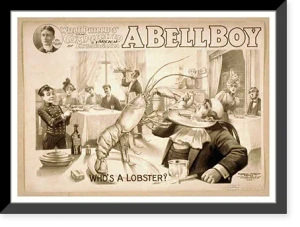
Antique Playbill - Comedy - Will F. Phillips complicated farcical
Step back in time with this striking reproduction of Will F. Phillips complicated farcical extravaganza A bell boy - 4. Sourced from the United States Library of Congress.Library of Congress record:...$57.00 -
 Snapshots of the Past
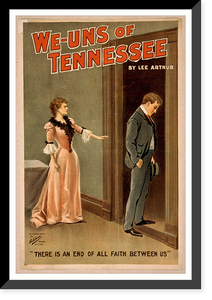
Vintage Theater Poster - We-uns of Tennessee by Lee Arthur
Originally preserved in the Library of Congress, this print of We-uns of Tennessee by Lee Arthur is now available for your home or office. The Library has preserved this image as part of its...$57.00 -
 Snapshots of the Past
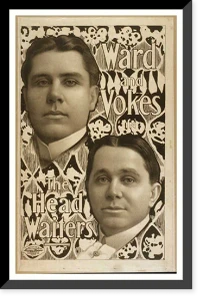
Antique Playbill - Ward & Vokes in The head waiters
Drawn from the Library of Congress archive, this print depicts Ward & Vokes in The head waiters. The Library holds one of the most comprehensive collections of American and international historical...$57.00 -
 Snapshots of the Past
Vintage Stage Poster - Walter Fletcher as Appetite Bill in Our Malindy
Step back in time with this striking reproduction of Walter Fletcher as Appetite Bill in Our Malindy. Sourced from the United States Library of Congress.Library of Congress record: Created 1885...$57.00