Trolleys & Streetcars
Between about 1890 and 1920 the electric streetcar rearranged every American city, and it did so on a business model that had almost nothing to do with carrying passengers.
The traction companies made their money in land. A syndicate bought farmland at the edge of town, built a line out to it, sold lots to people who could now reach the city, and ran the cars at a fare that barely covered costs. Whole neighborhoods exist because a streetcar company needed somewhere to put a line. The word streetcar suburb describes half the residential fabric of the older American cities.
Before electricity the cars were pulled by horses, and the photographs of horsecars are a different world — slower, smaller, and requiring an enormous stable operation behind the scenes. A horsecar line needed roughly ten animals per car, and the animals wore out in four years. Frank Sprague's Richmond system of 1888 proved electric traction worked at scale, and horse operations were essentially gone within fifteen years.
The open cars are the ones people photographed most, and for good reason. Summer service ran cars with no sides at all — bench seats across the full width, running boards along the outside, and a conductor who worked his way along the outside of a moving car collecting fares. They look precarious because they were.
The interurbans are the part of this story that vanished most completely. Faster, heavier cars running between towns on private right-of-way, often at sixty miles an hour, reaching a scale where you could travel from Elkhart to Cleveland entirely by electric car. Indiana and Ohio had networks that connected nearly every town of any size. Almost all of it was gone by 1940.
The conductor and motorman were distinct trades with distinct standing. The motorman ran the car from an open platform in all weather, often without a seat, and the conductor handled fares, the bell cord and the passengers. Photographs almost always show both men in uniform with badges and punch, because the job was a respectable one that men held for a lifetime.
What killed it was partly the automobile and partly the arithmetic. Franchises fixed the fare at five cents in perpetuity, and after wartime inflation that fare no longer covered the wages. Companies that had been enormously profitable in 1910 were bankrupt by 1925.
The amusement park at the end of the line is a related subject and the same business logic. A traction company built a park — a dance pavilion, a picnic grove, later rides — at the far end of its route specifically to generate weekend traffic on days when commuters were not riding. Dozens of American amusement parks began as a streetcar company trying to fill empty cars on a Sunday.
The carbarn photographs are worth seeking out. Rows of cars under one roof, pits between the rails, men working underneath — the industrial side of a business the public only saw from the sidewalk.
For dating, count the crew. Two men, a motorman and a conductor, is earlier. One-man cars with the fare box at the front come in during the 1920s as an economy measure and are a sign of a company in trouble.
Six Months, a Fake City, and Then Nothing




-

 Snapshots of the Past
Historic Railroad - Trolleys & Streetcars - Trolley
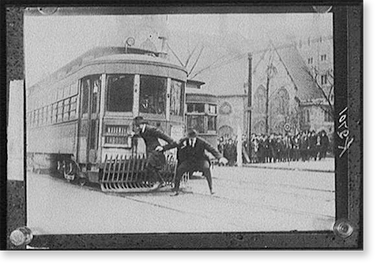
This rare historical print captures Trolley in remarkable detail. Sourced directly from the Library of Congress, it represents an authentic piece of documented history.Library of Congress record:...$57.00 -
 Snapshots of the Past
Vintage Street Scene - Trolleys & Streetcars - Street car, Wash
Step back in time with this striking reproduction of Street car, Wash. D.C. - 4. Sourced from the United States Library of Congress.Library of Congress record: Created between 1909 and 1923 Title...$57.00 -
 Snapshots of the Past
Antique City View - Washington, DC - Street car wreck, 8th & F NE
Step back in time with this striking reproduction of Street car wreck, 8th & F NE, Washington, D.C. Sourced from the United States Library of Congress.Library of Congress record: Created 1921 Title...$57.00 -
 Snapshots of the Past
Antique Railway Print - Trolleys & Streetcars - A streetcar named Desire
Drawn from the Library of Congress archive, this print depicts Las Vegas, Nevada. A billboard on the grounds of the gigantic plant of Basic Magnesium Incorporated, showing tracer bullets and reading...$57.00 -
 Snapshots of the Past
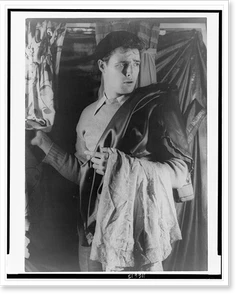
Vintage Portrait - Trolleys & Streetcars - Portrait of Marlon Brando
Drawn from the Library of Congress archive, this print depicts Portrait of Marlon Brando, Streetcar Named Desire"". The Library holds one of the most comprehensive collections of American and...$57.00 -
 Snapshots of the Past
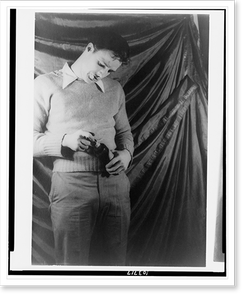
Antique Portrait - Trolleys & Streetcars - Portrait of Marlon Brando
Originally preserved in the Library of Congress, this print of Portrait of Marlon Brando, in A Streetcar Named Desire is now available for your home or office. The Library has preserved this image as...$57.00 -
 Snapshots of the Past
Antique Railway Print - Trolleys & Streetcars - A Streetcar named desire
This rare historical print captures A Streetcar named desire in remarkable detail. Sourced directly from the Library of Congress, it represents an authentic piece of documented history.Library of...$57.00 -
 Snapshots of the Past
Vintage Railroad - Trolleys & Streetcars - The Hamburg Trolley
Drawn from the Library of Congress archive, this print depicts The Hamburg Trolley, Hamburg, N.Y. The Library holds one of the most comprehensive collections of American and international historical...$57.00 -
 Snapshots of the Past
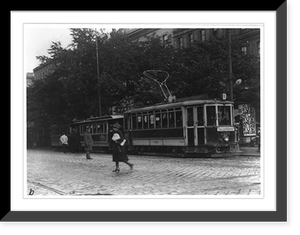
Historic Railroad - Trolleys & Streetcars - Trolley cars, Vienna
Drawn from the Library of Congress archive, this print depicts Trolley cars, Vienna, Austria. The Library holds one of the most comprehensive collections of American and international historical...$57.00 -
 Snapshots of the Past
Vintage Railroad - New York City - Horse-drawn streetcar no
Originally preserved in the Library of Congress, this print of Horse-drawn streetcar no. 148 of a New York City system is now available for your home or office. The Library has preserved this image...$57.00 -
 Snapshots of the Past
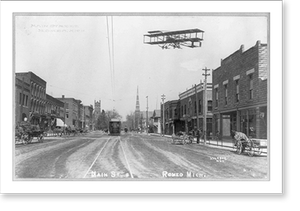
Vintage Railroad - Trolleys & Streetcars - Mich. - Romeo - Main Street
This rare historical print captures Mich. - Romeo - Main Street, showing trolley and airplane in remarkable detail. Sourced directly from the Library of Congress, it represents an authentic piece of...$57.00 -
 Snapshots of the Past
Vintage Railroad - Trolleys & Streetcars - Horse-drawn trolley
Historic Framed Print, [Horse-drawn trolley on street in Winfield, Kansas], 17-7/8" x 21-7/8", Image: 16" x 20"Beautiful historic reproduction print from the Library of Congress collections.Created...$57.00