New Year
New Year\u2019s Day in nineteenth-century America was a more formal occasion than New Year\u2019s Eve, and the custom that governed it has disappeared completely.
It was called making New Year calls. On the first of January, men paid brief visits to the households of every woman of their acquaintance, who stayed home and received. Refreshments were laid out. A card was left. In New York the newspapers printed lists of which houses would be receiving, and a man might make forty calls in a day, moving by carriage between them.
The custom collapsed in the 1880s, partly because it had become competitive and expensive and partly because the drinking got out of hand \u2014 a caller who accepted a glass at every house was in trouble by mid-afternoon. Photographs and prints of the practice are worth finding because the whole thing vanished within a generation.
Times Square is the modern replacement and it has a commercial origin. The New York Times moved to Longacre Square in 1904, had the square renamed after itself, and celebrated with a fireworks display from the roof. The city banned the fireworks, so in 1907 the paper substituted a lighted ball lowered down a flagpole \u2014 an idea borrowed from the time balls that harbors used to signal noon to ships. It has run since.
Resolutions are much older, going back to Babylonian and Roman practice, but the American newspaper habit of publishing them and mocking them is a nineteenth-century development and the cartoons are entertaining.
The Rose Parade in Pasadena began in 1890 as an advertisement for the California winter, put on by a hunt club to show easterners that flowers were blooming on the first of January while they were shoveling snow.
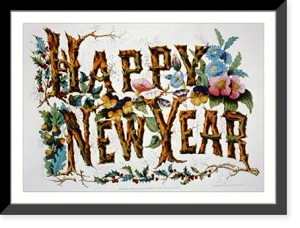
The imagery is mostly printed rather than photographic. The New Year postcard trade was enormous during the 1907 to 1915 boom, and the iconography is fixed: Father Time handing over to a baby, hourglasses, clocks at midnight, horseshoes and pigs for luck.
One caution for captions. A great deal of New Year card imagery is European in origin and was imported or copied, so a card in an American collection may show customs that were never practiced here.
Watch Night is the observance that carries the most weight and it is rarely in the commercial imagery. Black churches have held services on New Year’s Eve since 1862, when congregations gathered to wait for the Emancipation Proclamation to take effect at midnight on the first of January 1863. The tradition has continued unbroken since.
The noise is the oldest part of the whole thing. Firing guns, ringing bells and beating pans at midnight goes back to a European belief about driving off spirits, and it survived in America long enough that nineteenth-century newspapers complained about it annually in the same terms they complained about the Fourth of July.
Mummers in Philadelphia is the one large American New Year’s Day parade with deep roots, drawing on Swedish, English and Black traditions in the city and formalized in 1901. It is photographed heavily and looks like nothing else.
The White Dress Was Queen Victoria's Idea




-

 Snapshots of the Past
Antique Photo Print - New Year - Celebration, 1940 - Historic Wall Art Gift
Originally preserved in the Library of Congress, this print of New Year Celebration, 1940 is now available for your home or office. The Library has preserved this image as part of its permanent...$57.00 -
 Snapshots of the Past
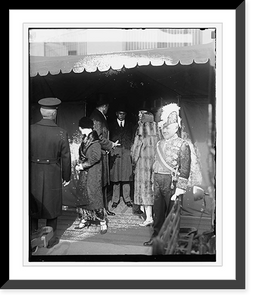
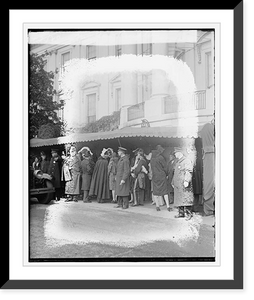
Antique Photo Print - New Year - reception, 1924
Originally preserved in the Library of Congress, this print of New year reception, 1/1/24 - 3 is now available for your home or office. The Library has preserved this image as part of its permanent...$57.00 -
 Snapshots of the Past
Antique Photo Print - New Year - reception, 1924 - Historic Wall Art Gift
Originally preserved in the Library of Congress, this print of New year reception, 1/1/24 - 4 is now available for your home or office. The Library has preserved this image as part of its permanent...$57.00 -
 Snapshots of the Past
Antique Photo Print - New Year - Taft, reception, 1924
Originally preserved in the Library of Congress, this print of Taft, New year reception, 1/1/24 is now available for your home or office. The Library has preserved this image as part of its permanent...$57.00 -
 Snapshots of the Past
Antique Photo Print - New Year - reception, 1924 - Vintage Wall Art Gift
Drawn from the Library of Congress archive, this print depicts New year reception, 1/1/24 - 2. The Library holds one of the most comprehensive collections of American and international historical...$57.00 -
 Snapshots of the Past
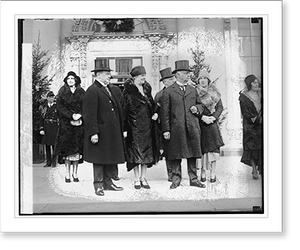
Historic Photo Print - New Year - V.P. Curtis, Reception
Drawn from the Library of Congress archive, this print depicts V.P. Curtis, New Year Reception. The Library holds one of the most comprehensive collections of American and international historical...$57.00 -
 Snapshots of the Past
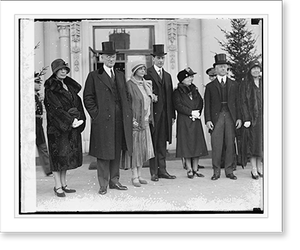
Vintage Photo Print - New Year - Sectys. Lamont, Wilbur
Drawn from the Library of Congress archive, this print depicts Sectys. Lamont, Wilbur, & Adams with wives, New Year Reception. The Library holds one of the most comprehensive collections of American...$57.00 -
 Snapshots of the Past
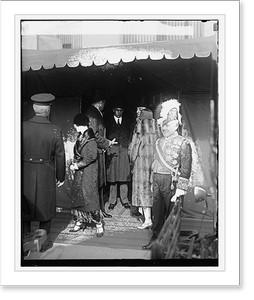
Black & White Photo - New Year - 's Reception - Vintage Home Decor Print
This rare historical print captures New Year's Reception - 3 in remarkable detail. Sourced directly from the Library of Congress, it represents an authentic piece of documented history.Library of...$57.00 -
 Snapshots of the Past
Antique Photo Print - New Year - Reception - Historic Wall Art Gift
Step back in time with this striking reproduction of New Year Reception. Sourced from the United States Library of Congress.Library of Congress record: Created between 1909 and 1932 Date span...$57.00 -
 Snapshots of the Past
Historic Photo Print - New Year - Scene in Ryan's Arcade on the morning
Step back in time with this striking reproduction of Scene in Ryan's Arcade on the morning of new year's day.R.F. Outcault. The bicyclist's revenge; or, How the Katzenjammer Kid got caught.R. Dirks...$57.00 -
 Snapshots of the Past
Vintage Photo Print - New Year - Happy - Historic Wall Art Gift
Step back in time with this striking reproduction of Happy new year - 3. Sourced from the United States Library of Congress.Library of Congress record: Created New York : Published by Currier & Ives,...$57.00 -
 Snapshots of the Past
Vintage Photo Print - New York City - Jews praying on Williamsburg
Step back in time with this striking reproduction of Jews praying on Williamsburg Bridge, New York City, on New Year's Day. Sourced from the United States Library of Congress.Library of Congress...$57.00