Father's Day
Father’s Day took sixty-two years to become official, and the delay was not an oversight. Congress kept declining because it thought the holiday was a sales promotion wearing a sentiment.
It began in Spokane, Washington. Sonora Smart Dodd sat through a Mother’s Day sermon in 1909 and thought of her own father, William Jackson Smart, a Civil War veteran who had raised six children alone after his wife died in childbirth. She proposed a matching day to the local ministerial association, and the first observance was held in Spokane in June 1910.
It spread slowly and got a bad reputation quickly. Through the 1920s and 1930s a trade group calling itself the National Council for the Promotion of Father’s Day worked to establish it, funded largely by men’s clothing, necktie and tobacco retailers. That backing was public and it was used against the holiday. Bills came before Congress repeatedly and were killed with a good deal of open ridicule, and the objection was consistent: members did not want to put the legislature’s name on something built to move merchandise.
Presidents hedged for decades. Woodrow Wilson took part in a Spokane observance by telegraph in 1916. Calvin Coolidge endorsed the idea in 1924 but would not issue a proclamation. Lyndon Johnson proclaimed it by executive order in 1966. Richard Nixon finally signed it into permanent law in 1972.
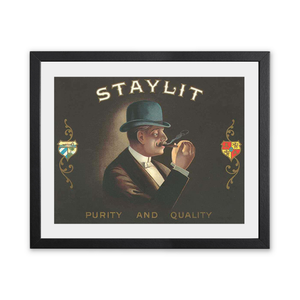
The neckties in the jokes are real. The retail campaign leaned on ties, pipes, and socks so consistently that the gift became a punchline within a few years of the holiday existing, and it has stayed one.
What that history means for the imagery is worth saying plainly. There is very little photographic record of Father’s Day as an occasion, because for most of the period it barely happened. The category is filled instead by the enormous visual record of American fatherhood, which is far more interesting.
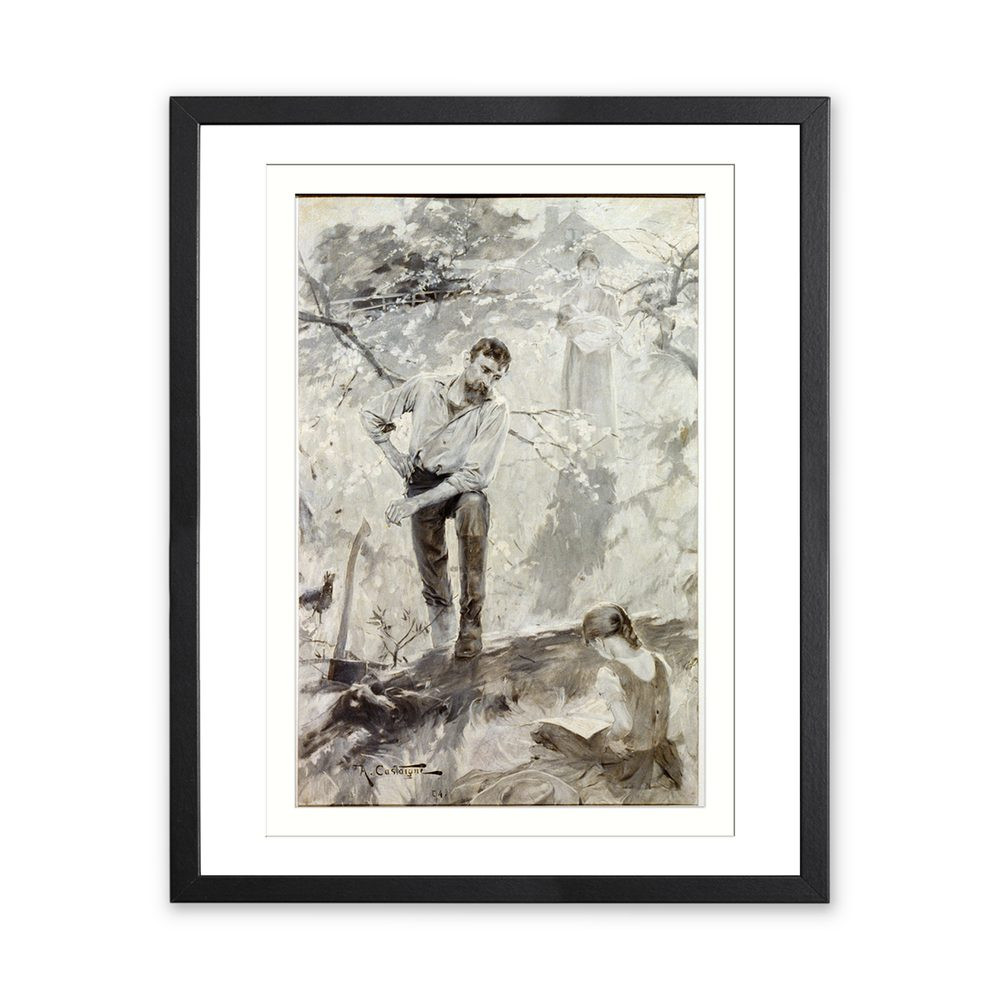
That record is heavily weighted toward work, because that is where men were photographed. Fathers appear in shop doorways with a son in an apron, on farm porches with the family arranged by height, at the wheel of a first automobile, in uniform before shipping out, in studio portraits stiff with formality. Occupational portraits — a man photographed with the tools of his trade — were a common and inexpensive form and they turn up in every collection.
One competing origin belongs in the record. A church in Fairmont, West Virginia, held a service in July 1908 honoring the fathers killed in the Monongah mine disaster the previous December, which took more than three hundred and sixty men and left about a thousand children without a father. It was a single observance rather than a campaign, and Spokane is where the annual holiday actually began, but Fairmont has a real claim to being first.
There is also a large body of images of fathers and children that were never meant as such. Immigration photographs at Ellis Island. Farm Security Administration work from the 1930s. Newspaper pictures of men waiting outside mines and mills. These carry more weight than any posed holiday picture, and they are the reason this category is worth building even though the holiday itself left almost no photographic trace.
The Campaign to Stop People Being Killed by It




-

 Snapshots of the Past
Historic Framed Print Vintage Father's Day Print - 14, 17-7/8" x 21-7/8"
Vintage Father's Day Print - 14, 17-7/8" x 21-7/8" , Image: 16" x 20"Note: Some images may show issues such as color bars or other artifacts from the digital scanning process at the Library. We...$57.00 -
 Snapshots of the Past
Historic Framed Print Vintage Father's Day Print - 13, 17-7/8" x 21-7/8"
Vintage Father's Day Print - 13, 17-7/8" x 21-7/8" , Image: 16" x 20"Note: Some images may show issues such as color bars or other artifacts from the digital scanning process at the Library. We...$57.00 -
 Snapshots of the Past
Historic Framed Print Vintage Father's Day Print - 12, 17-7/8" x 21-7/8"
Vintage Father's Day Print - 12, 17-7/8" x 21-7/8" , Image: 16" x 20"Note: Some images may show issues such as color bars or other artifacts from the digital scanning process at the Library. We...$57.00 -
 Snapshots of the Past
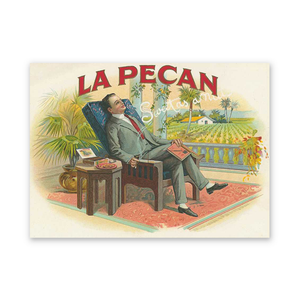
Historic Framed Print Vintage Father's Day Print - 11, 17-7/8" x 21-7/8"
Vintage Father's Day Print - 11, 17-7/8" x 21-7/8" , Image: 16" x 20"Note: Some images may show issues such as color bars or other artifacts from the digital scanning process at the Library. We...$57.00 -
 Snapshots of the Past
Historic Framed Print Vintage Father's Day Print - 10, 17-7/8" x 21-7/8"
Vintage Father's Day Print - 10, 17-7/8" x 21-7/8" , Image: 16" x 20"Note: Some images may show issues such as color bars or other artifacts from the digital scanning process at the Library. We...$57.00 -
 Snapshots of the Past
Historic Framed Print Vintage Father's Day Print - 9, 17-7/8" x 21-7/8"
Vintage Father's Day Print - 9, 17-7/8" x 21-7/8" , Image: 16" x 20"Note: Some images may show issues such as color bars or other artifacts from the digital scanning process at the Library. We clean...$57.00 -
 Snapshots of the Past
Historic Framed Print Vintage Father's Day Print - 8, 17-7/8" x 21-7/8"
Vintage Father's Day Print - 8, 17-7/8" x 21-7/8" , Image: 16" x 20"Note: Some images may show issues such as color bars or other artifacts from the digital scanning process at the Library. We clean...$57.00 -
 Snapshots of the Past
Historic Framed Print Vintage Father's Day Print - 7, 17-7/8" x 21-7/8"
Vintage Father's Day Print - 7, 17-7/8" x 21-7/8" , Image: 16" x 20"Note: Some images may show issues such as color bars or other artifacts from the digital scanning process at the Library. We clean...$57.00 -
 Snapshots of the Past
Historic Framed Print Vintage Father's Day Print - 6, 17-7/8" x 21-7/8"
Vintage Father's Day Print - 6, 17-7/8" x 21-7/8" , Image: 16" x 20"Note: Some images may show issues such as color bars or other artifacts from the digital scanning process at the Library. We clean...$57.00 -
 Snapshots of the Past
Historic Framed Print Vintage Father's Day Print - 5, 17-7/8" x 21-7/8"
Vintage Father's Day Print - 5, 17-7/8" x 21-7/8" , Image: 16" x 20"Note: Some images may show issues such as color bars or other artifacts from the digital scanning process at the Library. We clean...$57.00 -
 Snapshots of the Past
Historic Framed Print Vintage Father's Day Print - 4, 17-7/8" x 21-7/8"
Vintage Father's Day Print - 4, 17-7/8" x 21-7/8" , Image: 16" x 20"Note: Some images may show issues such as color bars or other artifacts from the digital scanning process at the Library. We clean...$57.00 -
 Snapshots of the Past
Historic Framed Print Vintage Father's Day Print - 2, 17-7/8" x 21-7/8"
Vintage Father's Day Print - 2, 17-7/8" x 21-7/8" , Image: 16" x 20"Note: Some images may show issues such as color bars or other artifacts from the digital scanning process at the Library. We clean...$57.00