Locomotives
There is a specific tradition of locomotive photography that has almost nothing to do with railroads as transport and everything to do with the machine as an object.
Builders like Baldwin, Alco and Lima photographed every engine they delivered, and the convention was fixed. Three-quarter view from the front. Broadside light. A plain wall or a blank sky behind. The engine clean, freshly painted, and standing still. The crew, if present, arranged in fixed positions on the running board and in the cab window.
These were catalog records. A railroad ordering engines wanted to see exactly what it was buying, and a builder wanted a file showing what it had made. The sameness is the point — it lets you compare one machine directly against another, which is what a purchasing agent needed and what a historian needs now.
The result is the most complete visual record of nineteenth and twentieth-century industrial design that exists for any class of machine. Every wheel arrangement, every boiler, every cab, in order, for a century.
The engines themselves changed enormously across that span. The 4-4-0 American type dominated the middle of the nineteenth century — balanced, ornamented, often painted in colors and lined out in gold, with a diamond stack for wood burning. By 1900 the ornament is gone, the machines are black, and they are much larger. By the 1940s the articulated engines are the largest self-propelled machines ever built.
The paint is another surprise for anyone who assumes locomotives were always black. Before the 1880s they were frequently green, maroon, red or blue, with lining in gold leaf, polished brass bands on the boiler, and the name of the engine lettered on the cab. Railroads gave engines names before they gave them numbers. Black came in as an economy and stayed.
Wood gives way to coal, which is why the stack shape changes: a diamond or balloon stack held a spark arrester for wood, a straight stack did not need one for coal. That single detail dates a photograph within about a decade.
Wheel arrangement is the shorthand every railroad photograph is catalogued by. The Whyte notation counts leading, driving and trailing wheels — so a 4-4-0 has four small leading wheels, four large drivers and no trailing truck, and a 2-8-2 is a heavy freight engine. Once you can read it, a caption tells you what the machine was for before you look at it.
The crews are worth looking at when they appear. An engineer and a fireman ran the machine as a pair and were photographed with it as a matter of pride, standing in the same positions their fathers had stood in. On many railroads the fireman's job was the entry to the engineer's, so the two men in a photograph are frequently a career in two stages.
Roundhouses and shops appear alongside the portraits and show the other half of the business. A steam locomotive required constant attention — boiler washing, flue cleaning, driver turning — and every division point had a roundhouse full of men doing it. Those buildings vanished within fifteen years of dieselization, so the photographs are all that is left of them.
The finest of these images were made by the builders themselves and never intended for the public, which is why they survive in institutional collections rather than in albums.
The Boat That Made the River Work





-

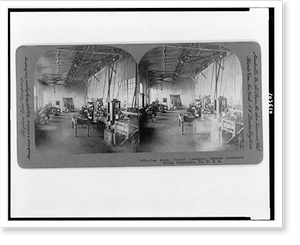 Snapshots of the Past
Vintage Stereoview - Philadelphia - Test room physical laboratory
Drawn from the Library of Congress archive, this print depicts Test room physical laboratory Baldwin Locomotive Works Philadelphia Pa. U.S.A. Classic. The Library holds one of the most comprehensive...$57.00 -
 Snapshots of the Past
Vintage Stereoview - Philadelphia - Foundry showing cylinders just
Drawn from the Library of Congress archive, this print depicts Foundry showing cylinders just from the moulding flasks Baldwin Locomotive Works Philadelphia Pa. U.S.A. The Library holds one of the...$57.00 -
 Snapshots of the Past
Historic Railroad - Locomotives - Southern R.R. Co. Crescent Locomotive (2)
Step back in time with this striking reproduction of Southern R.R. Co. Crescent Locomotive - 3. Sourced from the United States Library of Congress.Library of Congress record: Created between 1916 and...$57.00 -
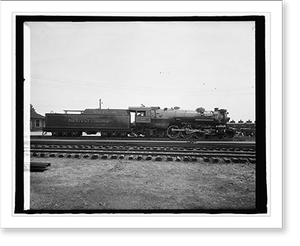 Snapshots of the Past
Historic Railroad - Locomotives - Southern R.R. Co. Crescent Locomotive (1)
Step back in time with this striking reproduction of Southern R.R. Co. Crescent Locomotive. Sourced from the United States Library of Congress.Library of Congress record: Created between 1916 and...$57.00 -
 Snapshots of the Past
Antique Railway Print - Locomotives - So. R.R. Co. Crescent Locomotive (2)
Drawn from the Library of Congress archive, this print depicts So. R.R. Co. Crescent Locomotive - 2. The Library holds one of the most comprehensive collections of American and international...$57.00 -
 Snapshots of the Past
Antique Railway Print - Locomotives - So. R.R. Co. Crescent Locomotive (1)
Drawn from the Library of Congress archive, this print depicts So. R.R. Co. Crescent Locomotive. The Library holds one of the most comprehensive collections of American and international historical...$57.00 -
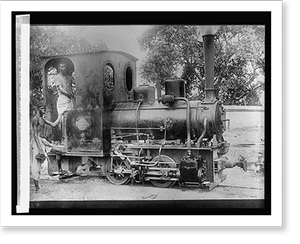 Snapshots of the Past
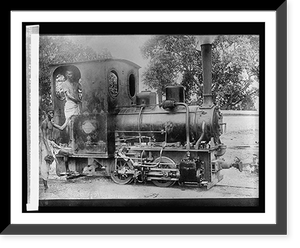
Antique Railway Print - Locomotives - Small locomotive used to draw
Drawn from the Library of Congress archive, this print depicts Small locomotive used to draw cane cars 2 ft. gauge, India. The Library holds one of the most comprehensive collections of American and...$57.00 -
 Snapshots of the Past
Historic Railroad - Locomotives - Largest electric locomotive in world
This rare historical print captures Largest electric locomotive in world, 6/25 in remarkable detail. Sourced directly from the Library of Congress, it represents an authentic piece of documented...$57.00 -
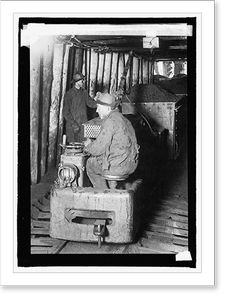 Snapshots of the Past
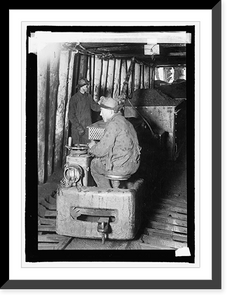
Historic Railroad - Oliver Iron Mining Co., Minnesota - Elec. Locomotive
Step back in time with this striking reproduction of Elec. Locomotive, Oliver Iron Mining Co., Minn. Sourced from the United States Library of Congress.Library of Congress record: Created between...$57.00 -
 Snapshots of the Past
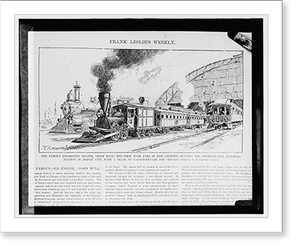
Antique Railway Print - Locomotives - John Bull first locomotive
Step back in time with this striking reproduction of John Bull" first locomotive". Sourced from the United States Library of Congress.Library of Congress record: Created 1925 Title from unverified...$57.00 -
 Snapshots of the Past
Black & White Photo - Locomotives - Destruction of the on the bridge (2)
Drawn from the Library of Congress archive, this print depicts Destruction of the locomotives on the bridge over the Chickahominy - 3. The Library holds one of the most comprehensive collections of...$57.00 -
 Snapshots of the Past
Vintage Railroad - Locomotives - The people's line (2)
Historic Framed Print, The people's line. Take care of the locomotive - 2, 17-7/8" x 21-7/8", Image: 16" x 20"Beautiful historic reproduction print from the Library of Congress collections.Created...$57.00