
New Haven
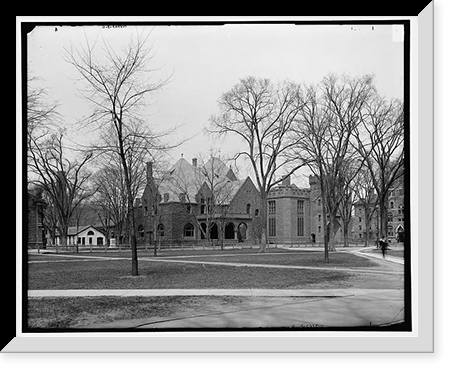
New Haven was laid out in 1638 as nine squares, with the central one left open as a common. That square is the Green, and it is still there, still open, and still the organizing fact of the city. Three churches stand on it in a row, built between 1812 and 1815, which is an arrangement no other American city has.
Yale was founded in 1701 and moved to New Haven in 1716. The photographs from the nineteenth century show a campus in the middle of an industrial town rather than apart from it — the Old Campus, the fence students gathered at, and beyond it the streets of a working city.
The industry surprises people. For much of the nineteenth century New Haven was the largest carriage-manufacturing center in the United States. Dozens of firms, thousands of workers, and a supply chain of wheelwrights, harness makers and painters. The photographs of the factory floors are worth looking at because they show handwork at industrial scale — carriages assembled one at a time, in buildings the size of a mill.
Winchester Repeating Arms was here too, from 1866, and became one of the largest employers in the state. Eli Whitney's earlier gun factory north of town is part of the same story; the ideas about interchangeable parts that made mass production possible were being worked out in this valley.
East Rock and West Rock stand over the city, and the panoramic photographers used them constantly. A great many of the surviving wide views of New Haven were made from those ridges, which is why the city appears more often from above than most places its size.
The harbor is shallow, and that shaped everything. New Haven never became a great port, so it became a manufacturer instead, and then a college town that had once been a manufacturer.
The archive holds around one thousand and eighty-five images naming New Haven, which is more than Chicago, Philadelphia or Boston relative to size.
The Gulf Port With the Oldest Carnival in America
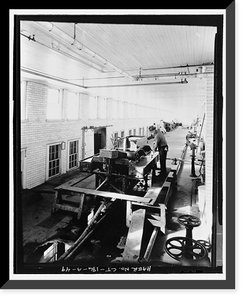

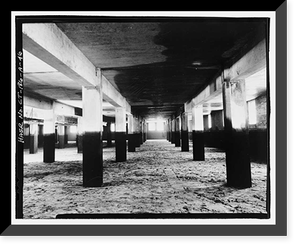


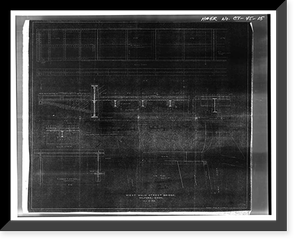

-

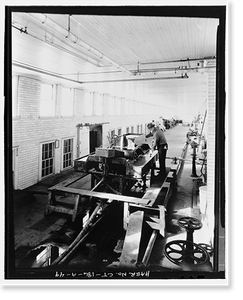 Snapshots of the Past
Historic Architecture - Hamden, Connecticut - Lake Whitney Water (9)
Originally preserved in the Library of Congress, this print of Lake Whitney Water Filtration Plant, Filtration Plant, South side of Armory Street between Edgehill Road & Whitney Avenue, Hamden, New...$57.00 -
 Snapshots of the Past
Historic Architecture - Hamden, Connecticut - Lake Whitney Water (8)
Originally preserved in the Library of Congress, this print of Lake Whitney Water Filtration Plant, Filtration Plant, South side of Armory Street between Edgehill Road & Whitney Avenue, Hamden, New...$57.00 -
 Snapshots of the Past
Historic Architecture - Hamden, Connecticut - Lake Whitney Water (7)
This rare historical print captures Lake Whitney Water Filtration Plant, Filtration Plant, South side of Armory Street between Edgehill Road & Whitney Avenue, Hamden, New Haven County, CT - 46 in...$57.00 -
 Snapshots of the Past
Historic Architecture - Hamden, Connecticut - Lake Whitney Water (6)
This rare historical print captures Lake Whitney Water Filtration Plant, Filtration Plant, South side of Armory Street between Edgehill Road & Whitney Avenue, Hamden, New Haven County, CT - 44 in...$57.00 -
 Snapshots of the Past
Historic Architecture - Hamden, Connecticut - Lake Whitney Water (5)
Step back in time with this striking reproduction of Lake Whitney Water Filtration Plant, Filtration Plant, South side of Armory Street between Edgehill Road & Whitney Avenue, Hamden, New Haven...$57.00 -
 Snapshots of the Past
Historic Architecture - Hamden, Connecticut - Lake Whitney Water (4)
Drawn from the Library of Congress archive, this print depicts Lake Whitney Water Filtration Plant, Filtration Plant, South side of Armory Street between Edgehill Road & Whitney Avenue, Hamden, New...$57.00 -
 Snapshots of the Past
Historic Architecture - Hamden, Connecticut - Lake Whitney Water (3)
Step back in time with this striking reproduction of Lake Whitney Water Filtration Plant, Filtration Plant, South side of Armory Street between Edgehill Road & Whitney Avenue, Hamden, New Haven...$57.00 -
 Snapshots of the Past
Historic Architecture - Hamden, Connecticut - Lake Whitney Water (2)
This rare historical print captures Lake Whitney Water Filtration Plant, Filtration Plant, South side of Armory Street between Edgehill Road & Whitney Avenue, Hamden, New Haven County, CT - 7 in...$57.00 -
 Snapshots of the Past
Historic Architecture - Hamden, Connecticut - Lake Whitney Water (1)
Step back in time with this striking reproduction of Lake Whitney Water Filtration Plant, Filtration Plant, South side of Armory Street between Edgehill Road & Whitney Avenue, Hamden, New Haven...$57.00 -
 Snapshots of the Past
Vintage Building Photo - Madison, Connecticut - Bridge No
Originally preserved in the Library of Congress, this print of Bridge No. 1132, Route 80, spanning Hammonasset River, Madison, New Haven County, CT - 3 Classic is now available for your home or...$57.00 -
 Snapshots of the Past
Antique Architecture - Milford, Connecticut - West Main Street Bridge (6)
Originally preserved in the Library of Congress, this print of West Main Street Bridge, Spanning Wepawaug River, Milford, New Haven County, CT - 15 is now available for your home or office. The...$57.00 -
 Snapshots of the Past
Antique Architecture - Milford, Connecticut - West Main Street Bridge (5)
This rare historical print captures West Main Street Bridge, Spanning Wepawaug River, Milford, New Haven County, CT - 14 in remarkable detail. Sourced directly from the Library of Congress, it...$57.00