Grand Canyon
For most of the nineteenth century the Grand Canyon was hard to reach and therefore barely photographed. Getting to the rim meant a full day in a stagecoach from Flagstaff over rough ground, and the people who did it were prospectors rather than tourists.
That changed in September 1901, when the Santa Fe Railway ran a spur line to the South Rim. The ride became a few hours and cost a few dollars, and the canyon turned into a destination almost overnight. Nearly every photograph in the archive dates from after that line opened.
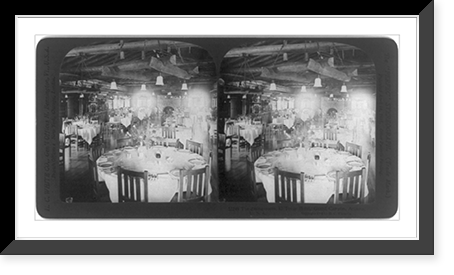
The Fred Harvey Company built what the visitors needed. El Tovar opened in 1905 within a hundred yards of the edge, a long hotel of Oregon pine and local stone that looked like a hunting lodge and had electric light and a solarium. Around it went a series of buildings by Mary Colter, an architect who worked for Harvey for four decades and designed against the fashion of her day. Hopi House in 1905 was modeled on the pueblo at Oraibi and built by Hopi masons. Lookout Studio and Hermit’s Rest in 1914 were made deliberately rough, with uneven stone and soot left on the fireplace, so they read as though they had been there a long time. Desert View Watchtower came in 1932.
The photography business on the rim deserves its own note. Emery and Ellsworth Kolb built a studio hanging off the canyon wall at the head of the Bright Angel Trail in 1904 and photographed every mule party that started down. They then ran four and a half miles to the nearest water suitable for developing, made the prints, and had them ready when the riders came back up. In 1911 they ran the Colorado from Wyoming to the Gulf of California with a motion picture camera, and Emery showed that film in the studio nearly every day until he died in 1976.
Mule trains on the Bright Angel switchbacks are the single most reproduced Grand Canyon image of the period, and the trail itself was originally a Havasupai route, later a prospectors’ path, then a toll trail before the park took it over.
The canyon did not become a national park until 1919, later than Yellowstone or Yosemite, because mining and grazing interests fought it for years. Theodore Roosevelt made it a national monument in 1908 by executive action to get around the delay.
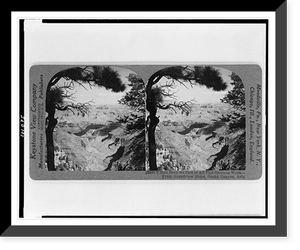
One caution for captions: a great many rim photographs are labeled simply Grand Canyon with no point of view named, so the same overlook appears under half a dozen descriptions.
Saved by a Committee of Women




-

 Snapshots of the Past
Antique Stereograph - Grand Canyon - of the Arkansas
Drawn from the Library of Congress archive, this print depicts Grand Canyon of the Arkansas. Royal Gorge walls 1500 feet in height. The Library holds one of the most comprehensive collections of...$57.00 -
 Snapshots of the Past
Vintage Stereoview - Grand Canyon - of the Arkansas
Originally preserved in the Library of Congress, this print of Grand Canyon of the Arkansas. Looking east toward the plains is now available for your home or office. The Library has preserved this...$57.00 -
 Snapshots of the Past
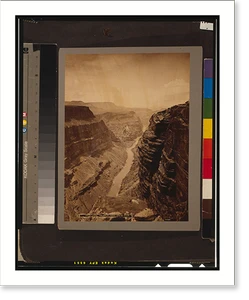
Antique Scenic Print - Grand Canyon - Colorado River (2)
This rare historical print captures Grand Canyon, Colorado River, looking west.Hillers. - 2 in remarkable detail. Sourced directly from the Library of Congress, it represents an authentic piece of...$57.00 -
 Snapshots of the Past
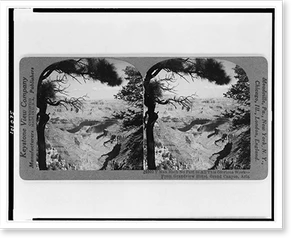
Vintage Building Photo - Grand Canyon, Arizona - Man hath no part
This rare historical print captures Man hath no part in all this glorious work. from Grandview Hotel, Grand Canyon, Ariz in remarkable detail. Sourced directly from the Library of Congress, it...$57.00 -
 Snapshots of the Past
Vintage Building Photo - Grand Canyon - National Park: El Tovar Hotel
This rare historical print captures Grand Canyon National Park: El Tovar Hotel from roof of Hopi House in remarkable detail. Sourced directly from the Library of Congress, it represents an authentic...$57.00 -
 Snapshots of the Past
Vintage Landscape - Grand Canyon - Over all broods a solemn stillness
This rare historical print captures Over all broods a solemn stillness - mists rising from the primeval deeps, Grand Canyon Nat. Park in remarkable detail. Sourced directly from the Library of...$57.00 -
 Snapshots of the Past
Vintage Landscape - Grand Canyon - President Theodore Roosevelt mounted
Originally preserved in the Library of Congress, this print of President Theodore Roosevelt mounted for a ride in the Grand Canyon, Arizona is now available for your home or office. The Library has...$57.00 -
 Snapshots of the Past
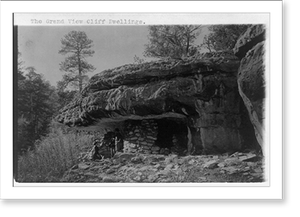
Historic Landscape - Grand Canyon - and vicinity: The grand view cliff
Step back in time with this striking reproduction of Grand Canyon and vicinity: The grand view cliff dwellings and 3 people. Sourced from the United States Library of Congress.Library of Congress...$57.00 -
 Snapshots of the Past
Vintage Landscape - Grand Canyon - and vicinity: Caravan on the desert
This rare historical print captures Grand Canyon and vicinity: Caravan on the desert plateau in remarkable detail. Sourced directly from the Library of Congress, it represents an authentic piece of...$57.00 -
 Snapshots of the Past
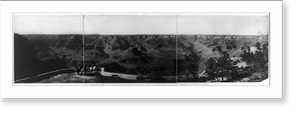
Historic Architecture - Grand Canyon - of Arizona from Hotel El Tovar
Drawn from the Library of Congress archive, this print depicts Grand Canyon of Arizona from Hotel El Tovar. The Library holds one of the most comprehensive collections of American and international...$57.00 -
 Snapshots of the Past
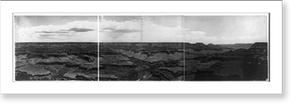
Antique Scenic Print - Grand Canyon - The of Arizona, from Rowe Point
Originally preserved in the Library of Congress, this print of The Grand Canyon of Arizona, from Rowe Point is now available for your home or office. The Library has preserved this image as part of...$57.00 -
 Snapshots of the Past
Historic Landscape - Grand Canyon - Arizona: The Cork Screw, 4100 ft
Drawn from the Library of Congress archive, this print depicts Grand Canyon, Arizona: The Cork Screw, 4100 ft. below the river, with people coming down trail. The Library holds one of the most...$57.00