Breweries
American brewing before Prohibition was a German industry conducted in English, and the numbers were extraordinary. The peak came in 1873 with 4,131 breweries operating in the United States — nearly every town of any size had one, because beer did not travel well and had to be made close to where it was drunk.
Lager is what changed the business. English-style ale ferments warm and quickly; lager ferments cold and needs months of storage near freezing. German brewers arriving in the 1840s and 1850s brought the method and then had to solve the storage, which they did by digging caves and packing them with lake ice cut in winter. Whole hillsides in Milwaukee, St. Louis, Cincinnati and Pottsville are tunneled underneath for that reason. Mechanical refrigeration in the 1880s made it possible to brew lager anywhere, and pasteurization and rail refrigeration made it possible to ship it, which is what allowed a handful of firms to go national.
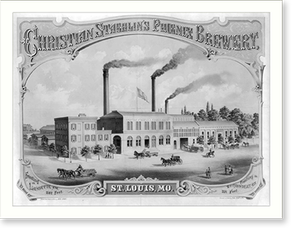
The great brewery lithographs belong to this period and they were advertising. A brewer commissioned a bird’s-eye view of the entire plant — every building, the stacks smoking, the yard full of wagons, rail cars on the siding, sometimes at an angle no vantage point could actually provide — and gave framed copies to the saloons that carried his beer. They are part architectural record and part boast, and they should be read with that in mind. The buildings are usually accurate. The bustle is not.
The tied house arrangement is why the saloons appear in the photographs at all. A brewery would furnish a saloon, supply its fixtures and its sign, and in exchange the place sold only that brewery’s beer. Photographs of a bar with one name on every surface are documenting a contract.
Prohibition arrived in January 1920 and the industry vanished. What survivors did to stay alive is the interesting part. Some made near beer, which required brewing real beer and then removing the alcohol. Anheuser-Busch made ice cream, baker’s yeast, truck bodies and corn syrup. Yuengling opened a dairy. Coors made ceramics. A great many simply sold malt syrup, which was marketed for baking and was bought overwhelmingly by people making beer at home, a fact everyone involved understood perfectly well.
Repeal came in 1933 and about seven hundred and fifty breweries reopened, a fraction of what had existed. Consolidation did the rest through the following decades.
Beer gardens are the other subject that comes with this one. German brewers built large outdoor gardens with tables, bandstands and family seating, deliberately positioned as respectable places where a man could bring his wife and children on a Sunday. That was a direct argument against the temperance case, and it was fought over in city after city through the ordinances governing Sunday sales.
For anyone working with this material, the wagons are worth attention. Draft teams delivering kegs were a brewery’s most visible advertising, the horses were matched and groomed to be looked at, and photographs of them are as much about the company’s reputation as about transport.
Seven Masts Was One Too Many





-

 Snapshots of the Past
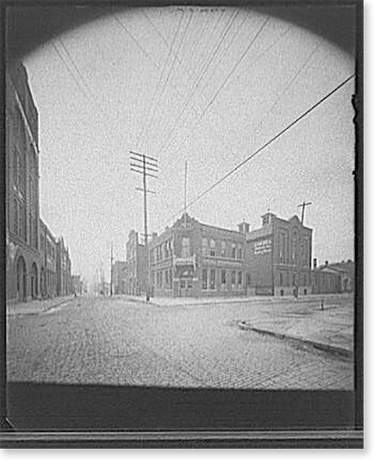
Vintage Building Photo - Denver, Colorado - Tivoli-Union Brewery
Originally preserved in the Library of Congress, this print of Tivoli-Union Brewery, West Denver Turn-Halle, Thirty-first Street, Denver, Denver County, CO - 6 is now available for your home or...$57.00 -
 Snapshots of the Past
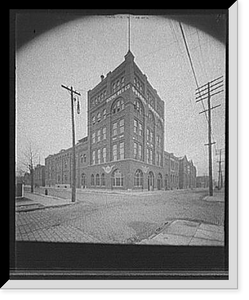
Antique Architecture - Denver, Colorado - Tivoli-Union Brewery
Drawn from the Library of Congress archive, this print depicts Tivoli-Union Brewery, 1320-1348 Tenth Street, Denver, Denver County, CO - 17. The Library holds one of the most comprehensive...$57.00 -
 Snapshots of the Past
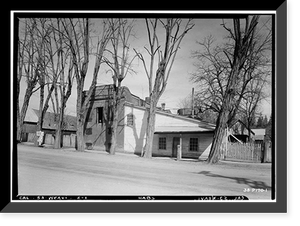
Vintage Building Photo - Weaverville, California - Old Brewery, Main
Originally preserved in the Library of Congress, this print of Old Brewery, Main Street, Weaverville, Trinity County, CA is now available for your home or office. The Library has preserved this image...$57.00 -
 Snapshots of the Past
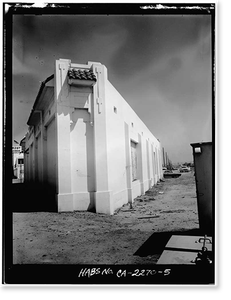
Vintage Building Photo - San Diego, California - Maier Brewing Company
Step back in time with this striking reproduction of Maier Brewing Company Warehouse, 505 West Market Street, San Diego, San Diego County, CA - 5. Sourced from the United States Library of Congress...$57.00 -
 Snapshots of the Past
Historic Architecture - Breweries - National Capitol Brewery
Originally preserved in the Library of Congress, this print of National Capitol Brewery is now available for your home or office. The Library has preserved this image as part of its permanent...$57.00 -
 Snapshots of the Past
Black & White Photo - Breweries - Wisconsin. Milwaukee
Drawn from the Library of Congress archive, this print depicts Wisconsin. Milwaukee. Schlitz Brewery: General offices. The Library holds one of the most comprehensive collections of American and...$57.00 -
 Snapshots of the Past
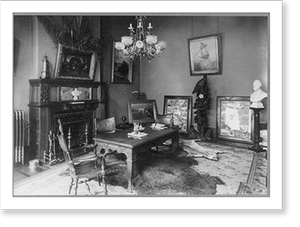
Historic Photo Print - Breweries - Wisconsin. Milwaukee
Drawn from the Library of Congress archive, this print depicts Wisconsin. Milwaukee. Schlitz Brewery: Director's room. The Library holds one of the most comprehensive collections of American and...$57.00 -
 Snapshots of the Past
Historic Photo Print - St. Louis - Christian Staehlin's Phoenix
Drawn from the Library of Congress archive, this print depicts Christian Staehlin's Phoenix brewery, St. Louis, MO. The Library holds one of the most comprehensive collections of American and...$57.00 -
 Snapshots of the Past
Antique Photo Print - Detroit, Michigan - Goebel Brewing Co (3)
This rare historical print captures Camp Kitchen, N.Y. N.G in remarkable detail. Sourced directly from the Library of Congress, it represents an authentic piece of documented history.Library of...$57.00 -
 Snapshots of the Past
Antique Photo Print - Detroit, Michigan - Goebel Brewing Co (2)
Originally preserved in the Library of Congress, this print of Lady Londonderry is now available for your home or office. The Library has preserved this image as part of its permanent historical...$57.00 -
 Snapshots of the Past
Antique Photo Print - Detroit, Michigan - Goebel Brewing Co (1)
This rare historical print captures Kezad Bey, Sec. to Sultan Classic in remarkable detail. Sourced directly from the Library of Congress, it represents an authentic piece of documented history...$57.00