
Weddings
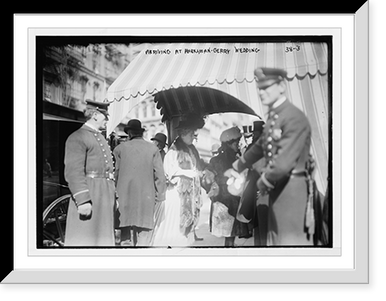
Almost everything people assume is traditional about an American wedding is younger than the photographs that record it.
The white dress dates from 1840, when Victoria married Albert in white silk satin. Before that a bride wore her best dress in whatever color it happened to be, and after that white spread through the middle classes as a display of means \u2014 a garment that could not be worn again and could not survive being cleaned was a statement about money rather than about purity, whatever was said later.
The photographs record the practice more honestly than the etiquette books do. Nineteenth-century wedding portraits show a great many brides in dark dresses, particularly in rural areas and among working families, because a dress that could be worn again was the sensible choice.
The formal group photograph is the standard document and it follows rules. The couple seated or standing centrally, attendants arranged by height, parents at the edges, and everyone still for the length of the exposure. The stiffness is the equipment. Nobody could hold a smile for the time required.
The reception photographs are looser and better. Tables laid in a parlor or a yard, the cake, the crowd, and increasingly through the century the arrival of a camera at the event rather than a visit to the studio afterward.
Several customs in these pictures have specific origins. The multi-tier cake copies the spire of St Bride\u2019s in London. Bridesmaids in matching dresses come from a Roman practice of confusing evil spirits. The ring on the fourth finger comes from a mistaken belief about a vein running to the heart. The honeymoon began as the bridal tour, in which a couple traveled to visit relatives who had not been able to attend.
The June preference is agricultural rather than romantic. It sat between planting and harvest, and a June wedding meant a first child arriving in spring when a woman could recover before the heaviest work.
For dating, the sleeves are the fastest guide. Enormous leg-of-mutton sleeves are the 1890s. Straight, narrow silhouettes are the 1910s. Dropped waists and shorter hems are the 1920s.
Photography changed the wedding itself. Once a photograph was expected, the event had to be staged for it — a procession that could be seen, a moment at the door, a group that could be arranged. The studio portrait came first, then the photographer at the church, and the modern wedding is partly a performance built for a camera.
Home weddings were the norm for much of the period and the photographs show it. A parlor with the furniture moved out, an arch of greenery, and forty people standing among the family’s own possessions. The church wedding as the default is a later and more prosperous arrangement.
Anniversary photographs belong with this material. Silver and golden wedding portraits were a standard commission, and a couple photographed at fifty years is frequently the only other formal picture of them that exists.
Immigrant and ethnic weddings are a distinct and rich body of material. The dress, the food, the musicians and the number of people present frequently follow the customs of a village in Europe rather than anything American, and those photographs were often sent back home as evidence that the family had done well.
Churches, Camp Meetings and the Printed Word


-

 Snapshots of the Past
Vintage Stage Poster - Weddings - Imre Kiralfys grand historic
Step back in time with this striking reproduction of Imre Kiralfys grand historic spectacle Venice the bride of the sea at Olympia - 2. Sourced from the United States Library of Congress.Library of...$57.00 -
 Snapshots of the Past
Vintage Theater Poster - Weddings - For her childrens sake by Theo
Drawn from the Library of Congress archive, this print depicts For her childrens sake by Theo. Kremer : the companion play to The fatal wedding. - 5 Classic. The Library holds one of the most...$57.00 -
 Snapshots of the Past
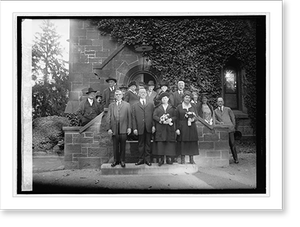
Historic Photo Print - Weddings - James Nightwire wedding, 1922
Drawn from the Library of Congress archive, this print depicts James Nightwire wedding, 10/24/22. The Library holds one of the most comprehensive collections of American and international historical...$57.00 -
 Snapshots of the Past
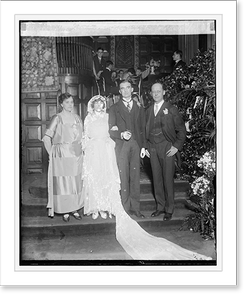
Historic Photo Print - Weddings - Wadsworth - Symington wedding, 1924
Drawn from the Library of Congress archive, this print depicts Wadsworth - Symington wedding, 3/1/24. The Library holds one of the most comprehensive collections of American and international...$57.00 -
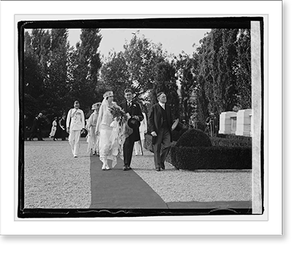 Snapshots of the Past
Historic Photo Print - Weddings - Mrs. Hughes wedding, 1922
Originally preserved in the Library of Congress, this print of Mrs. Hughes wedding, 6/10/22 is now available for your home or office. The Library has preserved this image as part of its permanent...$57.00 -
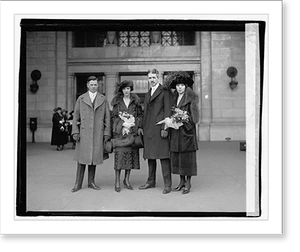 Snapshots of the Past
Black & White Photo - Weddings - Wedding Mintaugh
Step back in time with this striking reproduction of Wedding Mintaugh. Sourced from the United States Library of Congress.Library of Congress record: Created 1921 Title from unverified data provided...$57.00 -
 Snapshots of the Past
Vintage Photo Print - Weddings - Totten Wedding - Vintage Home Decor Print
Step back in time with this striking reproduction of Totten Wedding. Sourced from the United States Library of Congress.Library of Congress record: Created 1921 Title from unverified data provided by...$57.00 -
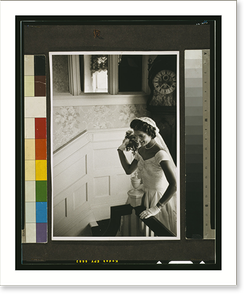 Snapshots of the Past
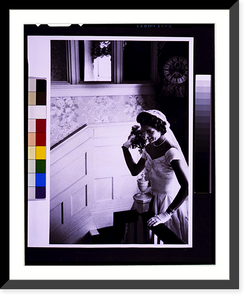
Vintage Americana Print - Weddings - Kennedy wedding (2)
Originally preserved in the Library of Congress, this print of Kennedy wedding. Jackie throwing the bouquet - 2 is now available for your home or office. The Library has preserved this image as part...$57.00 -
 Snapshots of the Past
Vintage Building Photo - White House - Wedding cake for Edward Cox
Step back in time with this striking reproduction of Wedding cake for Edward Cox and Patricia Nixon in the Grand Hall of the White House. Sourced from the United States Library of Congress.Library of...$57.00 -
 Snapshots of the Past
Antique Portrait - Weddings - Bouvier-Kennedy wedding portrait
Drawn from the Library of Congress archive, this print depicts Bouvier-Kennedy wedding portrait. The Library holds one of the most comprehensive collections of American and international historical...$57.00 -
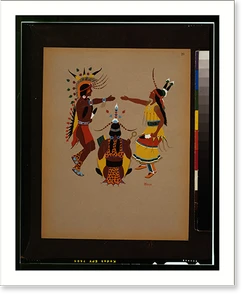 Snapshots of the Past
Vintage Photo Print - Weddings - Wedding ceremony.Mopope
Step back in time with this striking reproduction of Wedding ceremony.Mopope. Sourced from the United States Library of Congress.Library of Congress record: Created 1929 Illus. in: Kiowa Indian art...$57.00 -
 Snapshots of the Past
Vintage Americana Print - Weddings - Kennedy wedding (1)
Step back in time with this striking reproduction of Kennedy wedding. Jackie throwing the bouquet. Sourced from the United States Library of Congress.Library of Congress record: Created 1953 Sept 12...$57.00