
Barns & Farms
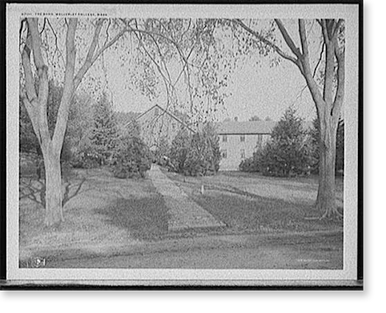
You can identify most regions of the United States from the shape of a barn, because a barn is a machine designed around one crop and one climate.
The Pennsylvania bank barn is built into a hillside so that wagons can drive into the upper floor while livestock occupy the lower, with a forebay overhanging the south wall. New England barns are connected to the house through a series of sheds, so a farmer could reach the animals in February without going outside — the arrangement people call big house, little house, back house, barn. Midwestern dairy barns are tall with rounded or gambrel roofs to hold loose hay above the cows. Tobacco barns in Kentucky and Connecticut have hinged vertical siding that opens to let air through. Southern barns are smaller and more open, because the winter does not require otherwise.
None of that is decoration. Each shape is an answer to a particular question about weather, crop and animal.
The mail order catalog belongs in this subject as much as the barn does. Sears and Montgomery Ward sold farm families everything from harness to houses, and a farmstead photographed in 1915 may contain a windmill, a cream separator, a buggy and in some cases the house itself, all ordered from a book and delivered by rail.
The photographs come from several directions and the sources matter. Commercial photographers sold views to the families themselves — a farm portrait with everyone arranged in front of the house was a standard purchase, and the livestock and equipment were included deliberately because they were the point. Agricultural agencies photographed methods and machinery. And in the 1930s the Farm Security Administration photographed rural America at the worst moment in its history, producing the images most people now have in mind.
Those FSA pictures need reading carefully. They were made to build political support for New Deal programs, and the photographers were briefed on what to look for. That does not make them dishonest — the conditions were real — but it does mean they show a particular slice, and the prosperous farms of the same decade are underrepresented as a result.
The windmill and the silo are the two features that changed the look of the American farm most visibly. Steel windmills spread across the plains from the 1880s and made settlement possible on land with no surface water. Upright silos arrived at about the same time and let a dairy farm keep cattle through a northern winter on stored corn. Both appear in photographs as suddenly as they appeared on the land.
The equipment dates a photograph well. Horse-drawn reapers give way to binders, then to tractors from the 1910s, and the changeover took forty years. A farm with both a team and a tractor in the yard is somewhere between 1920 and 1945.
Barn raisings appear regularly and are worth understanding. A frame barn went up in a day with the whole neighborhood present, because no family could do it alone and because the labor was reciprocal. The photograph of forty men on a frame is documenting an economy as much as a building.
The Ships That Were Meant to Be Photographed




-

 Snapshots of the Past
Historic Architecture - Tybouts Corner vicinity, Delaware - G. Z. Tybout
Drawn from the Library of Congress archive, this print depicts G. Z. Tybout Barn, Route 381 near Route 13, Tybouts Corner vicinity, New Castle County, DE. The Library holds one of the most...$57.00 -
 Snapshots of the Past
Vintage Building Photo - Middletown vicinity, Delaware - Greenlawn, Carr
Step back in time with this striking reproduction of Greenlawn, Carriage Barn, Route 896 (North Broad Street), 0.6 mile north of, Middletown vicinity, New Castle County, DE - 2. Sourced from the...$57.00 -
 Snapshots of the Past
Antique Architecture - Magnolia, Delaware - John B. Lindale Farm
Step back in time with this striking reproduction of John B. Lindale Farm, Small Barn, 24 South Main Street, Magnolia, Kent County, DE Classic. Sourced from the United States Library of Congress...$57.00 -
 Snapshots of the Past
Historic Architecture - Hamden, Connecticut - Eli Whitney Armory, Barn (4)
Drawn from the Library of Congress archive, this print depicts Eli Whitney Armory, Barn, Whitney Avenue, Hamden, New Haven County, CT - 15. The Library holds one of the most comprehensive collections...$57.00 -
 Snapshots of the Past
Historic Architecture - Hamden, Connecticut - Eli Whitney Armory, Barn (3)
Step back in time with this striking reproduction of Eli Whitney Armory, Barn, Whitney Avenue, Hamden, New Haven County, CT - 14. Sourced from the United States Library of Congress.Library of...$57.00 -
 Snapshots of the Past
Historic Architecture - Hamden, Connecticut - Eli Whitney Armory, Barn (2)
This rare historical print captures Eli Whitney Armory, Barn, Whitney Avenue, Hamden, New Haven County, CT - 6 Classic in remarkable detail. Sourced directly from the Library of Congress, it...$57.00 -
 Snapshots of the Past
Historic Architecture - Hamden, Connecticut - Eli Whitney Armory, Barn (1)
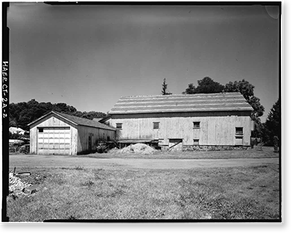
Originally preserved in the Library of Congress, this print of Eli Whitney Armory, Barn, Whitney Avenue, Hamden, New Haven County, CT - 2 Classic is now available for your home or office. The Library...$57.00 -
 Snapshots of the Past
Historic Architecture - Dolores vicinity, Colorado - Ritter Ranch, Barn (6)
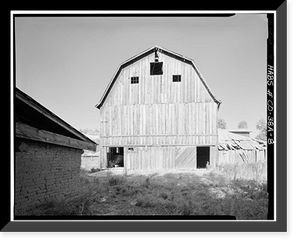
This rare historical print captures Ritter Ranch, Barn, Old Dolores Highway, Dolores vicinity, Montezuma County, CO - 8 Classic in remarkable detail. Sourced directly from the Library of Congress, it...$57.00 -
 Snapshots of the Past
Historic Architecture - Dolores vicinity, Colorado - Ritter Ranch, Barn (5)
Step back in time with this striking reproduction of Ritter Ranch, Barn, Old Dolores Highway, Dolores vicinity, Montezuma County, CO - 7. Sourced from the United States Library of Congress.Library of...$57.00 -
 Snapshots of the Past
Historic Architecture - Dolores vicinity, Colorado - Ritter Ranch, Barn (4)
This rare historical print captures Ritter Ranch, Barn, Old Dolores Highway, Dolores vicinity, Montezuma County, CO - 5 in remarkable detail. Sourced directly from the Library of Congress, it...$57.00 -
 Snapshots of the Past
Historic Architecture - Dolores vicinity, Colorado - Ritter Ranch, Barn (3)
Drawn from the Library of Congress archive, this print depicts Ritter Ranch, Barn, Old Dolores Highway, Dolores vicinity, Montezuma County, CO - 4. The Library holds one of the most comprehensive...$57.00 -
 Snapshots of the Past
Historic Architecture - Dolores vicinity, Colorado - Ritter Ranch, Barn (2)
This rare historical print captures Ritter Ranch, Barn, Old Dolores Highway, Dolores vicinity, Montezuma County, CO - 2 in remarkable detail. Sourced directly from the Library of Congress, it...$57.00