
Newport
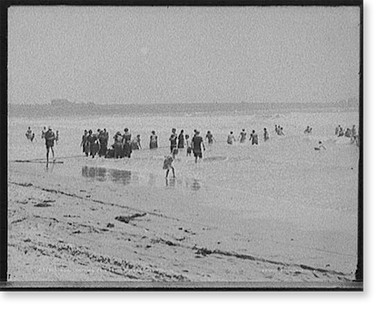
Newport had two lives and the photographs cover both. It was a major colonial seaport, and then, after a century of decline, it became the summer address of the richest people in America.
The colonial town is the older story and the more surprising. In the eighteenth century Newport rivaled New York and Boston as a port, with a merchant fleet, a slave trade it was deeply involved in, and a degree of religious tolerance unusual for its time. The Touro Synagogue of 1763 is the oldest surviving synagogue in the country. The town declined badly after the British occupation in the Revolution, and that decline is why so much colonial architecture survived \u2014 nobody had money to replace it.
The Gilded Age arrived in the 1850s and peaked between 1890 and 1914. Families with railroad, mining and banking money built houses along Bellevue Avenue and called them cottages, which was a joke everybody understood. The Breakers has seventy rooms. Marble House cost eleven million dollars in 1892, most of it in marble.
The season was eight to ten weeks and was governed by rules of extraordinary rigidity. Calls were paid, invitations were issued and withheld, and a person could be socially destroyed by a seating plan. Photographs of Bellevue Avenue in the afternoon show carriages moving slowly in both directions, which was the point \u2014 seeing and being seen.
The Cliff Walk is the detail that reveals the politics. A public right of way, established by colonial fishing rights, runs along the shoreline directly behind the great houses. The owners fought it repeatedly and lost, so the photographs from the walk look straight into the back gardens of the wealthiest families in America.
Yachting is the other constant. The New York Yacht Club moved its America\u2019s Cup defenses to Newport, and the harbor photographs from the 1890s onward are full of enormous steam and sailing yachts.
For dating, the vehicles on Bellevue Avenue are the clock. Carriages and coaches through the 1900s, automobiles from about 1905, and the transition is quick.
The architects are a roll call of the period. Richard Morris Hunt designed The Breakers and Marble House. McKim, Mead and White built the Newport Casino, which is where American tennis began and which is now the Hall of Fame. Stanford White’s shingled houses in Newport did as much to invent American domestic architecture as the marble palaces did to import European.
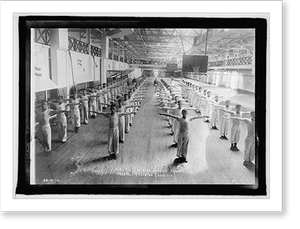
The Navy is the third Newport and it outlasted the other two. The Naval War College opened in 1884, the Naval Training Station followed, and by the twentieth century the town’s largest employer was the federal government rather than any summer family. The wartime photographs show a very different place from the season pictures.
The season is documented in an unusual way because the newspapers covered it as a sport. Arrivals, departures, dinners and slights were reported daily in the New York press, so a photograph of a Newport event can often be dated to the day from a caption in a paper.
The Spa That Became a Racetrack





-

 Snapshots of the Past
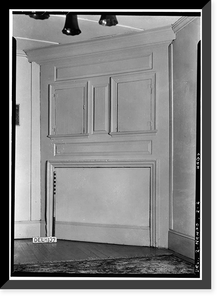
Antique Architecture - Wilmington, Delaware - Latimeria, Newport Pike
Originally preserved in the Library of Congress, this print of Latimeria, Newport Pike (Maryland Avenue), Wilmington, New Castle County, DE - 2 is now available for your home or office. The Library...$57.00 -
 Snapshots of the Past
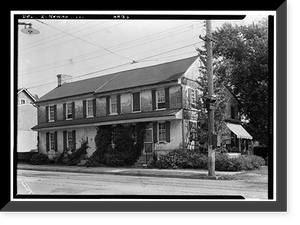
Antique Architecture - Newport, Delaware - Galloway House
This rare historical print captures Galloway House, Johns & Ayre Streets, Newport, New Castle County, DE - 2 in remarkable detail. Sourced directly from the Library of Congress, it represents an...$57.00 -
 Snapshots of the Past
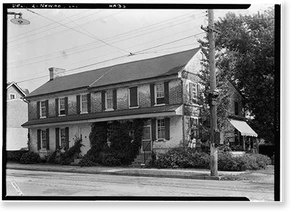
Vintage Building Photo - Newport, Delaware - Myers House, Market
Step back in time with this striking reproduction of Myers House, Market & Johns Streets, Newport, New Castle County, DE. Sourced from the United States Library of Congress.Library of Congress...$57.00 -
 Snapshots of the Past
Antique Architecture - Newport - Naval training station, R.I
This rare historical print captures Naval training station, Newport, R.I., physcial training exercises in remarkable detail. Sourced directly from the Library of Congress, it represents an authentic...$57.00 -
 Snapshots of the Past
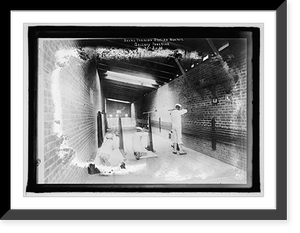
Vintage Building Photo - Newport - Naval training station, R.I
Drawn from the Library of Congress archive, this print depicts Naval training station, Newport, R.I., gallery practice, 35-5-10 Classic. The Library holds one of the most comprehensive collections of...$57.00 -
 Snapshots of the Past
Historic Photo Print - Newport - Karama a Japanese romance by Vivian
This rare historical print captures Karama" a Japanese romance by (Vivian Grey), Mabel McKinley composer of "Anona".The Donalson Litho. Co., Newport, KY." in remarkable detail. Sourced directly from...$57.00 -
 Snapshots of the Past
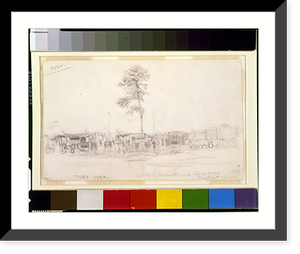
Antique Military - Newport - Camp of Hawkins Zouaves. News, 1861
This rare historical print captures Camp of Hawkins Zouaves. Newport News. 1861 Classic in remarkable detail. Sourced directly from the Library of Congress, it represents an authentic piece of...$57.00 -
 Snapshots of the Past
Vintage Building Photo - Newport - Interior of Casino grounds
This rare historical print captures Interior of Casino grounds, Newport - 2 in remarkable detail. Sourced directly from the Library of Congress, it represents an authentic piece of documented history...$57.00 -
 Snapshots of the Past
Black & White Photo - New York City - Newport jazz festival/New, 1954
Historic Framed Print, Newport jazz festival/New York 1954-1978/25 summers of jazz. June 23-July 2.Milton Glaser., 17-7/8" x 21-7/8", Image: 16" x 20"Beautiful historic reproduction print from the...$57.00 -
 Snapshots of the Past
Historic Photo Print - Newport - Student shipbuilders at News, Virginia
Originally preserved in the Library of Congress, this print of Student shipbuilders at Newport News, Virginia is now available for your home or office. The Library has preserved this image as part of...$57.00 -
 Snapshots of the Past
Antique Photo Print - Newport - East Ark., view of levee
This rare historical print captures East Newport, Ark., view of levee in remarkable detail. Sourced directly from the Library of Congress, it represents an authentic piece of documented history...$57.00 -
 Snapshots of the Past
Historic Landscape - Newport - Rhode Island - Framed Wall Art Gift Idea
Originally preserved in the Library of Congress, this print of Rhode Island. Newport. A.C. James home, Suprise Valley", workmen sawing in carpenter shop" Classic is now available for your home or...$57.00