Civil War Photographs

The Civil War was the first American war photographed at scale, and everything about the way it looks is determined by the equipment.
The wet-plate process required a glass plate to be coated with collodion, sensitized, exposed and developed before it dried — about ten minutes, start to finish. That meant a darkroom wagon at the front, a chemist's patience, and exposures long enough that anything moving vanished. There are no battle photographs from this war. There could not be.
What the camera could record was everything that held still, and it recorded a great deal of it. Camps. Earthworks and forts. Artillery parks. Pontoon bridges. Supply depots. Railroads. Ships at anchor. Officers posed outside headquarters tents. Enlisted men sitting on ammunition boxes with nothing to do. Hospitals. Prisons. And, notoriously, the aftermath of battle.
Mathew Brady organized the effort and took the credit and went bankrupt doing it. He financed roughly twenty photographers in the field, expecting the government to buy the archive afterward. It did not. The men who actually made most of the pictures — Alexander Gardner, Timothy O'Sullivan, George Barnard, James Gibson — worked under his name for years before their own were restored to the record. Gardner broke with him over exactly that.
Alexander Gardner is the one to know if you follow only one name. He ran Brady’s Washington gallery, broke away in 1862 over credit, took most of the good field operators with him, and published the Photographic Sketch Book of the War in 1866 — the first serious attempt to present a war as a coherent visual account. It sold badly and nearly ruined him.
The soldier portraits are a separate body of work and there are enormous numbers of them. A man about to leave for the army sat for a tintype or an ambrotype, often holding his weapon, sometimes with his brothers. These were made in every town by ordinary commercial photographers and sent home in paper cases. They are not fine photographs. They are the last picture of a great many people.
One thing worth stating plainly about the images of the dead. Gardner and O'Sullivan photographed the field at Antietam and at Gettysburg, and their pictures were exhibited in New York while the war was still on. It was the first time civilians had seen anything like it. There is also good evidence that a body or two was moved to improve a composition, which was noticed only a century later.
The photographs of Black Americans in this material carry particular weight. Contraband camps, the United States Colored Troops, freed families photographed at the moment of freedom, and the men who worked as teamsters, cooks and laborers behind every army in the field. Much of it was made for official or commercial purposes rather than sympathetic ones, and it survives regardless.
For dating, the process helps. Ambrotypes and tintypes are mostly early. Albumen prints from glass negatives run throughout. And a card mount with square corners is generally pre-1870, rounded corners after.
Color Pictures Made Before Color Film




-

 Snapshots of the Past
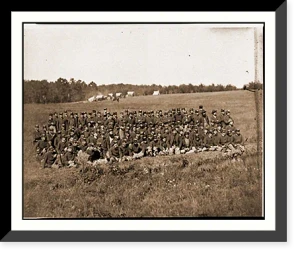
Antique Military - Culpeper Va - Antique Wall Decor Print
This rare historical print captures Culpeper Va. Men of Battery M (Bensons) 2d U.S. Artillery in remarkable detail. Sourced directly from the Library of Congress, it represents an authentic piece of...$57.00 -
 Snapshots of the Past
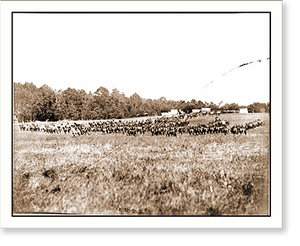
Historic Military - Culpeper Va - Vintage Wall Art Gift
Originally preserved in the Library of Congress, this print of Culpeper Va. Battery A 4th U.S. Artillery Robertsons Brigade is now available for your home or office. The Library has preserved this...$57.00 -
 Snapshots of the Past
Historic Military - Centreville Va - Framed Wall Art Gift Idea
This rare historical print captures Centreville Va. Confederate winter quarters south view in remarkable detail. Sourced directly from the Library of Congress, it represents an authentic piece of...$57.00 -
 Snapshots of the Past
Antique Military - Brandy Station Va. Lt. Col - Framed Wall Art Gift Idea
This rare historical print captures Brandy Station Va. Lt. Col. Orson H. Hart A.A.G. of 3d Corps and horse in remarkable detail. Sourced directly from the Library of Congress, it represents an...$57.00 -
 Snapshots of the Past
Vintage Military Print - Yorktown Virginia vicinity
Step back in time with this striking reproduction of Yorktown Virginia (vicinity). Federal soldiers in Confederate battery (protected wi Classic. Sourced from the United States Library of Congress...$57.00 -
 Snapshots of the Past
Historic Military - Yorktown Virginia (vicinity) - Antique Wall Decor Print
This rare historical print captures Yorktown Virginia (vicinity). Comte de Paris Duc de Chartres Prince de Joinville an - 2 in remarkable detail. Sourced directly from the Library of Congress, it...$57.00 -
 Snapshots of the Past
Historic Military - Westover Landing Virginia - Antique Wall Decor Print
This rare historical print captures Westover Landing Virginia. James H. Childs and staff 4th Pennsylvania Cavalry in remarkable detail. Sourced directly from the Library of Congress, it represents an...$57.00 -
 Snapshots of the Past
Vintage Military Print - Washington District of Columbia (5)
Step back in time with this striking reproduction of Washington District of Columbia. Wiard gun at U.S. Arsenal. (L to R: Gen. Daniel Si Classic. Sourced from the United States Library of Congress...$57.00 -
 Snapshots of the Past
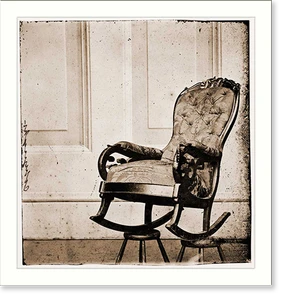
Vintage Military Print - Washington District of Columbia (6)
Originally preserved in the Library of Congress, this print of Washington District of Columbia. Chair occupied by Lincoln when assassinated - 2 is now available for your home or office. The Library...$57.00 -
 Snapshots of the Past
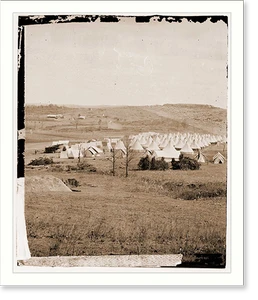
Historic Military - Washington District of Columbia. Camp of 31st Penn
Drawn from the Library of Congress archive, this print depicts Washington District of Columbia. Camp of 31st Penn. Inf. (later 82d Penn. Inf.) at - 2. The Library holds one of the most comprehensive...$57.00 -
 Snapshots of the Past
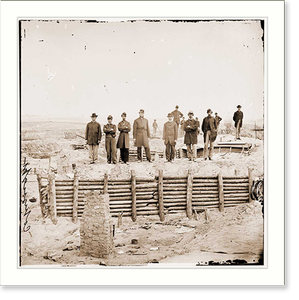
Vintage Military Print - Petersburg Virginia - Vintage Home Decor Print
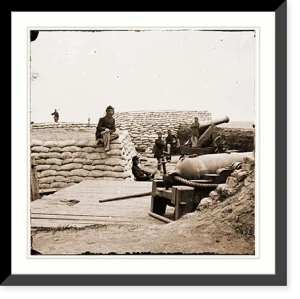
This rare historical print captures Petersburg Virginia. On the parapet of Fort Mahone. (Standing in the center is Lt in remarkable detail. Sourced directly from the Library of Congress, it...$57.00 -
 Snapshots of the Past
Historic Military - North Anna River Virginia - Antique Wall Decor Print
Drawn from the Library of Congress archive, this print depicts North Anna River Virginia. Chesterfield bridge with Confederate redoubt in the dist Classic. The Library holds one of the most...$57.00