Pittsburgh
Pittsburgh sits where the Allegheny and the Monongahela meet to form the Ohio, and that point of land is the reason the French, the British and the colonists all fought over it before there was a town.
What it became is the greatest concentration of heavy industry the world had seen. By 1900 the region produced somewhere between a third and a half of American steel, along with glass, aluminum and coke. The photographs of the mill districts \u2014 Homestead, Braddock, Duquesne, the South Side \u2014 show plants a mile long along the river with rows of workers\u2019 houses climbing the hillside directly above them.
The smoke is the thing every visitor wrote about. Streetlights burned at midday. Office workers changed collars at lunch. James Parton called it hell with the lid taken off, in 1868, and the phrase stuck for eighty years. Photographs taken at noon look like dusk, and that is not a defect in the print.
The inclines were a practical answer to the terrain. Steep hillsides rise directly from the riverbanks, and at one point seventeen funicular railways carried workers up to the neighborhoods above the mills. Two still run.
Homestead in 1892 is the event the photographs return to. The Carnegie Steel works locked out its union, Henry Clay Frick brought three hundred Pinkerton agents up the river on barges, and the resulting battle killed men on both sides before the state militia occupied the town. It broke unionized steel for forty years and it is one of the best-documented labor conflicts of the century.
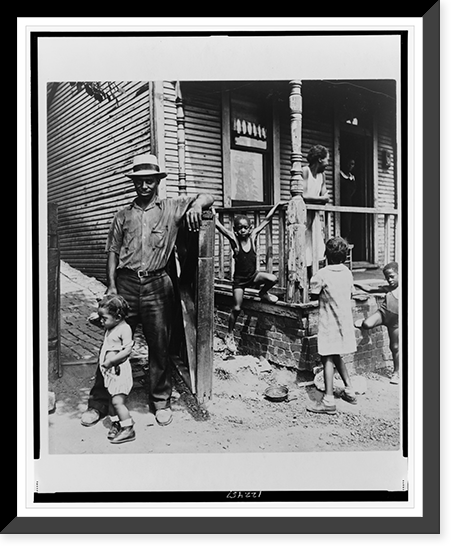
The immigrant labor that ran the mills is in a great many of these images. Slovaks, Poles, Hungarians, Italians, Serbs and, after the First World War, Black workers from the South, in neighborhoods organized around churches that each served one language.
For dating, the air is a reasonable guide. Smoke control legislation after 1946 cleaned the city dramatically, so a clear photograph of downtown from across the river is late.
The libraries and the museums are the other half of Carnegie and the photographs cover both. He gave the city a library system, a museum, a concert hall and a technical school, funded from the same works whose employees he had just broken. Both facts are true and the buildings are still in use.
The rivers were working water and are photographed as such. Coal came down the Monongahela in barge tows, iron ore came in by rail from the lakes, and the finished steel went out in every direction. A photograph of the Point without barges on it is a modern photograph.
The Johnstown flood of 1889 is sixty miles east and belongs to the same industrial world. A dam maintained by a private club for a fishing lake failed and killed over two thousand people, and the photographs of the debris field are among the earliest American disaster documentation.
Glass came before steel and is often forgotten. By the middle of the nineteenth century the region produced most of the glass in the country, and glasshouse photographs — the furnaces, the blowers, the boys who carried the pieces — are among the harder images in the industrial record.
The Holiday That Arrived With the Germans




-

 Snapshots of the Past
Vintage Stereoview - Pittsburgh - Plant of the blast furnace Puttsburg
This rare historical print captures Plant of the blast furnace Puttsburg i.e. Pittsburgh Pa in remarkable detail. Sourced directly from the Library of Congress, it represents an authentic piece of...$57.00 -
 Snapshots of the Past
Vintage Building Photo - Pittsburgh - Grand Opera House and Lyric, 1928
Historic Framed Print, [Grand Opera House and Lyric Theatre, Fifth Ave. near Smithfield St., Pittsburgh, Pennsylvania].AFD 1928., 17-7/8" x 21-7/8", Image: 16" x 20"Beautiful historic reproduction...$57.00 -
 Snapshots of the Past
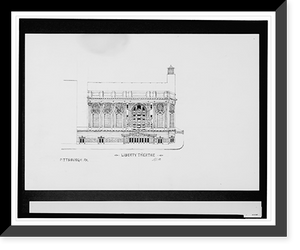
Antique Photo Print - Pittsburgh - Liberty Theatre Academy, 1937
Historic Framed Print, [Liberty Theatre (Academy Burlesque Theatre), Pittsburgh, Pennsylvania].AFD 1937., 17-7/8" x 21-7/8", Image: 16" x 20"Beautiful historic reproduction print from the Library...$57.00 -
 Snapshots of the Past
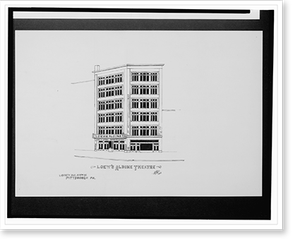
Antique Photo Print - Pittsburgh - Loew's Aldine Theatre, 1932
Historic Framed Print, [Loew's Aldine Theatre, Liberty Ave. and 9th St., Pittsburgh, Pennsylvania].AFD 1932., 17-7/8" x 21-7/8", Image: 16" x 20"Beautiful historic reproduction print from the...$57.00 -
 Snapshots of the Past
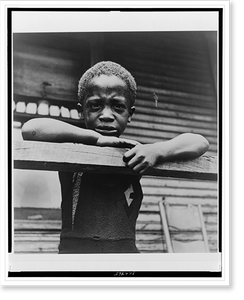
Black & White Photo - Pittsburgh - Steelworker's son, 1935
Historic Framed Print, Steelworker's son, Pittsburgh, 1935, 17-7/8" x 21-7/8", Image: 16" x 20"Beautiful historic reproduction print from the Library of Congress collections.Created 1935 Gelatin...$57.00 -
 Snapshots of the Past
Vintage Americana Print - Pittsburgh, Pennsylvania - Steelworkers, 1935
Drawn from the Library of Congress archive, this print depicts Steelworkers, Pittsburgh, Pa., 1935. The Library holds one of the most comprehensive collections of American and international...$57.00 -
 Snapshots of the Past
Vintage Americana Print - Pittsburgh - The Point, showing Union
Step back in time with this striking reproduction of The Point, Pittsburgh, showing Union and Manchester bridges Classic. Sourced from the United States Library of Congress.Library of Congress...$57.00 -
 Snapshots of the Past
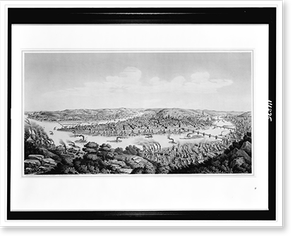
Antique Photo Print - Pittsburgh - View of & Allegheny.Otto Krebs lith (2)
Originally preserved in the Library of Congress, this print of View of Pittsburgh & Allegheny.Otto Krebs lith., Pittsburgh. - 2 is now available for your home or office. The Library has preserved...$57.00 -
 Snapshots of the Past
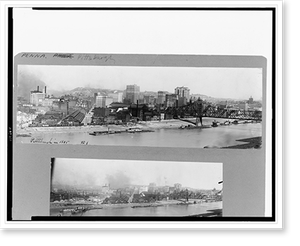
Historic Bird's Eye View - Pittsburgh - Bird's-eye view
Step back in time with this striking reproduction of Bird's-eye view of Pittsburgh, Pennsylvania, with river in foreground. Sourced from the United States Library of Congress.Library of Congress...$57.00 -
 Snapshots of the Past
Vintage Photo Print - Pittsburgh - Armory (U.S. Arsenal), Pennsylvania
This rare historical print captures Armory (U.S. Arsenal"), Pittsburgh, Pennsylvania. Ground floor plan" - 2 Classic in remarkable detail. Sourced directly from the Library of Congress, it represents...$57.00 -
 Snapshots of the Past
Antique Photo Print - Pittsburgh - Armory (U.S. Arsenal), Pennsylvania (2)
Drawn from the Library of Congress archive, this print depicts Armory (U.S. Arsenal"), Pittsburgh, Pennsylvania. Commandant Quarters - chamber and ground floor" - 2. The Library holds one of the most...$57.00 -
 Snapshots of the Past
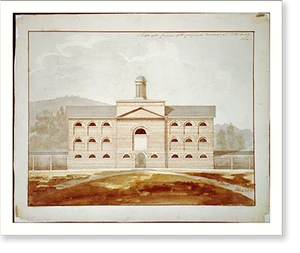
Vintage Americana Print - Pittsburgh - Armory (U.S. Arsenal)
This rare historical print captures Armory (U.S. Arsenal"), Pittsburgh, Pennsylvania. Front elevation" - 2 in remarkable detail. Sourced directly from the Library of Congress, it represents an...$57.00