Movies & Film
There is a strange reason the Library of Congress holds so much early film material, and it is a loophole in copyright law.
Until 1912 there was no provision for copyrighting a motion picture. Studios wanting protection exploited the fact that photographs could be registered, so they printed their films frame by frame onto long rolls of photographic paper and deposited those. The paper was filed and forgotten. Decades later, after the nitrate originals had decomposed or burned, somebody realized the deposits were a complete frame-by-frame record, and roughly three thousand films from 1894 to 1912 were rephotographed back onto film from paper. A great many early films exist today only because a clerk accepted a workaround.
The theater posters are their own body of work and they predate film. Nineteenth-century touring companies advertised with stone lithographs printed in enormous sizes and pasted up in sheets, produced by firms like Strobridge in Cincinnati whose presses could hold color registration across a poster ten feet high. Those posters were made to be destroyed — pasted over within a week — so the ones that survive did so mostly as copyright deposits, unpasted and flat.
Nickelodeons arrived around 1905 and were gone by about 1915. A storefront with a sheet, a projector and a few hundred chairs, admission five cents, programs running fifteen minutes on a loop. Within five years there were thousands, and the audience was heavily immigrant and working class, partly because silent film needed no English. Photographs of nickelodeon fronts covered in hand-painted signage are among the better street records of the period.
Hollywood came later than people assume. The early industry was in the east — Edison in the Bronx, and Fort Lee, New Jersey, which was the center of American film production in the early 1910s with studios lining the cliffs above the Hudson. The move west happened for winter light and cheap open land, and it was largely complete by 1920.
The movie palaces of the 1920s were the industry announcing it had arrived. Six thousand seats, an orchestra, a pipe organ that rose out of the floor, staff in uniform, and interiors done as Moorish courtyards or Egyptian temples. They were built to make a five-cent entertainment feel like an evening at the opera, and photographs of their lobbies say more about the ambitions of the business than any studio portrait.
Serials and the star system belong to the same decades. Weekly chapter films ending in a cliffhanger ran from about 1912 and made performers like Pearl White nationally known, and the studios discovered that a recognizable face sold tickets more reliably than a story did. The publicity portrait — soft-focused, evenly lit, retouched — was invented to serve exactly that.
For captions, one caution. Lobby cards, posters and production stills all get filed together and they are different objects made for different purposes. A production still was shot on set by a stills photographer with a large-format camera, often posed separately from the actual filming, so it is not a frame from the movie.
The Keeper Was Often a Widow



-

 Snapshots of the Past
Historic Framed Print Vintage Movies Film Print - 1, 17-7/8" x 21-7/8"
Vintage Movies Film Print - 1, 17-7/8" x 21-7/8" , Image: 16" x 20"Note: Some images may show issues such as color bars or other artifacts from the digital scanning process at the Library. We clean...$57.00 -
 Snapshots of the Past
Antique Military - United States official war films.Kerry
This rare historical print captures United States official war films.Kerry ; The Hegeman Print N.Y in remarkable detail. Sourced directly from the Library of Congress, it represents an authentic...$57.00 -
 Snapshots of the Past
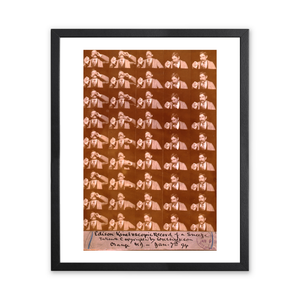
Vintage Americana Print - Edison kinetoscopic record of a sneeze.taken (3)
This rare historical print captures Edison kinetoscopic record of a sneeze.taken & copyrighted by W.K.-L. Dickson, Orange, N.J. - 4 in remarkable detail. Sourced directly from the Library of...$57.00 -
 Snapshots of the Past
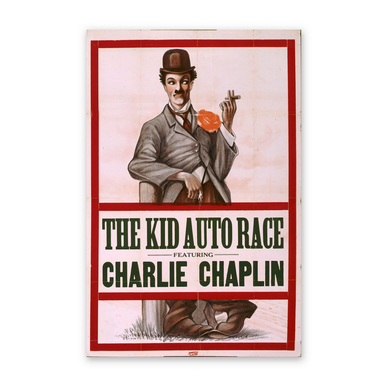
Historic Photo Print - The kid auto race, featuring Charlie Chaplin
Drawn from the Library of Congress archive, this print depicts The kid auto race, featuring Charlie Chaplin - 2. The Library holds one of the most comprehensive collections of American and...$57.00