
Brooklyn
Until 1898 Brooklyn was a separate city and the third largest in the United States, behind New York and Chicago. It had its own mayor, its own newspaper, its own baseball team and a strong sense of not being Manhattan. Consolidation passed in a referendum by 277 votes out of some 130,000, and there were people who never forgave it.
So a great many photographs catalogued under New York are in fact of a different municipality, made while it still was one.
The Brooklyn Bridge dominates, reasonably. It opened in 1883 after fourteen years of work that killed John Roebling before construction started and left his son Washington disabled by caisson disease — he directed the remainder from a window overlooking the site while his wife Emily carried instructions to the engineers and became, in practice, the chief engineer.
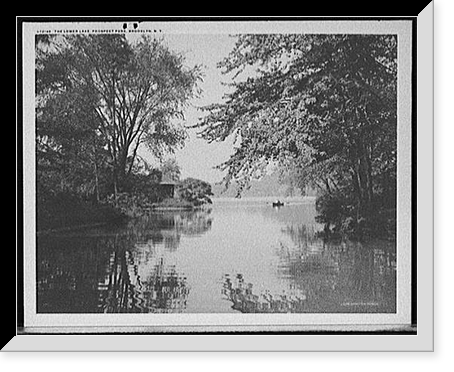
Prospect Park was designed by Olmsted and Vaux after Central Park, and both of them thought it the better work. They had learned from the first one and the site let them do what they wanted. Photographs of the Long Meadow show why they said it.
Coney Island was three competing amusement parks running at once — Steeplechase from 1897, Luna Park from 1903, Dreamland from 1904. Dreamland alone carried a million electric lights. It burned in 1911 and was never rebuilt. Photographs of it at night are among the strangest images of the period, because nothing else in America was lit like that.
The Brooklyn Navy Yard built warships from 1801 to 1966 and employed seventy thousand people at its peak. The Monitor's engines were made nearby; the Maine and the Arizona were both launched here.
The 1897 bird's-eye view of Brooklyn — made the year before consolidation — is worth singling out. It is a portrait of a city that was about to stop existing as one.
Insurance, Firearms and a House With a Steamboat Porch




-

 Snapshots of the Past
Antique Photo Print - Brooklyn - The rival Sunday shows in J. Keppler (1)
This rare historical print captures The rival Sunday shows in Brooklyn.J. Keppler ; Mayer, Merkel & Ottmann, lithographers, N.Y in remarkable detail. Sourced directly from the Library of Congress, it...$57.00 -
 Snapshots of the Past
Vintage Americana Print - Brooklyn - Bridge - Vintage Home Decor Print
Drawn from the Library of Congress archive, this print depicts Brooklyn Bridge - 5. The Library holds one of the most comprehensive collections of American and international historical prints in the...$57.00 -
 Snapshots of the Past
Antique Maritime - Brooklyn - Aerial view of Navy Yard and East River
Step back in time with this striking reproduction of Aerial view of Navy Yard and East River bridges, Brooklyn. Sourced from the United States Library of Congress.Library of Congress record: Created...$57.00 -
 Snapshots of the Past
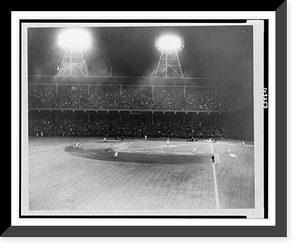
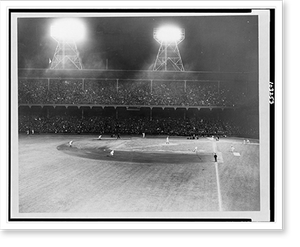
Antique Sporting Print - Brooklyn - Night baseball at Ebbetts
This rare historical print captures Night baseball at Ebbetts i.e., Ebbets Field in Brooklyn - Cincinnati vs Brooklyn Classic in remarkable detail. Sourced directly from the Library of Congress, it...$57.00 -
 Snapshots of the Past
Black & White Photo - Brooklyn - The City of - Framed Wall Art Gift Idea
Originally preserved in the Library of Congress, this print of The City of Brooklyn is now available for your home or office. The Library has preserved this image as part of its permanent historical...$57.00 -
 Snapshots of the Past
Antique Bird's Eye View - Brooklyn - Bird's eye view of New-York
Originally preserved in the Library of Congress, this print of Bird's eye view of New-York & Brooklyn.drawn from nature & on stone by J. Bachmann is now available for your home or office. The Library...$57.00 -
 Snapshots of the Past
Vintage Portrait - Brooklyn - Thomas Gordon Seaton - Vintage Wall Art Gift
This rare historical print captures Thomas Gordon Seaton, baseball player with Brooklyn (Fed.), full-length portrait, standing, facing right, wearing baseball uniform, in Washington Park in...$57.00 -
 Snapshots of the Past
Historic Portrait - Brooklyn - Daniel Francis Murphy, baseball player
Step back in time with this striking reproduction of Daniel Francis Murphy, baseball player, half-length portrait, standing, facing left, in uniform of the Brooklyn Feds. Sourced from the United...$57.00 -
 Snapshots of the Past
Black & White Photo - Brooklyn - Gov. Ames #3.Bolles, fecit
Originally preserved in the Library of Congress, this print of Gov. Ames #3.Bolles, fecit, Brooklyn. Classic is now available for your home or office. The Library has preserved this image as part of...$57.00 -
 Snapshots of the Past
Black & White Photo - Brooklyn - Skyline from Louis Lozowick
This rare historical print captures Skyline from Brooklyn.Louis Lozowick in remarkable detail. Sourced directly from the Library of Congress, it represents an authentic piece of documented history...$57.00 -
 Snapshots of the Past
Vintage Industrial - Brooklyn - Factory warehouse, Berenice Abbott
This rare historical print captures Factory warehouse, Brooklyn.Berenice Abbott. Classic in remarkable detail. Sourced directly from the Library of Congress, it represents an authentic piece of...$57.00 -
 Snapshots of the Past
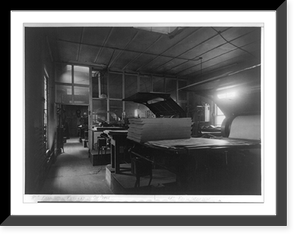
Vintage Street Scene - Brooklyn - The Albertype Co (2)
This rare historical print captures The Albertype Co. Postcard Factory at 250 Adams Street, Brooklyn, N.Y. - press room in remarkable detail. Sourced directly from the Library of Congress, it...$57.00