
Catskills
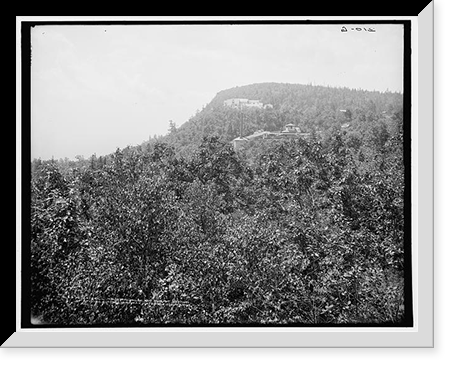
The Catskills were the first place Americans went on holiday to look at scenery, and the reason is that a group of painters told them to.
Thomas Cole came up the Hudson in 1825, painted the Kaaterskill Falls and the Clove, and effectively founded the Hudson River School. Within a decade the mountains had become the landscape Americans understood as characteristically theirs, and people came to see whether the paintings were accurate.
The Catskill Mountain House opened in 1824 on a ledge two thousand feet above the valley, with thirteen Corinthian columns across a portico facing east. Guests were woken before dawn to watch the sun come up over the Hudson, which was the entire point of the building. It is the archetype of the American mountain hotel and it stood, increasingly derelict, until the state burned it deliberately in 1963.
The Kaaterskill Falls is the other fixed subject. Two drops totaling more than two hundred and sixty feet, higher than Niagara, in a narrow amphitheater of rock. There was a hotel at the top and for a fee the owner would release water from a dammed pond so visitors could see the falls at full flow, which tells you a good deal about the period.
Getting there was part of it. A steamboat up the Hudson to Catskill Landing, then a stage, then later the Catskill Mountain Railway and a funicular that hauled cars up the escarpment on cables. The photographs of that incline railway are worth finding.
The second Catskills is a different story and slightly later. From the 1890s Jewish families excluded from the established resorts bought farms in Sullivan and Ulster counties and took in boarders, and that grew into the world of hotels and bungalow colonies that ran until the 1960s. The photographs of that era \u2014 families on porches, dining rooms, day camps, entertainers \u2014 are a distinct body of material and an important one.
For dating the mountain house photographs, look at the columns. The portico was extended over the years, so the number of columns and the shape of the wings changed.
The mountain resorts were reached by a chain of transport that no longer exists in any form. A Hudson River day boat from the Manhattan piers, a change at Catskill Landing, a narrow-gauge railway up the valley, and the incline for the last thousand feet. The journey took most of a day and was regarded as part of the holiday.
Washington Irving is the other reason people came. Rip Van Winkle was set in these mountains, published in 1819, and it did for the Catskills what Cole’s paintings did a few years later. Sites associated with the story were identified, named and sold to visitors, none of which had anything to do with a story Irving invented.
The tanneries came first and they are the industrial subject here. Hemlock bark was stripped for tanning leather, and by the middle of the century the industry had cut most of the accessible hemlock in the region, moved on, and left the mountains to the tourists. The scenery people came to admire was already second growth.
The Park That Was Built, Not Found





-

 Snapshots of the Past
Antique Architecture - Catskills - North veranda, Churchill Hall
Originally preserved in the Library of Congress, this print of North veranda, Churchill Hall, Stamford, Catskill Mountains, N.Y is now available for your home or office. The Library has preserved...$57.00 -
 Snapshots of the Past
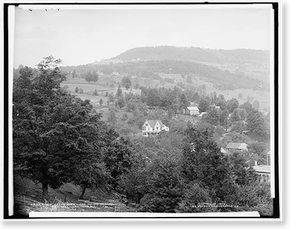
Antique Architecture - Catskills - New Grand Hotel and Monka Hill
Step back in time with this striking reproduction of New Grand Hotel and Monka Hill Mountain, Catskill Mountains, N.Y. Classic. Sourced from the United States Library of Congress.Library of Congress...$57.00 -
 Snapshots of the Past
Historic Architecture - Catskills - Old studio of artist Hall (1)
Drawn from the Library of Congress archive, this print depicts Old studio of artist Hall, near Palenville, Catskill Mountains, N.Y. The Library holds one of the most comprehensive collections of...$57.00 -
 Snapshots of the Past
Historic Landscape - Catskills - The Five cascades, Haines Falls
Originally preserved in the Library of Congress, this print of The Five cascades, Haines Falls, Catskill Mountains, N.Y is now available for your home or office. The Library has preserved this image...$57.00 -
 Snapshots of the Past
Vintage Building Photo - Catskills - Haines Falls House
This rare historical print captures Haines Falls House, Haines Corners, Catskill Mountains, N.Y. Classic in remarkable detail. Sourced directly from the Library of Congress, it represents an...$57.00 -
 Snapshots of the Past
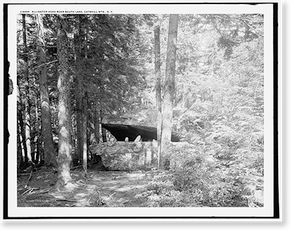
Vintage Landscape - Catskills - Alligator Head near South Lake
Step back in time with this striking reproduction of Alligator Head near South Lake, Catskill Mts., N.Y. Sourced from the United States Library of Congress.Library of Congress record: Created c1902...$57.00 -
 Snapshots of the Past
Antique Architecture - Catskills - Catskill Mountain House and Summit
This rare historical print captures Catskill Mountain House and Summit Station of Otis Elevating Railway, Catskill Mountains, N.Y in remarkable detail. Sourced directly from the Library of Congress,...$57.00 -
 Snapshots of the Past
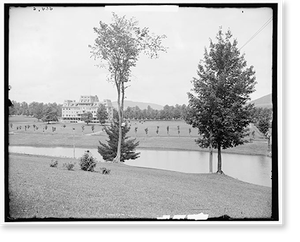
Historic Landscape - Catskills - Churchill Park and the Rexmere (2)
This rare historical print captures Churchill Park and the Rexmere, Stamford, Catskill Mountains, N.Y. - 3 in remarkable detail. Sourced directly from the Library of Congress, it represents an...$57.00 -
 Snapshots of the Past
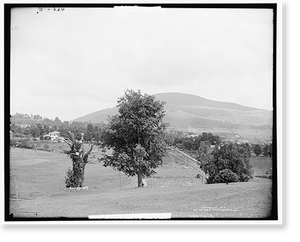
Historic Landscape - Catskills - Churchill Park and the Rexmere (1)
This rare historical print captures Churchill Park and the Rexmere, Stamford, Catskill Mountains, N.Y in remarkable detail. Sourced directly from the Library of Congress, it represents an authentic...$57.00 -
 Snapshots of the Past
Black & White Photo - Catskills - Stamford and Mt
This rare historical print captures Stamford and Mt. Utsayantha, Catskill Mountains, N.Y in remarkable detail. Sourced directly from the Library of Congress, it represents an authentic piece of...$57.00 -
 Snapshots of the Past
Black & White Photo - Catskills - Cottage and grounds of Mr
Drawn from the Library of Congress archive, this print depicts Cottage and grounds of Mr. Fleischmann, Fleischmann's, Catskill Mountains, N.Y. The Library holds one of the most comprehensive...$57.00 -
 Snapshots of the Past
Antique Architecture - Catskills - Fleischmann's and Hotel Switzerland (2)
Originally preserved in the Library of Congress, this print of Fleischmann's and Hotel Switzerland, Catskill Mountains, N.Y. - 3 is now available for your home or office. The Library has preserved...$57.00