
Christmas
Christmas was illegal in Massachusetts for twenty-two years. The Puritans banned it in 1659 on the grounds that it had no scriptural basis and had become an excuse for drinking, and the ban shaped New England attitudes long after it lapsed. As late as the 1850s, Boston public schools held classes on December 25 and expelled children who stayed home.
So the American Christmas in these photographs is a nineteenth-century construction, and most of it can be dated.
The tree came with German immigration and got its national push from a picture. An 1848 engraving of Victoria and Albert around a decorated tree ran in the Illustrated London News, and Godey’s Lady’s Book reprinted it in 1850 with the queen’s crown and the prince’s mustache removed, so it read as an ordinary American family. That single altered image did more to establish the household tree than any sermon.
Santa Claus was assembled in print over about sixty years. Clement Moore’s poem in 1823 gave him the sleigh, the reindeer and the chimney. Thomas Nast gave him everything else, in a run of drawings for Harper’s Weekly from 1863 to 1886 — the workshop at the North Pole, the list of good and bad children, the fur suit, and the heavy build. Nast started drawing him during the Civil War, in a picture of Santa visiting a Union camp.
Christmas became a federal holiday in 1870. It is worth knowing that the country had to legislate it, and that it did so partly to give workers a day that a good many were already taking.
The electric lights are datable too. Edward Johnson, who worked for Edison, wired eighty red, white and blue bulbs onto a tree at his New York house in December 1882 and the newspapers came to look. Grover Cleveland had an electrified tree in the White House in 1895. For decades after that the lighting was a rich man’s novelty because it required a wireman to install, and candles clipped to branches remained the norm — with a bucket of water standing by, which appears in more period photographs than people expect.
What the cameras actually recorded is commerce. Tree markets on city sidewalks, with cut spruce leaned against buildings and men in overcoats standing in the slush. Department store windows, which became a competitive art form in the 1880s and drew crowds that stopped traffic. Toy departments. Salvation Army kettles, which started in San Francisco in 1891 as a way to fund a Christmas dinner for the poor.
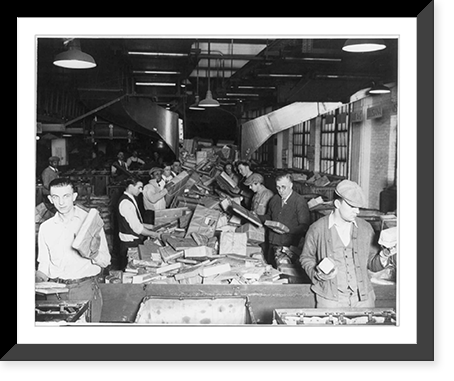
And the post office. The volume of Christmas mail in the first decades of the twentieth century was a genuine civic event, and photographs of clerks working in canyons of parcels are common because newspapers ran the story every single year. Christmas Seals, sold to fund tuberculosis work from 1907, ride along in the same pictures.
One caution on captions. Snow in a studio Christmas photograph is usually cotton, and interior tree photographs before about 1900 required a long exposure with flash powder, which is why the children in them look startled or blurred. The stiffness is the equipment, not the mood.
For Fifty Years It Was Mostly Vandalism






-

 Snapshots of the Past
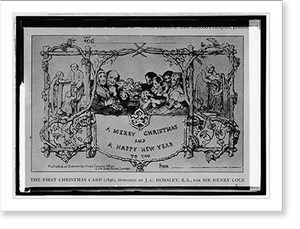
Historic Photo Print - Christmas - The First Card copy, 1846
Originally preserved in the Library of Congress, this print of The First Christmas Card (1846) copy is now available for your home or office. The Library has preserved this image as part of its...$57.00 -
 Snapshots of the Past
Vintage Photo Print - Christmas - Secty. Davis, tree, 1921
Originally preserved in the Library of Congress, this print of Secty. Davis, Christmas tree, 1921 is now available for your home or office. The Library has preserved this image as part of its...$57.00 -
 Snapshots of the Past
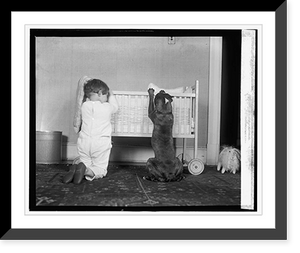
Black & White Photo - Christmas - Walter Reed, story, 1920
Originally preserved in the Library of Congress, this print of Walter Reed, Christmas story, 12/24/20 is now available for your home or office. The Library has preserved this image as part of its...$57.00 -
 Snapshots of the Past
Historic Photo Print - Christmas - story - Framed Wall Art Gift Idea
Step back in time with this striking reproduction of Christmas story. Sourced from the United States Library of Congress.Library of Congress record: Created 1923 or 1924 Title from unverified data...$57.00 -
 Snapshots of the Past
Vintage Photo Print - Christmas - Wilson buying seals
Originally preserved in the Library of Congress, this print of Wilson buying Christmas seals is now available for your home or office. The Library has preserved this image as part of its permanent...$57.00 -
 Snapshots of the Past
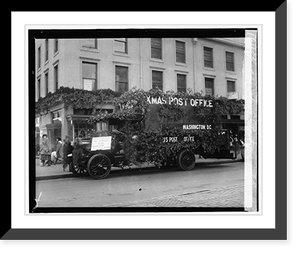
Vintage Photo Print - Christmas - Post Office - Antique Wall Decor Print
Step back in time with this striking reproduction of Christmas Post Office. Sourced from the United States Library of Congress.Library of Congress record: Created 1922 Title from unverified data...$57.00 -
 Snapshots of the Past
Historic Photo Print - Christmas - Harper's Edward Penfield
This rare historical print captures Harper's Christmas.Edward Penfield in remarkable detail. Sourced directly from the Library of Congress, it represents an authentic piece of documented history...$57.00 -
 Snapshots of the Past
Historic Photo Print - Christmas - Harper's number
Originally preserved in the Library of Congress, this print of Harper's Christmas number Classic is now available for your home or office. The Library has preserved this image as part of its...$57.00 -
 Snapshots of the Past
Vintage Americana Print - Christmas - eve - Great Gift for History Buffs
This rare historical print captures Christmas eve - 5 Classic in remarkable detail. Sourced directly from the Library of Congress, it represents an authentic piece of documented history.Library of...$57.00 -
 Snapshots of the Past
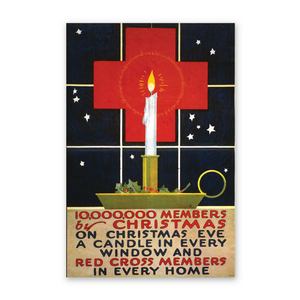
Antique Photo Print - Christmas - 10,000,000 members by On eve
Drawn from the Library of Congress archive, this print depicts 10,000,000 members by Christmas On Christmas eve, a candle in every window and Red Cross members in every home. Classic. The Library...$57.00 -
 Snapshots of the Past
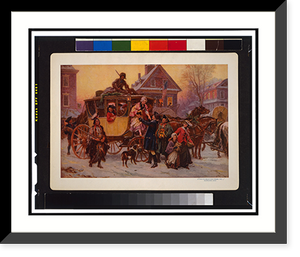
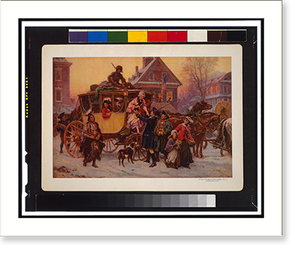
Vintage Americana Print - Christmas - The coach.J.L.G. Ferris, 1795
Originally preserved in the Library of Congress, this print of The Christmas coach 1795.J.L.G. Ferris is now available for your home or office. The Library has preserved this image as part of its...$57.00 -
 Snapshots of the Past
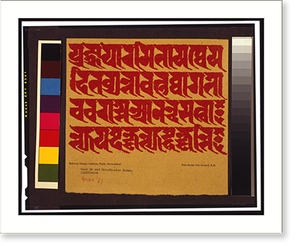
Black & White Photo - Christmas - card with Pala script
Step back in time with this striking reproduction of Christmas card with Pala script, 11th Century A.D. Classic. Sourced from the United States Library of Congress.Library of Congress record: Created...$57.00