
Cincinnati
Cincinnati was the first American boomtown of the interior, and for a stretch of the nineteenth century it was the sixth largest city in the country and the largest west of the Alleghenies.
The river made it. Steamboats connected it to New Orleans and Pittsburgh, and the city became the processing point for the produce of the Ohio valley. Above all it processed pigs \u2014 so many that the city was known as Porkopolis, with hogs driven through the streets to slaughterhouses on the hillsides and the whole disassembly line arranged so that nothing was wasted. Henry Ford said later that he got the idea for the moving assembly line from watching a Cincinnati packing plant run in reverse.
German immigration shaped everything else. By 1900 a large share of the population was German or of German descent, and the neighborhood north of the canal was called Over-the-Rhine because crossing the canal was like crossing into Germany. It had beer gardens, singing societies, German-language newspapers and schools, and the densest concentration of nineteenth-century Italianate tenement architecture in America \u2014 much of which still stands.
The breweries were the industry that followed. More than thirty of them operated in and around Over-the-Rhine, tunneling lagering cellars into the hillsides. Prohibition destroyed the trade completely and permanently.
The inclines are the detail that made the city work. Cincinnati is built in a basin ringed by steep hills, and five funicular railways hauled streetcars, wagons and people up the slopes between the 1870s and the 1940s. At the top of each was a resort house with a restaurant and a view, and the photographs from those platforms are the best cityscapes of the period.
The 1937 flood is the other event the photographs record. The Ohio rose to nearly eighty feet, put a fifth of the city underwater, and is still the flood everything else is measured against.
For dating, look at the river. Steamboat traffic thins after 1900, the bridges multiply, and the flood wall arrives after 1937.
Music is a serious part of the record. The German singing societies produced the May Festival from 1873 and Music Hall in 1878, a vast Gothic pile built over a former potter’s field, and Cincinnati had a symphony and a conservatory when most American cities of its size had neither.
The suspension bridge of 1866 deserves attention. John Roebling built it across the Ohio before he built Brooklyn, and it was the longest suspension span in the world when it opened. It is effectively the prototype, and it still carries traffic.
The 1884 courthouse riot belongs in the record. A lenient verdict in a murder case set off three days of rioting that burned the courthouse and killed more than fifty people, and it remains one of the deadliest urban disturbances in American history.
Procter and Gamble is the industrial survivor. Founded in 1837 by a candlemaker and a soapmaker who had married sisters, it grew out of the same hog trade that made the city — soap and candles were made from the fat the packing houses could not sell. Ivory soap came in 1879 and the company is still headquartered there.
The City Built Where Two Railroads Met


-

 Snapshots of the Past
Antique Photo Print - Cincinnati - Along the levee, Ohio (2)
Originally preserved in the Library of Congress, this print of Tod Sloan - 2 is now available for your home or office. The Library has preserved this image as part of its permanent historical...$57.00 -
 Snapshots of the Past
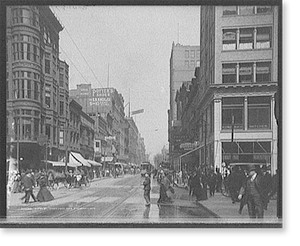
Historic Street Photo - Cincinnati - Fifth St - Vintage Wall Art Gift
Drawn from the Library of Congress archive, this print depicts German Anti-aircraft gun. The Library holds one of the most comprehensive collections of American and international historical prints in...$57.00 -
 Snapshots of the Past
Antique Architecture - Cincinnati - Cathedral of the Immaculate
Originally preserved in the Library of Congress, this print of Ger. . Captured French Plane . Deperdussin Type is now available for your home or office. The Library has preserved this image as part...$57.00 -
 Snapshots of the Past
Vintage Photo Print - Cincinnati - Country club, Ohio
Step back in time with this striking reproduction of Opera Claquers - 3. Sourced from the United States Library of Congress.Library of Congress record: Title from unverified data provided by the Bain...$57.00 -
 Snapshots of the Past
Antique Photo Print - Cincinnati - Up the Ohio from Mt. Adams, Ohio
Step back in time with this striking reproduction of Opera Claquers - 2 Classic. Sourced from the United States Library of Congress.Library of Congress record: Title from unverified data provided by...$57.00 -
 Snapshots of the Past
Antique Scenic Print - Cincinnati - The Lake, Eden Park, Ohio
This rare historical print captures Joe Levy in remarkable detail. Sourced directly from the Library of Congress, it represents an authentic piece of documented history.Library of Congress record:...$57.00 -
 Snapshots of the Past
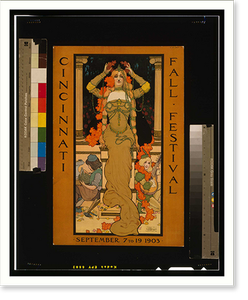
Vintage Photo Print - Cincinnati - fall festival September 7 to 19, 1903
Step back in time with this striking reproduction of Cincinnati fall festival September 7 to 19 1903. Sourced from the United States Library of Congress.Library of Congress record: Created Cincinnati...$57.00