
Detroit

Detroit occupies a particular place in this archive, and not only as a subject. The Detroit Publishing Company was headquartered here, and it was one of the largest photographic publishers in the country — the source of tens of thousands of images of American places, made using the Photochrom process that turned black-and-white negatives into color prints. A great deal of what Americans knew their own country looked like came out of this city.
So Detroit photographed everywhere, and it also photographed itself.
The Model T arrived in 1908 and the moving assembly line at Highland Park in 1913. The line cut the build time for a car from twelve hours to ninety-three minutes. Photographs of it are among the most reproduced industrial images ever made, and they were taken deliberately — Ford understood publicity and kept photographers on staff.
The five-dollar day came in 1914, roughly double the going wage, and it drew people from across the South and from Europe. Detroit's population went from under three hundred thousand in 1900 to over one and a half million by 1930. Photographs from those decades show a city adding neighborhoods faster than it could name them.
Woodward Avenue runs from the river to the northern suburbs and organizes most of the street photography. Downtown at Campus Martius, the department stores, the theaters. The Fox opened in 1928 and seated five thousand.
Belle Isle sits in the Detroit River, an island park laid out with advice from Frederick Law Olmsted. The conservatory, the canals, the casino — Sunday photographs from Belle Isle are the counterweight to the factory images and they are the ones that show what the money bought.
The river itself is worth attention. Detroit faces Canada, and Windsor is to the south, which surprises people. The ferries, the freighters and later the Ambassador Bridge of 1929 all appear.
The City Where the Country Was Argued Into Existence







-

 Snapshots of the Past
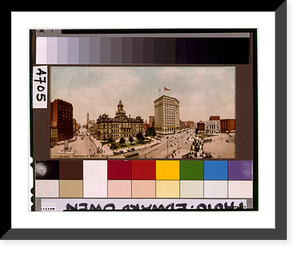
Vintage Panoramic - Detroit - Panorama of Campus Martius, Michigan
This rare historical print captures Panorama of Campus Martius, Detroit, Michigan in remarkable detail. Sourced directly from the Library of Congress, it represents an authentic piece of documented...$57.00 -
 Snapshots of the Past
Vintage Photo Print - Detroit - Bi-centennial memorial
Originally preserved in the Library of Congress, this print of Bi-centennial memorial, Detroit is now available for your home or office. The Library has preserved this image as part of its permanent...$57.00 -
 Snapshots of the Past
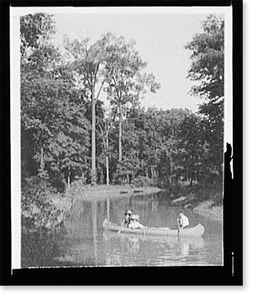
Historic Landscape - Detroit, Michigan - A Shady canal, Belle Isle Pk
Step back in time with this striking reproduction of A Shady canal, Belle Isle Pk. Park, Detroit, Mich. Sourced from the United States Library of Congress.Library of Congress record: Created 1908...$57.00 -
 Snapshots of the Past
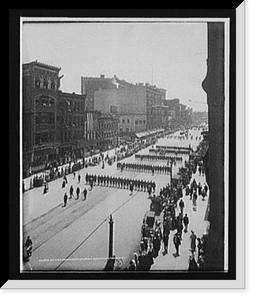
Black & White Photo - Detroit - Commandery no - Historic Wall Art Gift
This rare historical print captures Detroit Commandery no. 1, state encampment, Michigan K.T. Knights Templar in remarkable detail. Sourced directly from the Library of Congress, it represents an...$57.00 -
 Snapshots of the Past
Vintage Americana Print - Detroit - Belle Isle Casino, the beautiful
This rare historical print captures Belle Isle Casino, Detroit the beautiful in remarkable detail. Sourced directly from the Library of Congress, it represents an authentic piece of documented...$57.00 -
 Snapshots of the Past
Vintage Landscape - Detroit - Palmer Park lake, the beautiful
Originally preserved in the Library of Congress, this print of Palmer Park lake, Detroit the beautiful is now available for your home or office. The Library has preserved this image as part of its...$57.00 -
 Snapshots of the Past
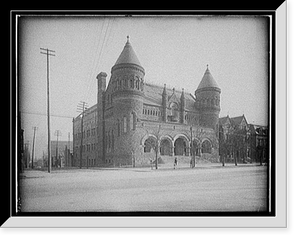
Vintage Building Photo - Detroit - Museum of Art - Historic Wall Art Gift
Drawn from the Library of Congress archive, this print depicts Detroit Museum of Art. The Library holds one of the most comprehensive collections of American and international historical prints in...$57.00 -
 Snapshots of the Past
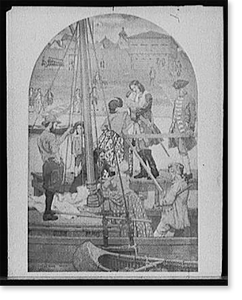
Historic Photo Print - Detroit - Landing of Cadillac's wife
This rare historical print captures Landing of Cadillac's wife in Detroit - 2 in remarkable detail. Sourced directly from the Library of Congress, it represents an authentic piece of documented...$57.00 -
 Snapshots of the Past
Antique Architecture - Detroit - Church tower, commercial buildings
Originally preserved in the Library of Congress, this print of Church tower, commercial buildings and waterfront, probably Detroit Classic is now available for your home or office. The Library has...$57.00 -
 Snapshots of the Past
Vintage Photo Print - Detroit - Waterfront, Michigan
Originally preserved in the Library of Congress, this print of Waterfront, Detroit, Michigan is now available for your home or office. The Library has preserved this image as part of its permanent...$57.00 -
 Snapshots of the Past
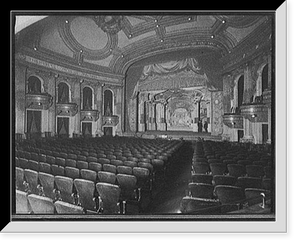
Historic Photo Print - Detroit - Michigan, Temple Theatre auditorium
This rare historical print captures Detroit, Michigan, Temple Theatre auditorium in remarkable detail. Sourced directly from the Library of Congress, it represents an authentic piece of documented...$57.00 -
 Snapshots of the Past
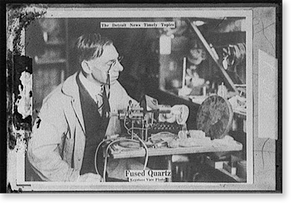
Historic Photo Print - Detroit - The news timely topics. Fused quartz
This rare historical print captures The Detroit news timely topics. Fused quartz in remarkable detail. Sourced directly from the Library of Congress, it represents an authentic piece of documented...$57.00