
Easter
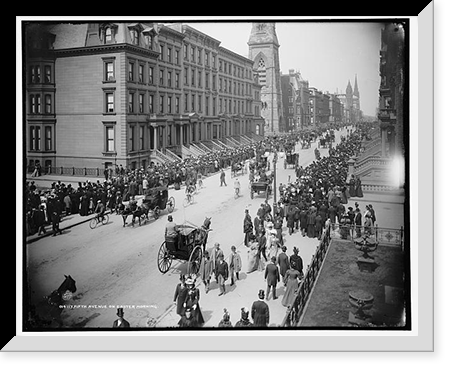
Easter as an American public occasion is largely a nineteenth-century creation, and like Christmas it was assembled from German customs, English fashion and American commerce.
The rabbit came with German settlers in Pennsylvania, where the Osterhase was said to judge whether children had been good and to leave colored eggs for those who had. Children built nests for it out of caps and bonnets, which is where the Easter basket comes from. The custom spread outward from Pennsylvania through the nineteenth century.
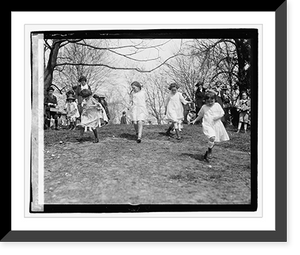
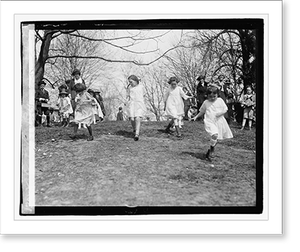
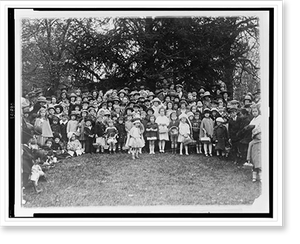
The White House Egg Roll dates from 1878. Children had been rolling eggs on the Capitol grounds until Congress banned it to protect the turf, and Rutherford Hayes offered the South Lawn instead. It has run almost every year since and is one of the longest-standing continuous events in American public life.
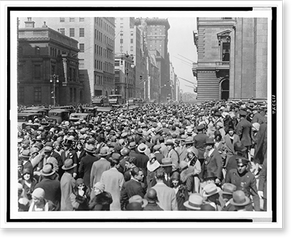
The Easter Parade on Fifth Avenue was never organized by anyone. After services at the churches along the avenue, congregations walked out and strolled, and by the 1880s the informal promenade had become a fashion event that drew crowds to watch. Photographs from the 1900s show the avenue closed to traffic by sheer numbers of people in new clothes.
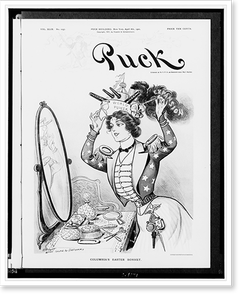
The bonnet is the reason. New clothes at Easter carried an older superstition about good fortune for the year, and the millinery trade built its entire season around it. The photographs of hat shop windows and of women in extraordinary hats are among the best fashion records of the period.
The card and confectionery trade followed. Chocolate eggs came from Europe in the mid-nineteenth century, the jelly bean was attached to Easter around the 1930s, and the marshmallow chick arrived after the Second World War.
For anyone assembling this category, the material is more printed than photographic. Chromolithographed cards, postcards from the 1907 to 1915 boom, and advertising for the millinery and confectionery trades all sit here alongside the parade and egg roll photographs.
One thing to watch in the imagery. The rabbit is frequently enormous, wearing clothes and behaving unsettlingly, which was normal for the period and reads very differently now.
Easter Monday at the White House is the part with the longest continuous record. The photographs run from the 1880s through every administration since, and they are an unusually consistent series — the same lawn, the same activity, and a hundred and forty years of changing clothes, changing faces and changing ideas about who was welcome on that grass.
Sunrise services are the other American contribution and they photograph well. The custom came from Moravian settlers in Pennsylvania in 1741 and spread widely, producing gatherings in cemeteries, on hillsides and eventually in stadiums, all before dawn.
The commercial card trade is the largest single source of Easter imagery in any archive, and it peaked between 1907 and 1915 alongside every other postcard subject. Lilies, crosses, chicks, lambs and rabbits in roughly that order of frequency.
Hot cross buns, egg dyeing with onion skins, and the Pennsylvania German practice of egg tapping all appear in the domestic photographs, and they are the older strand — folk customs carried from Europe that survived alongside the commercial holiday rather than being replaced by it.
The Only Holiday Nobody Organized






-

 Snapshots of the Past
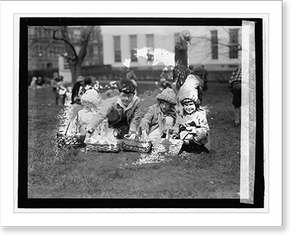
Black & White Photo - Easter - Joan, Jimmie, Jr, 1926
Originally preserved in the Library of Congress, this print of Joan, Jimmie, Jr., Jean & Jane Davis, Easter, 4/5/26 is now available for your home or office. The Library has preserved this image as...$57.00 -
 Snapshots of the Past
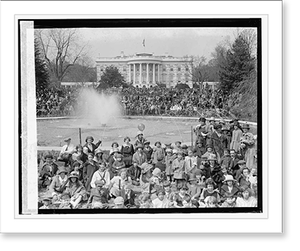
Historic Photo Print - Easter - egg rolling, 1924
Originally preserved in the Library of Congress, this print of Easter egg rolling, 4/21/24 is now available for your home or office. The Library has preserved this image as part of its permanent...$57.00 -
 Snapshots of the Past
Historic Photo Print - Easter - egg rolling, 1923 - Historic Wall Art Gift
Drawn from the Library of Congress archive, this print depicts Easter egg rolling, 4/2/23 - 3. The Library holds one of the most comprehensive collections of American and international historical...$57.00 -
 Snapshots of the Past
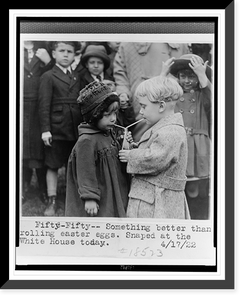
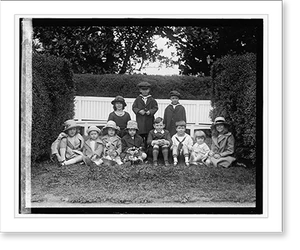
Antique Photo Print - Easter - Cabinet children, 1922
Drawn from the Library of Congress archive, this print depicts Cabinet children (Easter), 4/17/22. The Library holds one of the most comprehensive collections of American and international historical...$57.00 -
 Snapshots of the Past
Historic Photo Print - Easter - egg rolling, 1921
Originally preserved in the Library of Congress, this print of Easter egg rolling, 1921, 3/28/21 is now available for your home or office. The Library has preserved this image as part of its...$57.00 -
 Snapshots of the Past
Vintage Photo Print - Easter - parade - Antique Wall Decor Print
Step back in time with this striking reproduction of Easter parade. Sourced from the United States Library of Congress.Library of Congress record: Created 1 print (poster) : color ; 28 x 355 cm [S.l...$57.00 -
 Snapshots of the Past
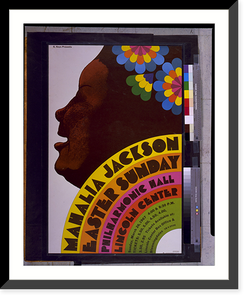
Historic Architecture - Easter - Mahalia Jackson - Sunday
Historic Framed Print, Mahalia Jackson - Easter Sunday - Philharmonic Hall, Lincoln Center...Milton Glaser. - 2, 17-7/8" x 21-7/8", Image: 16" x 20"Beautiful historic reproduction print from the...$57.00 -
 Snapshots of the Past
Historic Photo Print - Easter - Fifty-fifty - something better than
This rare historical print captures Fifty-fifty - something better than rolling Easter eggs in remarkable detail. Sourced directly from the Library of Congress, it represents an authentic piece of...$57.00 -
 Snapshots of the Past
Antique Architecture - White House - A group of happy youngsters
This rare historical print captures A group of happy youngsters who rolled their Easter eggs on the White House lawn today in remarkable detail. Sourced directly from the Library of Congress, it...$57.00 -
 Snapshots of the Past
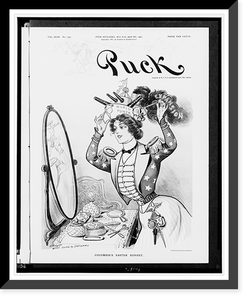
Vintage Americana Print - Easter - Columbia's bonnet.Ehrhart after
This rare historical print captures Columbia's Easter bonnet.Ehrhart after sketch by Dalrymple in remarkable detail. Sourced directly from the Library of Congress, it represents an authentic piece of...$57.00 -
 Snapshots of the Past
Vintage Street Scene - Easter - The Sunday throngs on Fifth Avenue
Step back in time with this striking reproduction of The Easter Sunday throngs on Fifth Avenue. Sourced from the United States Library of Congress.Library of Congress record: Created between 1910 and...$57.00 -
 Snapshots of the Past
Antique Architecture - Easter - Vanderbilt mansion. Sunday
Step back in time with this striking reproduction of Vanderbilt mansion. Easter Sunday. 5th Avenue.photo by A. Wittemann. Sourced from the United States Library of Congress.Library of Congress...$57.00