
Fire Engines
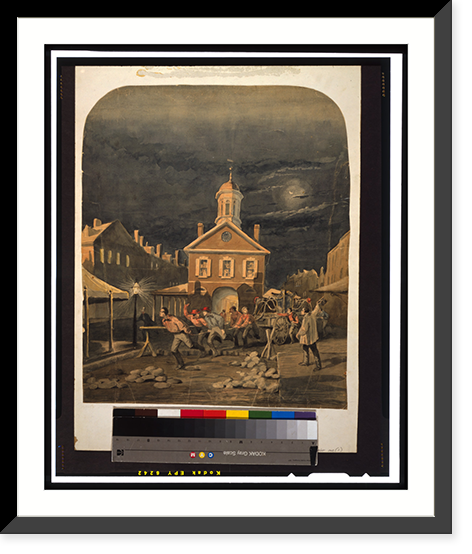
American firefighting was a volunteer business before it was a municipal one, and the volunteer companies were social clubs, political machines and street gangs as much as they were emergency services.
In the first half of the nineteenth century a company bought its own apparatus, decorated it lavishly, gave it a name, and defended its territory. Rival companies racing to the same fire fought each other in the street while the building burned, and in several cities the fights were serious enough to require the police. The companies were also voting blocs, which is why so many politicians of the period had been firemen.
The hand pumper required as many as forty men working brakes on either side and could not sustain a stream for long. The steam fire engine changed that in the 1850s, and it changed the politics with it — a steamer was expensive, needed horses and trained crews, and effectively ended the volunteer era. Cincinnati went professional in 1853 and the rest followed.
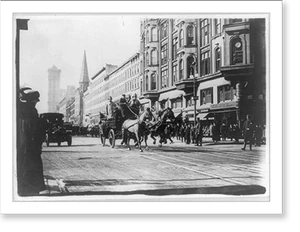
The horses are the subject of most of the good photographs and they deserve it. A fire team was trained to leave its stalls at the bell and position itself under a suspended harness that dropped onto its back, and a good company could be moving in under thirty seconds. The horses learned the routine so completely that they would take their places without being led, and firehouses kept them for a decade or more. When motorization came in the 1910s, the retirement of a well-known team was reported in the papers like the death of a public figure.
Fire insurance shaped the whole business. Insurance companies funded early companies directly and marked insured buildings with metal fire marks on the facade, and the mark told a company whether a burning building was worth saving. Municipal departments ended that arrangement, but the marks are still on buildings and appear in photographs.
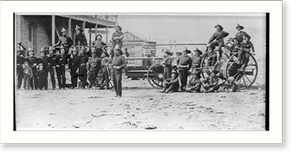
The apparatus itself was made to be looked at. Nickel plating, painted panels, gold leaf lettering, polished brass on the boiler. A steamer standing outside the house with the crew arranged around it is a formal portrait of a machine, and every company had one made.
The name on the machine mattered enormously. Volunteer companies were called things like Neptune, Hope, Cataract, Protector or Vigilant, and the name was painted, carved and cast into the apparatus in a dozen places. Members wore it on belts and helmets and fire hats. A company photograph is a portrait of an identity as much as of a crew.
The firehouse is the other subject. Sliding pole, hose tower for drying, horse stalls at the rear, and the men living upstairs on shifts that ran for days at a stretch.
Firehouse dogs are not a myth and the photographs prove it. Dalmatians were kept because they got on with horses, ran alongside a team without spooking it, and guarded the apparatus at a fire. They appear in company portraits as members of the crew, sitting in front with the men behind.
For dating, follow the power. Hand pumpers are pre-1860 in most cities. Steamers with horses run from the 1850s to about 1915. Motor apparatus comes in through the 1910s, and for a decade the photographs show both in the same house.
The Barn Tells You Where You Are


-

 Snapshots of the Past
Vintage Photo Print - Fire Engines - Mullan Idaho Fire Dept, 1912
Drawn from the Library of Congress archive, this print depicts Mullan Idaho Fire Dept., Decoration Day, 1912. The Library holds one of the most comprehensive collections of American and international...$57.00 -
 Snapshots of the Past
Vintage Street Scene - New York City - Horse-drawn fire engines
Originally preserved in the Library of Congress, this print of Horse-drawn fire engines in street, on their way to the Triangle Shirtwaist Company fire, New York City is now available for your home...$57.00 -
 Snapshots of the Past
Historic Photo Print - Fire Engines - Firemen with fire engine, 1860
Step back in time with this striking reproduction of Firemen with fire engine, Carson City, Ormsby Co., Nevada, ca. 1860. Sourced from the United States Library of Congress.Library of Congress...$57.00 -
 Snapshots of the Past
Antique Photo Print - Cincinnati - Explosion of a steam fire engine
Drawn from the Library of Congress archive, this print depicts Explosion of a steam fire engine, Cincinnati. The Library holds one of the most comprehensive collections of American and international...$57.00