
Hartford

Hartford in this period was, per head, one of the wealthiest cities in the country, and the money came from insurance. The industry started here in the eighteenth century underwriting ships and moved to fire cover after a series of large urban fires — Hartford companies paid in full after the New York fire of 1835 when others failed, and the reputation was made.
The insurance buildings are a genuine subject in the architectural photography. They were built to look permanent, because that was the product.
Samuel Colt built his armory on the south meadows in 1855 and put a blue onion dome studded with gold stars on top of it, for no reason anyone has satisfactorily explained. It is visible in almost every wide view of the city and is one of the most recognizable industrial buildings in America. Colt manufactured revolvers using interchangeable parts on a scale that made the method ordinary.
Mark Twain built his house on Farmington Avenue in 1874 and lived there seventeen years, writing Tom Sawyer and Huckleberry Finn in it. It has a porch modeled on a riverboat deck, and the architecture was thought excessive at the time. Harriet Beecher Stowe lived next door.
The Wadsworth Atheneum opened in 1844 and is the oldest continuously operating public art museum in the United States. It appears in the streetscape photographs as a castellated Gothic block that looks nothing like its neighbors.
The Connecticut River made the city and then repeatedly flooded it. The 1936 flood put the downtown under water and the photographs of it are the most dramatic images the city produced. The dikes came afterward.
Connecticut is also deep in the panoramic collection — fifty-four bird's-eye view maps, covering mill towns and river towns far beyond Hartford.
Where Standard Oil Began and the River Caught Fire


-

 Snapshots of the Past
Historic Architecture - Hartford, Connecticut - Mechanics Savings Bank (4)
Step back in time with this striking reproduction of Mechanics Savings Bank Building, 80 Pearl Street, Hartford, Hartford County, CT - 12. Sourced from the United States Library of Congress.Library...$57.00 -
 Snapshots of the Past
Historic Architecture - Hartford, Connecticut - Mechanics Savings Bank (3)
Step back in time with this striking reproduction of Mechanics Savings Bank Building, 80 Pearl Street, Hartford, Hartford County, CT - 8. Sourced from the United States Library of Congress.Library of...$57.00 -
 Snapshots of the Past
Historic Architecture - Hartford, Connecticut - Mechanics Savings Bank (2)
Originally preserved in the Library of Congress, this print of Mechanics Savings Bank Building, 80 Pearl Street, Hartford, Hartford County, CT - 6 is now available for your home or office. The...$57.00 -
 Snapshots of the Past
Historic Architecture - Hartford, Connecticut - Mechanics Savings Bank (1)
Originally preserved in the Library of Congress, this print of Mechanics Savings Bank Building, 80 Pearl Street, Hartford, Hartford County, CT - 3 is now available for your home or office. The...$57.00 -
 Snapshots of the Past
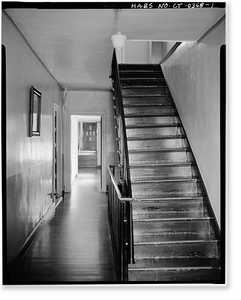
Vintage Building Photo - Hartford, Connecticut - Samuel Colt House
Step back in time with this striking reproduction of Samuel Colt House, 80 Wethersfield Avenue, Hartford, Hartford County, CT Classic. Sourced from the United States Library of Congress.Library of...$57.00 -
 Snapshots of the Past
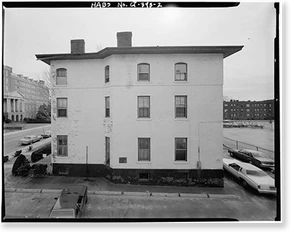
Historic Architecture - Hartford, Connecticut - Henry Barnard House
Historic Framed Print, Henry Barnard House, 118 Main Street, Hartford, Hartford County, CT, 17-7/8" x 21-7/8", Image: 16" x 20"Beautiful historic reproduction print from the Library of Congress...$57.00 -
 Snapshots of the Past
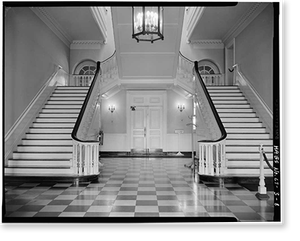
Vintage Building Photo - Hartford, Connecticut - 83-85 Sigourney Street (3)
This rare historical print captures 83-85 Sigourney Street (Commercial Buildings), Hartford, Hartford County, CT - 3 in remarkable detail. Sourced directly from the Library of Congress, it represents...$57.00 -
 Snapshots of the Past
Vintage Building Photo - Hartford, Connecticut - 83-85 Sigourney Street (2)
Drawn from the Library of Congress archive, this print depicts 83-85 Sigourney Street (Commercial Buildings), Hartford, Hartford County, CT - 2 Classic. The Library holds one of the most...$57.00 -
 Snapshots of the Past
Vintage Building Photo - Hartford, Connecticut - 83-85 Sigourney Street (1)
Originally preserved in the Library of Congress, this print of 83-85 Sigourney Street (Commercial Buildings), Hartford, Hartford County, CT Classic is now available for your home or office. The...$57.00 -
 Snapshots of the Past
Vintage Building Photo - Hartford, Connecticut - Old State House
This rare historical print captures Old State House, Main Street & Central Row, Hartford, Hartford County, CT - 8 Classic in remarkable detail. Sourced directly from the Library of Congress, it...$57.00 -
 Snapshots of the Past
Vintage Building Photo - Glastonbury, Connecticut - Gideon Welles House
Drawn from the Library of Congress archive, this print depicts Gideon Welles House, Main & Hebron Streets, Glastonbury, Hartford County, CT - 2. The Library holds one of the most comprehensive...$57.00 -
 Snapshots of the Past
Historic Architecture - Farmington, Connecticut - Stanley-Whitman (4)
Drawn from the Library of Congress archive, this print depicts Stanley-Whitman House, 37 High Street, Farmington, Hartford County, CT - 5. The Library holds one of the most comprehensive collections...$57.00