
Houston
Houston was founded in 1836 by two brothers from New York who bought swampland at the head of a bayou and advertised it as a great center of commerce. It was, at the time, a straightforward real estate fraud. It became true anyway.
The bayou was the whole argument. Buffalo Bayou was navigable to that point and no further, so goods came up by shallow boat and went inland by wagon. The founders named the place after Sam Houston, who had just won at San Jacinto a few miles downstream, and successfully lobbied to make it the capital of the Republic of Texas for a couple of years.
What transformed it was dredging. After the 1900 Galveston hurricane killed thousands and destroyed the region\u2019s main port, Houston argued that an inland port fifty miles from the coast would be safer. The federal government paid half, the county paid half, and the Houston Ship Channel opened in 1914 \u2014 a deep-water port reached through a dredged bayou, which is an unusual thing to have built and which made the city.
Oil arrived at almost exactly the same moment. Spindletop blew in at Beaumont in 1901, and Houston became the business address of the industry rather than its drilling site. The photographs of the period show a downtown of oil company headquarters rising out of a coastal plain.
Before that it was cotton and timber. The photographs from the 1880s and 1890s show wagons, bales, sawmills and a low wooden town on flat ground, which is what most of Texas looked like.
The heat is a real presence in these photographs and shaped the architecture. Deep porches, high ceilings, transoms above doors, houses raised off the ground for air, and awnings over every downtown window. Air conditioning changed the city more than any other single technology, and it arrives in the photographs through the 1930s and 1940s.
For dating, the ship channel is the divide. Anything with ocean-going vessels is post-1914. Before that, the water traffic is shallow-draft.
The 1900 Galveston hurricane is the event standing behind everything here. It killed somewhere between six and twelve thousand people and remains the deadliest natural disaster in American history. Galveston had been the dominant Texas port; afterward the capital and the shipping moved inland, and Houston received both.
Rice University and the Texas Medical Center are the later story. Both grew from local endowments in the first half of the century, and the medical center in particular turned into one of the largest concentrations of hospitals and research institutions anywhere, which is visible in the postwar photographs as an entirely new district appearing.
The 1935 flood is the other water event. Buffalo Bayou and White Oak Bayou met downtown and put the business district under several feet of water, which produced the reservoir system built north-west of the city in the following decade.
Ship channel photography is a category in itself. The turning basin, the cotton compresses, the grain elevators and the oil terminals were all photographed for company reports and promotional material, which means the industrial record is unusually complete.
The River, the Railroad and the Great Fire




-

 Snapshots of the Past
Historic Architecture - Houston - Courthouse, Texas
This rare historical print captures Courthouse, Houston, Texas in remarkable detail. Sourced directly from the Library of Congress, it represents an authentic piece of documented history.Library of...$57.00 -
 Snapshots of the Past
Vintage Photo Print - Houston - Texas - Hallettsville - hustlers
Historic Framed Print, Texas - Hallettsville - Houston hustlers, 17-7/8" x 21-7/8", Image: 16" x 20"Beautiful historic reproduction print from the Library of Congress collections.Created no date...$57.00 -
 Snapshots of the Past
Historic Architecture - Houston - The steamboat house, 1863
This rare historical print captures The steamboat house" in which Sam Houston died, July 26, 1863. Huntsville, Texas" Classic in remarkable detail. Sourced directly from the Library of Congress, it...$57.00 -
 Snapshots of the Past
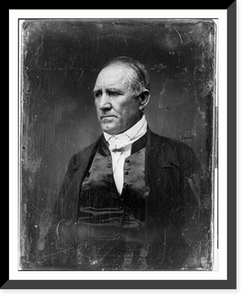
Vintage Portrait - Houston - Sam half-length portrait
Drawn from the Library of Congress archive, this print depicts Sam Houston, half-length portrait, three-quarters to the left, in civilian dress, clean shaven. The Library holds one of the most...$57.00 -
 Snapshots of the Past
Historic Portrait - Houston - Robert G. Honorable - Vintage Wall Art Gift
Originally preserved in the Library of Congress, this print of HOUSTON, ROBERT G. HONORABLE is now available for your home or office. The Library has preserved this image as part of its permanent...$57.00 -
 Snapshots of the Past
Vintage Portrait - Houston - David Franklin. Secretary of Agriculture
This rare historical print captures HOUSTON, DAVID FRANKLIN. SECRETARY OF AGRICULTURE in remarkable detail. Sourced directly from the Library of Congress, it represents an authentic piece of...$57.00 -
 Snapshots of the Past
Antique Portrait - Houston - B. Teehee (name, handwritten)
Drawn from the Library of Congress archive, this print depicts Houston B. Teehee (name, handwritten). The Library holds one of the most comprehensive collections of American and international...$57.00 -
 Snapshots of the Past
Historic Portrait - Houston - Daniels, Josephus, 1913
This rare historical print captures DANIELS, JOSEPHUS. SECRETARY OF THE NAVY, 1913-1921. WITH LANE AND HOUSTON in remarkable detail. Sourced directly from the Library of Congress, it represents an...$57.00 -
 Snapshots of the Past
Historic Architecture - Houston - hall, University of Pennsylvania
Drawn from the Library of Congress archive, this print depicts Houston hall, University of Pennsylvania. The Library holds one of the most comprehensive collections of American and international...$57.00