
Vintage Photograph Archive

Not every photograph in a national archive arrives as part of a famous collection. A great deal of it comes in ones and twos — donated by a family, transferred from an agency, bought at auction, deposited for copyright and never claimed.
This category holds that material. It is the least tidy part of the archive and often the most surprising, because nothing in it was selected to fit a theme.
The copyright deposits are the largest single source. From 1870 the Library received two copies of anything registered for copyright, which for several decades meant a steady stream of commercial photographs from studios across the country. A portrait photographer in Ohio registering a picture of a local building sent it to Washington, where it was filed and left. Those deposits are now among the better records of small-town American commercial photography.
Anything that arrives without a collection name also arrives without a finding aid, which is the practical difficulty. There is no essay explaining what is here and no curator who selected it, so the only way through is to look.
Government transfers make up much of the rest. Agencies that photographed their own work — reclamation projects, road building, agricultural experiment stations, public health campaigns — eventually handed the negatives over. This material was made for internal use, so it is unposed and often unlovely and completely honest about what it shows.
Some of the best things in an archive arrive this way. A single photograph of a storefront, deposited by a photographer nobody has heard of, may be the only surviving picture of a building, a business or a street. Nothing about it was important when it was made, which is exactly why it was never curated, edited or thrown away.
Then there are the family papers. A photographer's estate, a soldier's album, a scientist's working files. These come with the strengths and gaps of a private life: superb coverage of one subject and nothing at all around it.
The date range is wider here than in any named collection, running from the 1850s to the middle of the twentieth century, because the material came in from every direction over a hundred years rather than from one studio over forty.
What holds it together is that all of it is documentary. None of these photographs were made as art or as decoration. They were made because somebody needed a record of something, and the intent shows in the plainness of the results.
There is a particular pleasure in this part of an archive that the famous collections do not offer. Nobody curated it. A photograph survives here because one person, at one moment, thought it was worth registering or filing or keeping — and the reasons are frequently unknowable. What you get is the country photographing itself without a plan.
For anyone working through this material, the captions vary enormously in quality. Some carry a full description, a date and a photographer. Others carry a single word written on an envelope by someone who assumed the picture would explain itself.
The Building That Told You What the County Thought of Itself






-

 Snapshots of the Past
Antique Photo Print - Ikoku kotoba - Amerika Translation:Foreign words
This rare historical print captures Ikoku kotoba - Amerika Translation:Foreign words - America in remarkable detail. Sourced directly from the Library of Congress, it represents an authentic piece of...$57.00 -
 Snapshots of the Past
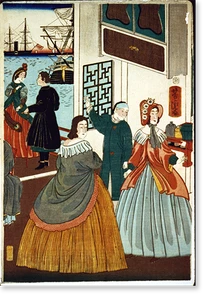
Historic Photo Print - Gokakoku jinbutsu - Framed Wall Art Gift Idea
Step back in time with this striking reproduction of Gokakoku jinbutsu - dontaku no zu Translation:People of five nations - Sunday. Sourced from the United States Library of Congress.Library of...$57.00 -
 Snapshots of the Past
Antique Scenic Print - Bokusui tsutsumi hanazakari no zu
Step back in time with this striking reproduction of Bokusui tsutsumi hanazakari no zu Translation:Cherry blossoms in full bloom along Sumida River. Sourced from the United States Library of Congress...$57.00 -
 Snapshots of the Past
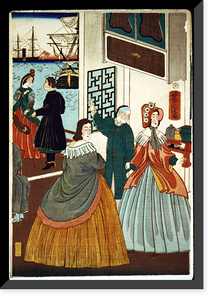
Historic Street Photo - Yokohama kaigan kakkoku shokan zu
Step back in time with this striking reproduction of Yokohama kaigan kakkoku shokan zu Translation:Foreign business district in Yokohama. Sourced from the United States Library of Congress.Library of...$57.00 -
 Snapshots of the Past
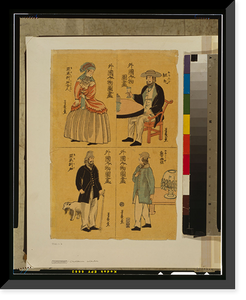
Vintage Photo Print - Gaikoku jinbutsu zuga - Historic Wall Art Gift
This rare historical print captures Gaikoku jinbutsu zuga - Oranda Oroshia Amerika nyonin Amerika Translation:Portraits of foreigners - Dutch Russian American lady American in remarkable detail...$57.00 -
 Snapshots of the Past
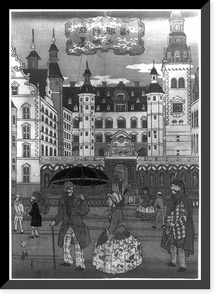
Vintage Americana Print - Amerika nigiwai no zu Translation:Picture
This rare historical print captures Amerika nigiwai no zu Translation:Picture of flourishing America in remarkable detail. Sourced directly from the Library of Congress, it represents an authentic...$57.00 -
 Snapshots of the Past
Historic Portrait - Portrait of Miyamoto Musashi - Historic Wall Art Gift
Step back in time with this striking reproduction of Portrait of Miyamoto Musashi. Sourced from the United States Library of Congress.Library of Congress record: Created 1852 Title and other...$57.00 -
 Snapshots of the Past
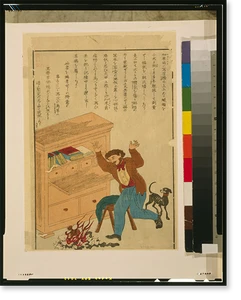
Vintage Americana Print - Onoi Kikugoro actor in the role of Oishi
Drawn from the Library of Congress archive, this print depicts Onoi Kikugoro actor in the role of Oishi Yoshio in his farewell performace. The Library holds one of the most comprehensive collections...$57.00 -
 Snapshots of the Past
Vintage Americana Print - Thomas Carlyle author - Vintage Home Decor Print
This rare historical print captures Thomas Carlyle author in remarkable detail. Sourced directly from the Library of Congress, it represents an authentic piece of documented history.Library of...$57.00 -
 Snapshots of the Past
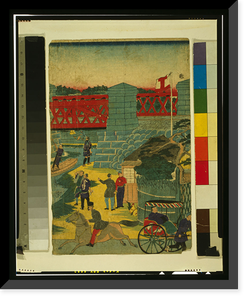
Black & White Photo - Village scene in Japan showing people engaged
Step back in time with this striking reproduction of Village scene in Japan showing people engaged in various activities. Sourced from the United States Library of Congress.Library of Congress...$57.00 -
 Snapshots of the Past
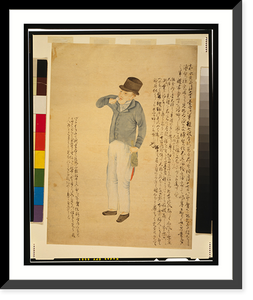
Historic Photo Print - American sailor drinking
Drawn from the Library of Congress archive, this print depicts American sailor drinking Classic. The Library holds one of the most comprehensive collections of American and international historical...$57.00 -
 Snapshots of the Past
Vintage Americana Print - Commodore Perry in Japan
This rare historical print captures Commodore Perry in Japan in remarkable detail. Sourced directly from the Library of Congress, it represents an authentic piece of documented history.Library of...$57.00