
Mobile Alabama
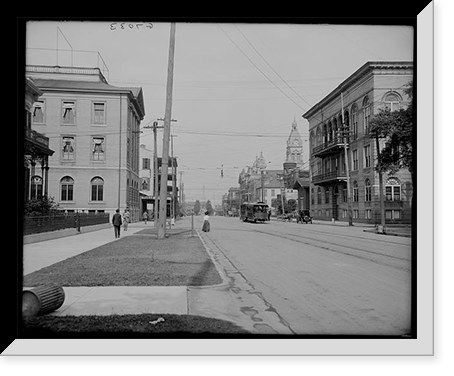
Mobile was founded by the French in 1702 and was the capital of French Louisiana before New Orleans existed. It has been French, British, Spanish and American, and the layers show in the older photographs — street names and building forms that do not belong to the rest of Alabama.
Mardi Gras started here, not in New Orleans. The first recorded celebration was in 1703, and the modern parading societies date from 1830 with the Cowbellion de Rakin Society, which later sent members to New Orleans to help start theirs. Mobile has never made much noise about this, which is characteristic.
Photographs of the parades from the 1890s onward show floats, masked societies and crowds along Government Street. They are among the earliest American carnival photographs anywhere.
Cotton built the modern city. Mobile Bay is shallow, so ocean vessels anchored downriver and lighters carried the bales out, which is why photographs of the wharves show a great deal of small-craft traffic alongside the warehouses.
The Battle of Mobile Bay was fought in August 1864, and it is where Farragut is supposed to have said damn the torpedoes — torpedoes then meaning moored mines. The forts guarding the entrance, Morgan and Gaines, were photographed extensively afterward and both survive.
The live oaks are a subject in themselves. Government Street and the older residential districts were planted with them, and the canopy in the photographs from the 1900s is already a century old.
Around eighteen hundred images in the archive name Mobile, and a note on that number: an earlier count put it above two thousand because the search was matching the word automobile. This one does not.
The City That Was Burned and Named Itself for Rising







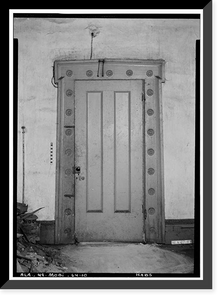
-

 Snapshots of the Past
Vintage Building Photo - Mobile, Alabama - Meyer Goldsmith House
Step back in time with this striking reproduction of Meyer Goldsmith House, 408 Conti Street, Mobile, Mobile County, AL - 4. Sourced from the United States Library of Congress.Library of Congress...$57.00 -
 Snapshots of the Past
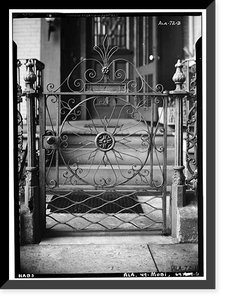
Vintage Building Photo - Mobile, Alabama - Convent of the Visitation
Step back in time with this striking reproduction of Convent of the Visitation, Gates & Wall, Spring Hill Avenue, Mobile, Mobile County, AL - 5. Sourced from the United States Library of Congress...$57.00 -
 Snapshots of the Past
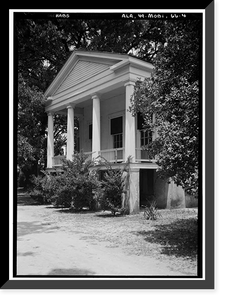
Vintage Building Photo - Mobile, Alabama - The Sledge Place
Step back in time with this striking reproduction of The Sledge Place, 54 South Jackson Street, Mobile, Mobile County, AL - 5. Sourced from the United States Library of Congress.Library of Congress...$57.00 -
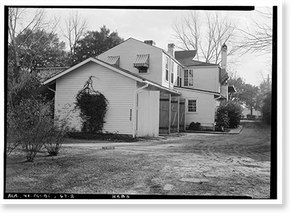 Snapshots of the Past
Vintage Building Photo - Mobile, Alabama - Vincent-Walsh House, 1664
Drawn from the Library of Congress archive, this print depicts Vincent-Walsh House, 1664 Spring Hill Avenue, Mobile, Mobile County, AL - 2 Classic. The Library holds one of the most comprehensive...$57.00 -
 Snapshots of the Past
Historic Architecture - Mobile, Alabama - Briarwood, Dauphin Way (4)
Drawn from the Library of Congress archive, this print depicts Briarwood, Dauphin Way & Mobile Street, Mobile, Mobile County, AL - 17 Classic. The Library holds one of the most comprehensive...$57.00 -
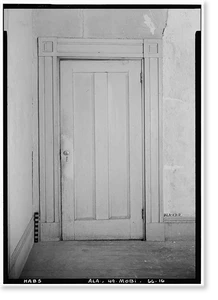 Snapshots of the Past
Historic Architecture - Mobile, Alabama - Briarwood, Dauphin Way (3)
Originally preserved in the Library of Congress, this print of Briarwood, Dauphin Way & Mobile Street, Mobile, Mobile County, AL - 16 is now available for your home or office. The Library has...$57.00 -
 Snapshots of the Past
Historic Architecture - Mobile, Alabama - Briarwood, Dauphin Way (2)
Originally preserved in the Library of Congress, this print of Briarwood, Dauphin Way & Mobile Street, Mobile, Mobile County, AL - 5 is now available for your home or office. The Library has...$57.00 -
 Snapshots of the Past
Historic Architecture - Mobile, Alabama - Briarwood, Dauphin Way (1)
Originally preserved in the Library of Congress, this print of Briarwood, Dauphin Way & Mobile Street, Mobile, Mobile County, AL - 4 is now available for your home or office. The Library has...$57.00 -
 Snapshots of the Past
Antique Architecture - Mobile, Alabama - 67-69 Government Street (5)
This rare historical print captures 67-69 Government Street (Commercial Building), Mobile, Mobile County, AL - 17 Classic in remarkable detail. Sourced directly from the Library of Congress, it...$57.00 -
 Snapshots of the Past
Antique Architecture - Mobile, Alabama - 67-69 Government Street (4)
Originally preserved in the Library of Congress, this print of 67-69 Government Street (Commercial Building), Mobile, Mobile County, AL - 13 is now available for your home or office. The Library has...$57.00 -
 Snapshots of the Past
Antique Architecture - Mobile, Alabama - 67-69 Government Street (3)
Originally preserved in the Library of Congress, this print of 67-69 Government Street (Commercial Building), Mobile, Mobile County, AL - 12 Classic is now available for your home or office. The...$57.00 -
 Snapshots of the Past
Antique Architecture - Mobile, Alabama - 67-69 Government Street (2)
Step back in time with this striking reproduction of 67-69 Government Street (Commercial Building), Mobile, Mobile County, AL - 10. Sourced from the United States Library of Congress.Library of...$57.00