
New Orleans
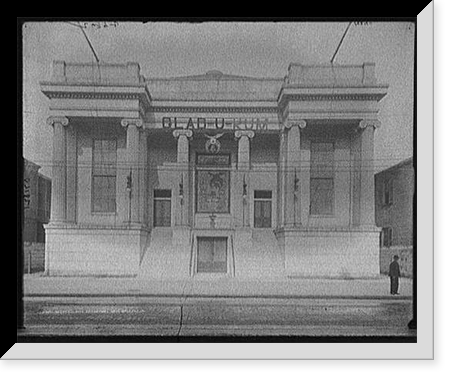
New Orleans sits below the level of the river beside it, held there by levees, and every photograph of the waterfront is an image of water standing above the city. Ships at the wharves are higher than the streets behind them, and once you notice it in these pictures you cannot stop noticing it.
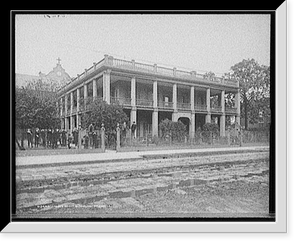
The French Quarter is the original city, laid out in 1721 on a grid around a parade ground that is now Jackson Square. Most of what appears in the photographs is Spanish rather than French — two fires, in 1788 and 1794, destroyed nearly all the French building, and the reconstruction happened under Spanish rule. The ironwork galleries are Spanish colonial by way of the nineteenth century.
St. Louis Cathedral faces the square and has been rebuilt twice. The Pontalba buildings either side, from 1850, are among the oldest apartment buildings in the country.
Cotton ran the economy. The Cotton Exchange opened in 1871 and Degas painted his uncle's cotton office here in 1873, the only painting he made in America. The wharf photographs show bales in quantities that ran to hundreds of thousands of bales a season.
The World Cotton Centennial of 1884 was the city's World's Fair, and it lost money spectacularly, but the photographs of the Main Building — then the largest structure ever roofed — are worth seeing.
Mardi Gras photographs from the 1890s onward show the krewes, the floats and the crowds on Canal Street. Rex dates from 1872 and Comus from 1857, and the parading tradition here descends in part from Mobile.
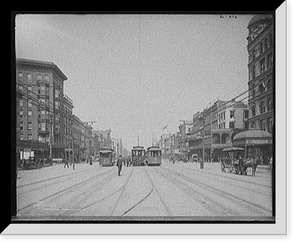
The streetcars are constant. The St. Charles line has run since 1835 and is the oldest continuously operating street railway in the world, and it appears in an enormous proportion of the surviving street photography.
Around six hundred images name New Orleans.
The City That Burned in 1904 and Rebuilt in Two Years




-

 Snapshots of the Past
Historic Architecture - New Orleans, Louisiana - Horticultural hall
Drawn from the Library of Congress archive, this print depicts Horticultural hall, Audubon Park, New Orleans, La. The Library holds one of the most comprehensive collections of American and...$57.00 -
 Snapshots of the Past
Vintage Street Scene - New Orleans, Louisiana - Royal Street from Canal
Drawn from the Library of Congress archive, this print depicts Royal Street from Canal Street, New Orleans, La. The Library holds one of the most comprehensive collections of American and...$57.00 -
 Snapshots of the Past
Vintage Photo Print - New Orleans - La., Mardi Gras Day, the Red Pageant
Step back in time with this striking reproduction of New Orleans, La., Mardi Gras Day, the Red" Pageant". Sourced from the United States Library of Congress.Library of Congress record: Created...$57.00 -
 Snapshots of the Past
Vintage Photo Print - New Orleans - milk cart, Louisiana
Step back in time with this striking reproduction of New Orleans milk cart, New Orleans, Louisiana. Sourced from the United States Library of Congress.Library of Congress record: Created between 1900...$57.00 -
 Snapshots of the Past
Black & White Photo - New Orleans - Old Spanish courtyard, Louisiana
Originally preserved in the Library of Congress, this print of Old Spanish courtyard, New Orleans, Louisiana is now available for your home or office. The Library has preserved this image as part of...$57.00 -
 Snapshots of the Past
Antique Architecture - New Orleans - Old Absinthe House, Louisiana
Drawn from the Library of Congress archive, this print depicts Old Absinthe House, New Orleans, Louisiana Classic. The Library holds one of the most comprehensive collections of American and...$57.00 -
 Snapshots of the Past
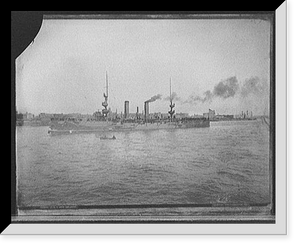
Vintage Nautical Print - New Orleans - U.S.S - Antique Wall Decor Print
Originally preserved in the Library of Congress, this print of U.S.S. New Orleans - 5 is now available for your home or office. The Library has preserved this image as part of its permanent...$57.00 -
 Snapshots of the Past
Vintage Nautical Print - New Orleans - U.S.S - Vintage Wall Art Gift (2)
This rare historical print captures U.S.S. New Orleans - 4 in remarkable detail. Sourced directly from the Library of Congress, it represents an authentic piece of documented history.Library of...$57.00 -
 Snapshots of the Past
Black & White Photo - New Orleans, Louisiana - Canal St
Originally preserved in the Library of Congress, this print of Canal St., New Orleans, La. - 2 Classic is now available for your home or office. The Library has preserved this image as part of its...$57.00 -
 Snapshots of the Past
Antique Architecture - New Orleans, Louisiana - Rex receiving the key
Step back in time with this striking reproduction of Rex receiving the key at City Hall, Mardi Gras day, New Orleans, La. Sourced from the United States Library of Congress.Library of Congress...$57.00 -
 Snapshots of the Past
Historic Photo Print - New Orleans, Louisiana - The Royal chariot
This rare historical print captures The Royal chariot with Rex, Mardi Gras day, New Orleans, La in remarkable detail. Sourced directly from the Library of Congress, it represents an authentic piece...$57.00 -
 Snapshots of the Past
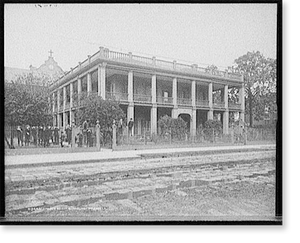
Antique Architecture - New Orleans, Louisiana - St. Simeon's Select
Drawn from the Library of Congress archive, this print depicts St. Simeon's Select School, New Orleans, La. The Library holds one of the most comprehensive collections of American and international...$57.00