
New York City
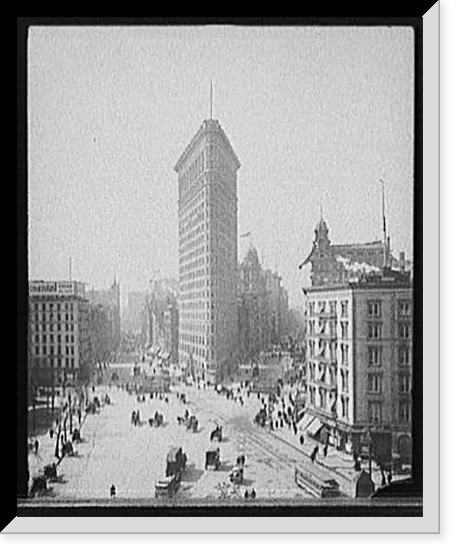
The New York in this archive is not yet the New York in your head. It is a city in the middle of an argument about how tall a building should be, whether a bridge could cross the East River, and what to do with the people arriving at a rate no city had absorbed before.
The Brooklyn Bridge opened in 1883 after fourteen years, and photographs of it from the following decade have a quality that is hard to describe and easy to see: people are looking at it. Not crossing it, looking at it. It was the tallest structure on the continent and the first steel-wire suspension bridge, and the wire was made on site because nobody trusted a supplier after the first contractor sold the project fraudulent cable.
Brooklyn itself was a separate city until 1898 — the third largest in the country. A great many photographs catalogued as New York are actually of an independent municipality with its own mayor, and the 1897 bird's-eye views were drawn while that was still true.
Ellis Island opened in 1892 and processed twelve million people before it closed. The photographs from it are quieter than the story suggests. Families on benches. A doctor examining eyes with a buttonhook. Numbered tags. Whatever a person expects an immigration photograph to look like, these are usually more ordinary and more affecting than that.
The skyline arrived suddenly. The Flatiron in 1902, the Singer Building in 1908, the Woolworth in 1913 — each briefly the tallest in the world, each photographed obsessively while it was. Photographers stood at the same corners repeatedly, and the sequence of images from one intersection over fifteen years shows a city growing vertically in something close to time-lapse.
Coney Island belongs in any account of the period. Luna Park, Dreamland, Steeplechase — three competing amusement parks running simultaneously, lit by more electric bulbs than most American cities possessed. Dreamland burned in 1911 in a fire that started in the Hell Gate ride, which is the kind of detail no novelist would risk.
Central Park is thirty years old in the earliest of these photographs and already looks eternal, which was the intention. Olmsted and Vaux designed it to appear as though the city had been built around a landscape rather than the reverse. The photographs show how thoroughly that worked, and how young the trees actually were.
Over seven thousand images in the archive name New York, and the panoramic photographs alone run to more than two hundred and fifty — the largest panoramic group of any state.
The City That Burned and Photographed Itself Rebuilding





-

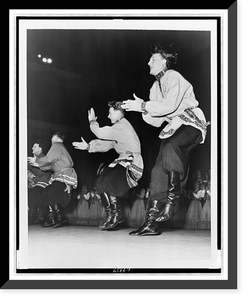 Snapshots of the Past
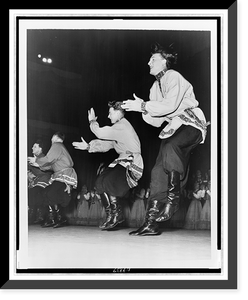
Vintage Street Scene - New York City - Dancers in the Russian Festival
Step back in time with this striking reproduction of Dancers in the Russian Festival of Music and Dance performing at Madison Square Garden in New York City Classic. Sourced from the United States...$57.00 -
 Snapshots of the Past
Vintage Americana Print - New York City - Bathing beaches
Step back in time with this striking reproduction of Bathing beaches - New York beauties at Atlantic City carnival. Sourced from the United States Library of Congress.Library of Congress record:...$57.00 -
 Snapshots of the Past
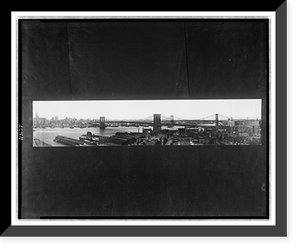
Vintage Landscape - New York City - New York and East River bridges
This rare historical print captures New York and East River bridges in remarkable detail. Sourced directly from the Library of Congress, it represents an authentic piece of documented history.Library...$57.00 -
 Snapshots of the Past
Black & White Photo - New York City - Firemen posed on fire engine
Originally preserved in the Library of Congress, this print of Firemen posed on fire engine, New York City is now available for your home or office. The Library has preserved this image as part of...$57.00 -
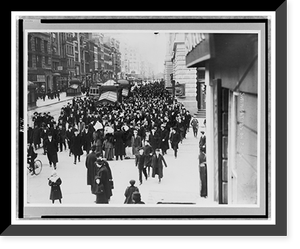 Snapshots of the Past
Historic Street Photo - New York City - New York, N.Y. Suffragettes
Step back in time with this striking reproduction of New York, N.Y.. Suffragettes on 23rd Street Classic. Sourced from the United States Library of Congress.Library of Congress record: Created 1908...$57.00 -
 Snapshots of the Past
Antique City View - New York City - Broad Street and curb brokers
This rare historical print captures Broad Street and curb brokers, New York City in remarkable detail. Sourced directly from the Library of Congress, it represents an authentic piece of documented...$57.00 -
 Snapshots of the Past
Historic Portrait - New York City - Frank Hague, bust portrait
Step back in time with this striking reproduction of Frank Hague, bust portrait, facing right.Ira L. Hill's Studio, New York City. Classic. Sourced from the United States Library of Congress.Library...$57.00 -
 Snapshots of the Past
Black & White Photo - New York City - Rev. R.L.T. Smith
This rare historical print captures Rev. R.L.T. Smith, near top at right, addresses crowd in New York at a memorial service for Medgar Evers in remarkable detail. Sourced directly from the Library of...$57.00 -
 Snapshots of the Past
Vintage Photo Print - New York City - George Gershwin in his New York
Originally preserved in the Library of Congress, this print of George Gershwin in his New York apartment with his first oil painting is now available for your home or office. The Library has...$57.00 -
 Snapshots of the Past
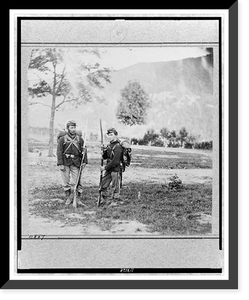
Antique Photo Print - Virginia - 22nd New York State Militia, 1861
Drawn from the Library of Congress archive, this print depicts 22nd New York State Militia, near Harpers Ferry, Va., 1861 - 2. The Library holds one of the most comprehensive collections of American...$57.00 -
 Snapshots of the Past
Historic Architecture - New York City - Madison Square Presbyterian
Originally preserved in the Library of Congress, this print of Madison Square Presbyterian Church, New York City is now available for your home or office. The Library has preserved this image as part...$57.00 -
 Snapshots of the Past
Historic Photo Print - New York City - Bayard Rustin, addressing
Drawn from the Library of Congress archive, this print depicts Bayard Rustin, addressing a group of march marshals in New York as they prepare for the March on Washington. The Library holds one of...$57.00