
Philadelphia
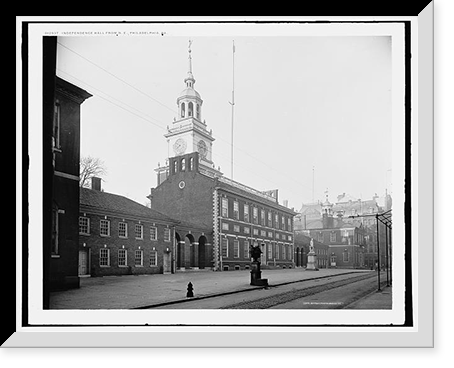
Philadelphia was the largest city in the colonies, the capital for a decade, and the place where both the Declaration and the Constitution were written. By the time photography arrived it had settled into being an industrial city that happened to contain the country's founding documents.
Independence Hall was nearly lost. It was sold off, altered, and by the middle of the nineteenth century was in poor repair; the tower had been rebuilt and the interior remodeled beyond recognition. The restoration was driven by the approaching centennial, and photographs from before and after show two rather different buildings.
The Centennial Exposition of 1876 was the first World's Fair held in the United States, and nearly ten million people attended — about a fifth of the country. Machinery Hall contained the Corliss engine, a steam engine forty feet tall that powered the entire exhibition and which Americans queued to look at. The Bartholdi Fountain was there, and so was the arm and torch of the Statue of Liberty, exhibited alone to raise money for the pedestal.
City Hall took thirty years and was finished in 1901. It is still the largest free-standing masonry building in the world, and until 1908 it was the tallest habitable structure anywhere. William Penn stands on top, thirty-seven feet of bronze. For most of the twentieth century a gentleman's agreement kept anything from being built taller.
Fairmount Park is among the largest urban parks in the country and contains the waterworks, which was an engineering marvel in its own right and looks like a Greek temple because that was thought appropriate for public infrastructure.
The street photography shows a city of row houses — Philadelphia built for ownership rather than tenancy, which made it physically unlike New York from the beginning. Blocks of identical brick fronts with white marble steps appear again and again, and the steps were scrubbed, which was a matter of pride.
The Capital That Burned as It Was Abandoned





-

 Snapshots of the Past
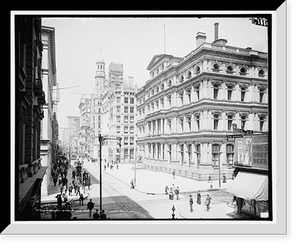
Vintage Americana Print - Philadelphia, Pennsylvania - Bourse
Step back in time with this striking reproduction of Philadelphia Bourse, Philadelphia, Pa. Sourced from the United States Library of Congress.Library of Congress record: Created c1904 Corresponding...$57.00 -
 Snapshots of the Past
Vintage Building Photo - Philadelphia, Pennsylvania - Land Title Buildin
Originally preserved in the Library of Congress, this print of Land Title Building, Philadelphia, Pa is now available for your home or office. The Library has preserved this image as part of its...$57.00 -
 Snapshots of the Past
Vintage Street Scene - Philadelphia, Pennsylvania - Chestnut Street
Step back in time with this striking reproduction of Chestnut Street and post office, Philadelphia, Pa. Sourced from the United States Library of Congress.Library of Congress record: Created c1904...$57.00 -
 Snapshots of the Past
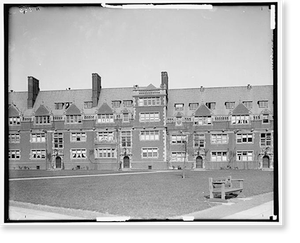
Vintage Americana Print - Philadelphia, Pennsylvania - Dormitories, U
Originally preserved in the Library of Congress, this print of Dormitories, U. of Pa., Philadelphia, Pa. - 2 is now available for your home or office. The Library has preserved this image as part of...$57.00 -
 Snapshots of the Past
Antique Maritime - Philadelphia - League Island Navy Yard
Step back in time with this striking reproduction of League Island Navy Yard, U.S.S. Iowa and monitors, Philadelphia. Sourced from the United States Library of Congress.Library of Congress record:...$57.00 -
 Snapshots of the Past
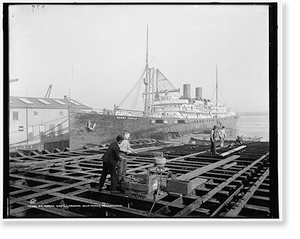
Antique Architecture - Philadelphia - S.S. Morro Castle (2)
Originally preserved in the Library of Congress, this print of S.S. Morro Castle, Cramps Shipyards, Philadelphia - 2 is now available for your home or office. The Library has preserved this image as...$57.00 -
 Snapshots of the Past
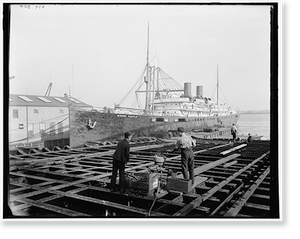
Antique Architecture - Philadelphia - S.S. Morro Castle (1)
This rare historical print captures S.S. Morro Castle, Cramps Shipyards, Philadelphia in remarkable detail. Sourced directly from the Library of Congress, it represents an authentic piece of...$57.00 -
 Snapshots of the Past
Antique Maritime - Philadelphia - Russian war ship Retvizan
Step back in time with this striking reproduction of Russian war ship Retvizan sic, day before launching, Cramp's ship yards, Philadelphia Classic. Sourced from the United States Library of Congress...$57.00 -
 Snapshots of the Past
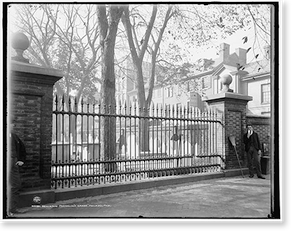
Historic Architecture - Philadelphia - Benjamin Franklin's grave Christ
Step back in time with this striking reproduction of Benjamin Franklin's grave Christ Church Burial Ground, Philadelphia Classic. Sourced from the United States Library of Congress.Library of...$57.00 -
 Snapshots of the Past
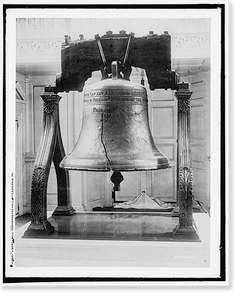
Historic Architecture - Philadelphia, Pennsylvania - Liberty Bell (1)
This rare historical print captures Liberty Bell, Independence Hall, Philadelphia, Pa in remarkable detail. Sourced directly from the Library of Congress, it represents an authentic piece of...$57.00 -
 Snapshots of the Past
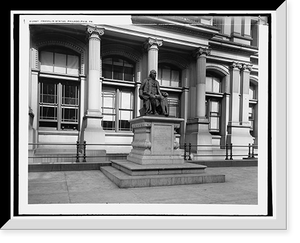
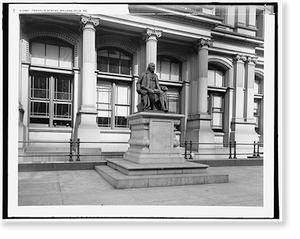
Historic Photo Print - Philadelphia, Pennsylvania - Franklin Statue
Drawn from the Library of Congress archive, this print depicts Franklin Statue, Philadelphia, Pa. The Library holds one of the most comprehensive collections of American and international historical...$57.00 -
 Snapshots of the Past
Vintage Building Photo - Philadelphia, Pennsylvania - Wm. William Penn
This rare historical print captures Wm. William Penn Treaty Monument, Philadelphia, Pa in remarkable detail. Sourced directly from the Library of Congress, it represents an authentic piece of...$57.00