San Francisco
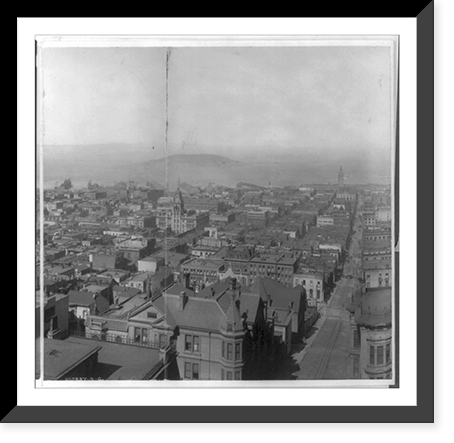
On the morning of 18 April 1906 the San Andreas fault moved, and for three days afterward San Francisco burned. The fire did more damage than the shaking. It is the most thoroughly photographed disaster of its era, partly because it lasted long enough for people to fetch cameras.
What survives is a strange body of work. Some of it is journalism. Some is what we would now call citizen documentation — amateurs with new roll-film cameras standing on hills watching their own city burn. And some is panoramic, made with the rotating cameras then in fashion, which produced images of the ruins that are physically wide enough to convey the scale.
The photographs from the weeks after are the ones worth sitting with. Refugee camps in Golden Gate Park. Cooking stoves moved into the street because chimneys were unsafe. Bread lines. Handwritten signs on rubble announcing that a business would reopen and where. There is a famous one reading that a saloon was open again, with an arrow.
The city rebuilt fast, and photography tracked it. Within a decade San Francisco was confident enough to host the Panama-Pacific International Exposition of 1915, ostensibly to mark the opening of the Panama Canal and unmistakably to announce that the city was back. The Palace of Fine Arts survives from it — the only building meant to be temporary that anyone insisted on keeping.
Earlier material exists too. The 1855 bird's-eye view shows a settlement barely six years past the Gold Rush, already laid out on the grid that would later be criticized for ignoring the hills entirely. The cable cars date from 1873, invented in response to a horse-drawn accident on a wet slope.
Chinatown appears throughout, though the photographs need reading with some care. Much of what was made there in the 1890s was staged for a white audience with an appetite for the exotic. The material from after 1906, when the district was rebuilt on its own terms, is more honest.
The archive holds around twenty-six hundred images naming San Francisco, which puts it third after Washington and New York.
The City That Rebuilt Itself Twice in Thirty Years




-

 Snapshots of the Past
Antique Playbill - San Francisco - Max Figman - Vintage Wall Art Gift
Step back in time with this striking reproduction of Max Figman. from photo by Frank C. Bangs San Francisco. Sourced from the United States Library of Congress.Library of Congress record: Created...$57.00 -
 Snapshots of the Past
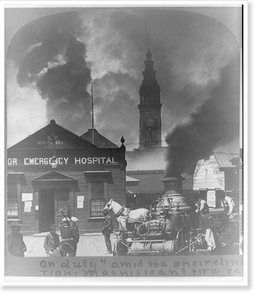
Antique Stereograph - San Francisco - On duty amid the encircling gloom
Step back in time with this striking reproduction of On duty amid the encircling gloom of a citys certain destruction. Magnificent fire scene near Union Ferry Bldg. San Francisco U.S.A. Sourced from...$57.00 -
 Snapshots of the Past
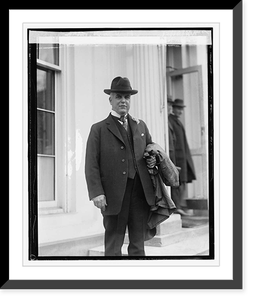
Vintage Photo Print - San Francisco - Mayor James Rolfe of at W.H, 1924
Step back in time with this striking reproduction of Mayor James Rolfe of San Francisco at W.H., 12/10/24. Sourced from the United States Library of Congress.Library of Congress record: Created 1924...$57.00 -
 Snapshots of the Past
Vintage Americana Print - San Francisco - Lucille Shirpser, Mascot
This rare historical print captures Lucille Shirpser, Mascot, San Francisco Islam Band in remarkable detail. Sourced directly from the Library of Congress, it represents an authentic piece of...$57.00 -
 Snapshots of the Past
Historic Street Photo - San Francisco - Portsmouth Square, California
Drawn from the Library of Congress archive, this print depicts Portsmouth Square, San Francisco, California - 2. The Library holds one of the most comprehensive collections of American and...$57.00 -
 Snapshots of the Past
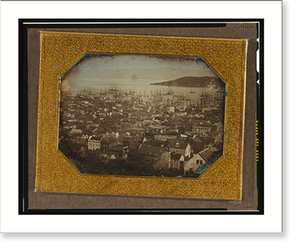
Vintage Nautical Print - San Francisco - View of harbor
Originally preserved in the Library of Congress, this print of View of San Francisco harbor - 2 is now available for your home or office. The Library has preserved this image as part of its permanent...$57.00 -
 Snapshots of the Past
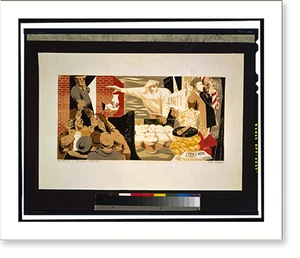
Antique Photo Print - San Francisco - '34 waterfront strike.A. Refregier
Drawn from the Library of Congress archive, this print depicts Spanish-American boy with lamb, Amalia, New Mexico. The Library holds one of the most comprehensive collections of American and...$57.00 -
 Snapshots of the Past
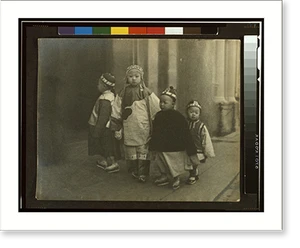
Historic Photo Print - San Francisco - Children were the pride, joy
This rare historical print captures Children were the pride, joy, beauty, and chief delight of the quarter, Chinatown, San Francisco in remarkable detail. Sourced directly from the Library of...$57.00 -
 Snapshots of the Past
Vintage Americana Print - San Francisco - Schmidt Label & Litho, 1849
Originally preserved in the Library of Congress, this print of San Francisco, 1849.Schmidt Label & Litho. Co., S.F. Cal. - 2 is now available for your home or office. The Library has preserved this...$57.00 -
 Snapshots of the Past
Vintage Photo Print - San Francisco - California (2)
Historic Framed Print, San Francisco, California - 2, 17-7/8" x 21-7/8", Image: 16" x 20"Beautiful historic reproduction print from the Library of Congress collections.Created Frederick Hess...$57.00 -
 Snapshots of the Past
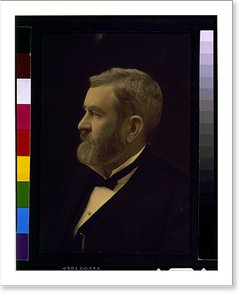
Vintage Portrait - San Francisco - Ulysses S. Grant - Vintage Wall Art Gift
Historic Framed Print, [Ulysses S. Grant, head-and-shoulders portrait, facing left].Taber, San Francisco., 17-7/8" x 21-7/8", Image: 16" x 20"Beautiful historic reproduction print from the Library...$57.00 -
 Snapshots of the Past
Antique Photo Print - San Francisco - Mining on the Comstock.drawn
Historic Framed Print, Mining on the Comstock.drawn by T.L. Dawes ; engraved and printed by Le Count Bro's., San Francisco. - 2, 17-7/8" x 21-7/8", Image: 16" x 20"Beautiful historic reproduction...$57.00