
St. Louis
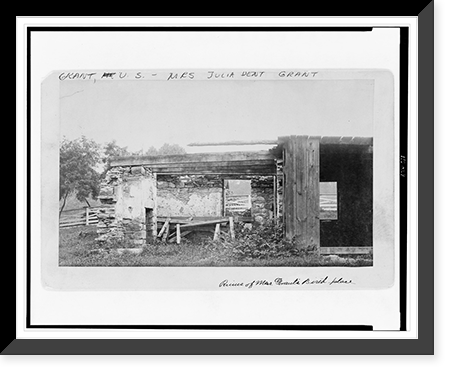
St. Louis was the place people left from. Everything moving west between the 1840s and the 1870s came through here to be outfitted, and the levee photographs from that period show steamboats moored four and five deep along a mile of riverfront.
The Eads Bridge changed it. Finished in 1874, it was the first bridge to cross the Mississippi at St. Louis and the longest arch bridge in the world, built of steel at a time when steel was not trusted for structures. James Eads had never built a bridge. He had built ironclads and salvaged wrecks, and he knew the river bottom better than anyone alive. To prove the bridge safe he sent an elephant across, on the theory that animals will not step onto unsound structures.
The caisson work sank piers a hundred feet to bedrock and killed fifteen men from decompression sickness, which was not then understood. Eads' physician documented it and produced some of the first serious medical work on the condition.
The Louisiana Purchase Exposition of 1904 was the largest World's Fair ever held — twelve hundred acres, twenty million visitors, and the Olympic Games held alongside it. The buildings were staff, a plaster and fiber composite, and were demolished afterward except the Palace of Fine Arts, which is the art museum today. The photographs show a city of white palaces around lagoons that existed for seven months.
The fair is credited with popularizing the ice cream cone, iced tea and the hot dog, none of which is quite true and all of which is repeated. What is true is that the fair introduced most Americans to their first personal encounter with electricity at scale.
Anheuser-Busch built the brewery complex in the 1860s and the buildings — brick, ornamented, industrial — are photographed as often as anything in the city. The Brew House of 1892 has a clock tower and looks like a cathedral, deliberately.
Around seven hundred and fifty images name St. Louis.
The Mining Camp That Bought Itself a Gold Dome




-

 Snapshots of the Past
Vintage Photo Print - St. Louis - Davis, 1924 - Framed Wall Art Gift Idea
Drawn from the Library of Congress archive, this print depicts Davis, St. Louis, 1924. The Library holds one of the most comprehensive collections of American and international historical prints in...$57.00 -
 Snapshots of the Past
Antique Photo Print - St. Louis - Williams, 1924 - Vintage Home Decor Print
Originally preserved in the Library of Congress, this print of Williams, St. Louis, 1924 Classic is now available for your home or office. The Library has preserved this image as part of its...$57.00 -
 Snapshots of the Past
Historic Photo Print - St. Louis - Voigt, 1924
Drawn from the Library of Congress archive, this print depicts Voigt, St. Louis, 1924. The Library holds one of the most comprehensive collections of American and international historical prints in...$57.00 -
 Snapshots of the Past
Black & White Photo - St. Louis - Pruett, 1924 - Framed Wall Art Gift Idea
Step back in time with this striking reproduction of Pruett, St. Louis 1924. Sourced from the United States Library of Congress.Library of Congress record: Created 1924 Title from unverified data...$57.00 -
 Snapshots of the Past
Antique Photo Print - St. Louis - Tobin, 1924 - Framed Wall Art Gift Idea
Originally preserved in the Library of Congress, this print of Tobin, St. Louis, 1924 is now available for your home or office. The Library has preserved this image as part of its permanent...$57.00 -
 Snapshots of the Past
Vintage Photo Print - St. Louis - Thomas, 1924
This rare historical print captures Thomas, St. Louis, 1924 in remarkable detail. Sourced directly from the Library of Congress, it represents an authentic piece of documented history.Library of...$57.00 -
 Snapshots of the Past
Black & White Photo - St. Louis - Severoid, 1924
Originally preserved in the Library of Congress, this print of Severoid, St. Louis, 1924 is now available for your home or office. The Library has preserved this image as part of its permanent...$57.00 -
 Snapshots of the Past
Black & White Photo - St. Louis - Grant, 1924
Originally preserved in the Library of Congress, this print of Grant, St. Louis, 1924 is now available for your home or office. The Library has preserved this image as part of its permanent...$57.00 -
 Snapshots of the Past
Vintage Photo Print - St. Louis - Joe Ryan, Mascot, 1922
Step back in time with this striking reproduction of Joe Ryan, St. Louis, Mascot, 8/16/22. Sourced from the United States Library of Congress.Library of Congress record: Created 1922 August 16 Title...$57.00 -
 Snapshots of the Past
Historic Photo Print - St. Louis - L to R: Wilbur W. Marsh, Treas
Originally preserved in the Library of Congress, this print of L to R: Wilbur W. Marsh, Treas., Iowa, S.W. Fordyce, St. Louis Classic is now available for your home or office. The Library has...$57.00 -
 Snapshots of the Past
Historic Photo Print - St. Louis - Cheyenne chiefs and family
Drawn from the Library of Congress archive, this print depicts Cheyenne chiefs and family, descendants of America's aboriginal princes, World's Fair, St. Louis, U.S.A. - 2 Classic. The Library holds...$57.00 -
 Snapshots of the Past
Vintage Americana Print - St. Louis, Missouri - James Moran & Co.'s
This rare historical print captures James Moran & Co.'s Romeo, fine cut, chewing tobacco.C. Hamilton & Co. lith., St. Louis, Mo in remarkable detail. Sourced directly from the Library of Congress, it...$57.00