
Steamboats
The western river steamboat is a peculiarly American machine, developed for water nobody else had to deal with — shallow, snag-filled, constantly shifting rivers with no reliable channel.
The design that resulted looks improbable and was entirely rational. A flat, almost boxlike hull drawing only a few feet. Machinery placed high rather than low. Enormous superstructure. A stern or side paddlewheel. Twin chimneys. The saying was that a good boat could run on a heavy dew, and the exaggeration was small.
They were also dangerous in a way that is hard to convey. High-pressure boilers, no meaningful regulation until 1852, crews under pressure to make time, and hulls built cheaply because the working life of a boat was reckoned in a few years. Explosions, fires and snags destroyed hundreds of them. The Sultana blew up in 1865 carrying paroled Union prisoners home and killed roughly eighteen hundred people, which remains the worst maritime disaster in American history and which almost nobody has heard of.
The photographs divide into two eras. The great packet era before the railroads, when the boats carried passengers and freight together and the grand saloons were genuinely grand — skylights, carpet, chandeliers, a ladies' cabin at the stern. And the working era afterward, when the railroads took the passengers and the boats became towboats pushing barges of coal and grain, which is what most of them ended up doing.
Mark Twain is unavoidable here and worth quoting for accuracy rather than atmosphere. He piloted on the lower Mississippi in the late 1850s and wrote later that a pilot had to know the shape of the river so completely that he could run it blind, because the channel he memorized in June had moved by August. Life on the Mississippi is a technical manual disguised as a memoir.
The landings are as interesting as the boats. A river town's levee in photographs is a chaos of cargo, drays, roustabouts, mud and stacked freight, with three or four boats nosed in at angles. There were no docks in the eastern sense — a boat simply ran her bow onto the bank and put out a stage plank.
The labor was overwhelmingly Black, both before and after emancipation, and the roustabouts who loaded and unloaded appear in a great many of these photographs. The work was brutal, the pay was poor, and the river songs that came out of it fed directly into American music.
The upper Missouri trade is the extreme case and produced its own photographs. Boats ran from St. Louis to Fort Benton in Montana, over two thousand miles, on water that was shallow, unmapped and only navigable for a few weeks of high melt. A successful voyage could return more than the cost of the boat, which is why owners took the risk.
For dating, the wheel tells you a good deal. Side-wheelers dominate early and are more maneuverable. Sternwheelers take over later, being cheaper and better suited to narrow water. A boat with a tall pilothouse and elaborate scrollwork on the chimneys is likely a passenger packet; a plain one pushing barges is late.
Where the Town Actually Made Its Decisions




-

 Snapshots of the Past
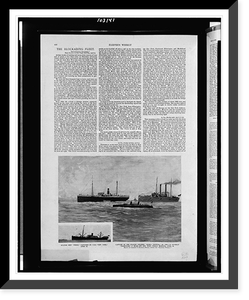
Vintage Nautical Print - Steamboats - Green Line steamer
Drawn from the Library of Congress archive, this print depicts Green Line steamer. The Library holds one of the most comprehensive collections of American and international historical prints in the...$57.00 -
 Snapshots of the Past
Antique Maritime - New York City - Spanish ship Pedro
Historic Framed Print, Spanish ship Pedro, captured by U.S.S. New York, April 22. Capture of the Spanish steamer Buena Ventura, by the U.S. gunboat Nashville, 17 miles off Key West, Friday...$57.00 -
 Snapshots of the Past
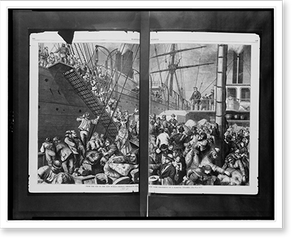
Vintage Nautical Print - New York City - From the old to the new world
This rare historical print captures From the old to the new world - German emigrants for New York embarking on a Hamburg steamer in remarkable detail. Sourced directly from the Library of Congress,...$57.00 -
 Snapshots of the Past
Historic Maritime - Steamboats - Steamboat, possibly U.S.S, 1853
Originally preserved in the Library of Congress, this print of Steamboat, possibly U.S.S. Susquehanna, shown during Commodore Oliver Hazard Perry's first landing at Kurihama, Japan, July 8, 1853 is...$57.00 -
 Snapshots of the Past
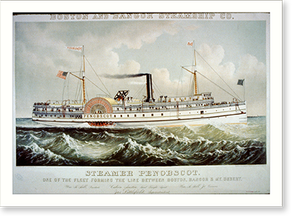
Antique Maritime - Boston - Steamer Penobscot
Step back in time with this striking reproduction of A few of the pin boys in Donahue's Bowling Alley. James Syeros, (in middle), 25 Femirck St. George Spanos, (left end), said 12 years old, lives at...$57.00 -
 Snapshots of the Past
Vintage Nautical Print - Steamboats - Providence and Stonington
Originally preserved in the Library of Congress, this print of Providence and Stonington Steamship Co's. steamer, Rhode Island is now available for your home or office. The Library has preserved this...$57.00 -
 Snapshots of the Past
Historic Maritime - Steamboats - Way down on Babahoyo river
Step back in time with this striking reproduction of Way down on Babahoyo river, hacienda of a rich planter, seen from a passing steamer, Ecuador Classic. Sourced from the United States Library of...$57.00 -
 Snapshots of the Past
Historic Maritime - Steamboats - River steamer Irma near Machuca
This rare historical print captures River steamer Irma near Machuca Rapids, on San Juan River, in Nicaragua in remarkable detail. Sourced directly from the Library of Congress, it represents an...$57.00 -
 Snapshots of the Past
Vintage Nautical Print - Steamboats - Central R.R. of New Jersey
Drawn from the Library of Congress archive, this print depicts Central R.R. of New Jersey - Sandy Hook route steamer, Sandy Hook, N.J. Classic. The Library holds one of the most comprehensive...$57.00 -
 Snapshots of the Past
Antique Architecture - Steamboats - Steamer ARMANDALE CASTLE at Paul's
Drawn from the Library of Congress archive, this print depicts Steamer ARMANDALE CASTLE at Paul's wharf, Durban, Natal, South Africa. The Library holds one of the most comprehensive collections of...$57.00 -
 Snapshots of the Past
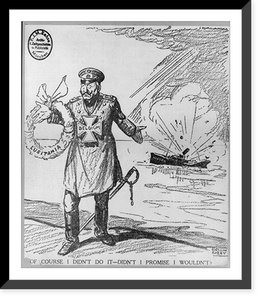
Antique Maritime - Steamboats - Anti-German cartoons concerning, 1916 (2)
Step back in time with this striking reproduction of Anti-German cartoons concerning the U-Boat sinking of the Steamer SUSSEX in 1916 - 2. Sourced from the United States Library of Congress.Library...$57.00 -
 Snapshots of the Past
Antique Maritime - Steamboats - Anti-German cartoons concerning, 1916 (1)
Step back in time with this striking reproduction of Anti-German cartoons concerning the U-Boat sinking of the Steamer SUSSEX in 1916. Sourced from the United States Library of Congress.Library of...$57.00