Washington DC
Washington is the most photographed city in the American archive, and the reason is bureaucratic rather than romantic. It was a company town, and the company was the federal government. Where there is government there are photographers on retainer.
Three studios did most of the work. Mathew Brady kept a gallery on Pennsylvania Avenue and photographed nearly every figure of consequence who passed through during and after the Civil War; the Brady-Handy collection that survives from it runs to thousands of plates. The National Photo Company covered the city daily through the 1920s, treating Washington the way a local paper treats a small town — hearings, parades, ribbon-cuttings, the first cherry blossoms. Harris & Ewing worked the same beat and left an even larger record.
What that produced is unusual. Most American cities are photographed at their moments — a fire, a flood, a fair. Washington was photographed on ordinary Tuesdays, for sixty years, by people being paid to be there. The result is a continuous visual record of a city changing rather than a scrapbook of its dramas.
The Capitol appears constantly, and it is worth knowing that the dome in these pictures is younger than the building beneath it. The cast-iron dome was finished during the Civil War, deliberately, as an argument that the Union intended to continue. Lincoln insisted the work go on while the fighting did. Photographs from the 1860s show it half-finished, ringed with scaffolding, above a city of mud streets.
The Mall was not the Mall for most of this period. Through the nineteenth century it was a working landscape — a railway station sat where the National Gallery is now, there were market sheds and a canal that had become an open sewer. The formal composition we recognize dates from the McMillan Plan of 1901 and took decades to realize. Photographs from the 1890s and the 1930s show what amounts to two different cities.
The Lincoln Memorial went up on reclaimed swamp at the western end and was dedicated in 1922. The Washington Monument had taken so long that the stone changes color a third of the way up, where construction stopped for two decades and resumed from a different quarry. That seam is visible in almost every photograph of it, once you know to look.
The residential city is here too, and it is the part people tend not to expect. Alley dwellings behind the grand avenues. Streetcars on F Street. Government clerks on their lunch hour. Union Station when it was new and astonishing. The photographers who were sent to cover a hearing walked past all of it with a camera.
Nearly ten thousand images in this archive carry Washington in the caption, which makes it the largest single place in the collection — larger than New York.
A City Photographed While It Was Still Deciding What to Be



-

 Snapshots of the Past
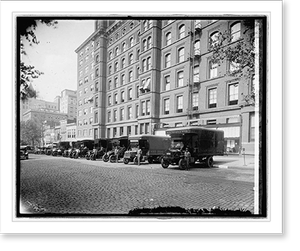
Antique Photo Print - Washington DC - W.B. Moses & Sons Co
Drawn from the Library of Congress archive, this print depicts W.B. Moses & Sons Co., Washington, D.C., automobiles. The Library holds one of the most comprehensive collections of American and...$57.00 -
 Snapshots of the Past
Historic Architecture - Washington DC - Trew Motor Co., Washington
Step back in time with this striking reproduction of Trew Motor Co., Washington, D.C., interior. Sourced from the United States Library of Congress.Library of Congress record: Created between 1910...$57.00 -
 Snapshots of the Past
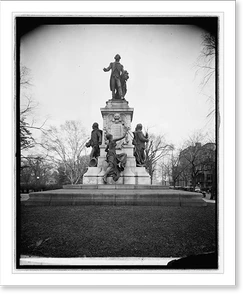
Black & White Photo - Washington, DC - LaFayette statue
Originally preserved in the Library of Congress, this print of LaFayette statue, Washington, D.C is now available for your home or office. The Library has preserved this image as part of its...$57.00 -
 Snapshots of the Past
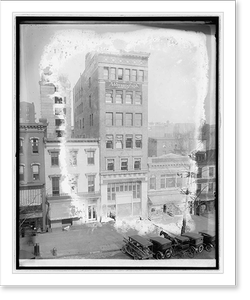
Vintage Photo Print - Washington, DC - Standard Eng. Co., 511 11 St
Step back in time with this striking reproduction of Standard Eng. Co., 511 11 St., Washington, D.C. Sourced from the United States Library of Congress.Library of Congress record: Created between...$57.00 -
 Snapshots of the Past
Historic Photo Print - Washington DC - Penna. Ave., Washington
Step back in time with this striking reproduction of Penna. Ave., Washington, D.C., illuminated Classic. Sourced from the United States Library of Congress.Library of Congress record: Created between...$57.00 -
 Snapshots of the Past
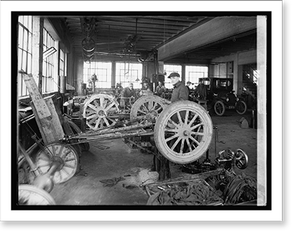
Antique Photo Print - Washington, DC - R.L. Taylor Auto Co
Step back in time with this striking reproduction of R.L. Taylor Auto Co., Washington, D.C. Classic. Sourced from the United States Library of Congress.Library of Congress record: Created between...$57.00 -
 Snapshots of the Past
Vintage Photo Print - Washington, DC - Agrl. Dept
This rare historical print captures Agrl. Dept., Washington, D.C in remarkable detail. Sourced directly from the Library of Congress, it represents an authentic piece of documented history.Library of...$57.00 -
 Snapshots of the Past
Black & White Photo - Washington, DC - Dist. bldg
This rare historical print captures Dist. bldg., Washington, D.C in remarkable detail. Sourced directly from the Library of Congress, it represents an authentic piece of documented history.Library of...$57.00 -
 Snapshots of the Past
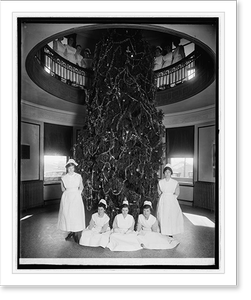
Black & White Photo - Washington DC - Garfield Hospital, Washington
Drawn from the Library of Congress archive, this print depicts Garfield Hospital, Washington, D.C., Christmas tree. The Library holds one of the most comprehensive collections of American and...$57.00 -
 Snapshots of the Past
Vintage Americana Print - Washington, DC - Supreme Ct. chamber
Drawn from the Library of Congress archive, this print depicts Supreme Ct. chamber, Washington, D.C. The Library holds one of the most comprehensive collections of American and international...$57.00 -
 Snapshots of the Past
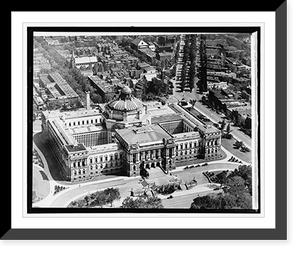
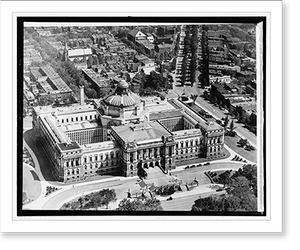
Antique Architecture - Washington, DC - Aerial view of Library
Step back in time with this striking reproduction of Aerial view of Library of Congress, Washington, D.C. Sourced from the United States Library of Congress.Library of Congress record: Created...$57.00 -
 Snapshots of the Past
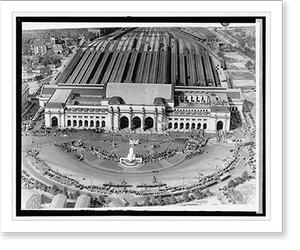
Vintage Building Photo - Washington DC - Union Station, Washington (3)
Originally preserved in the Library of Congress, this print of Union Station, Washington, D.C., from air is now available for your home or office. The Library has preserved this image as part of its...$57.00