
White Mountains
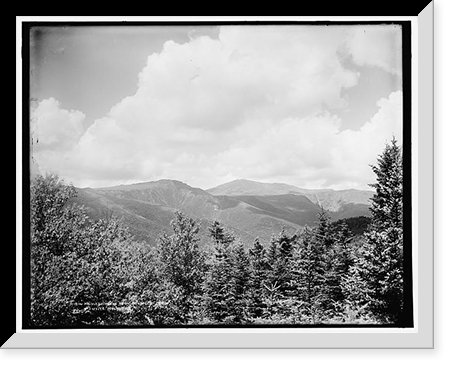
The summit of Mount Washington recorded a wind speed of two hundred and thirty-one miles an hour in 1934, which stood as the world record for sixty years. The mountain is not high by western standards. It is simply in the wrong place, where three storm tracks converge.
That reputation is why people came. The White Mountains were the first mountain tourist destination in America, drawing visitors from Boston and New York from the 1820s, decades before the West was reachable.
The cog railway is the thing worth understanding. Sylvester Marsh proposed a railway to the summit in 1858 and the New Hampshire legislature granted the charter with laughter, one member suggesting he might as well build a railway to the moon. It opened in 1869, the first mountain-climbing cog railway in the world, and it still runs on the original route. The steepest section is over thirty-seven percent, and the locomotive boilers are mounted at an angle so the water sits level on the grade.
The grand hotels were enormous and almost all of them burned. The Profile House, the Crawford House, the Mount Washington Hotel, the Maplewood \u2014 wooden buildings of two hundred rooms and more, lit by oil, heated by stoves, and standing in a forest. Only the Mount Washington Hotel of 1902 survives, which is where the Bretton Woods conference was held in 1944.
The Old Man of the Mountain deserves mention because it is gone. A profile of granite ledges on Cannon Mountain that looked like a face, adopted as the state emblem, photographed and painted endlessly for a century and a half. It collapsed in May 2003.
The notches \u2014 Crawford, Franconia, Pinkham \u2014 are the passes through the range and the routes every visitor took. The Willey family were killed in a landslide in Crawford Notch in 1826 in circumstances so dramatic that it became a national story and turned the region into a destination, which is a grim way to start a tourist trade.
For dating, the hotels are the calendar. Most burned between the 1900s and the 1920s, so a photograph containing one places itself.
The Appalachian Mountain Club, founded in 1876, built the hut system that still runs — a chain of shelters a day’s walk apart along the Presidential Range, provisioned by young men carrying loads up the trails on packboards. That tradition is photographed from the 1880s onward and continues today.
The summit road up Mount Washington opened in 1861 as a carriage road, which is older than the cog railway on the other side, and the annual race up it began in 1904. Photographs of stagecoaches, then early automobiles, then racing machines climbing the same eight miles cover a century of transport on one strip of gravel.
The Willey House stood for eighty years after the slide and became the single most visited site in the mountains, which says something uncomfortable about why people traveled. Photographs of tourists posed in front of it are common.
Franconia Notch has its own set of subjects beyond the Old Man. The Flume, a natural granite gorge with a boardwalk through it, and Echo Lake beneath Cannon Mountain were both fixtures of every visit and appear in enormous numbers of stereoviews and postcards.
The City That Sat Between North and South




-

 Snapshots of the Past
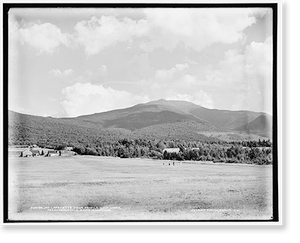
Antique Sporting Print - White Mountains - Mt. Mount Lafayette
Step back in time with this striking reproduction of Mt. Mount Lafayette from Profile Golf Club links, Franconia Notch, White Mountains. Sourced from the United States Library of Congress.Library of...$57.00 -
 Snapshots of the Past
Vintage Building Photo - White Mountains - Profile House, Franconia
This rare historical print captures Profile House, Franconia Notch, White Mountains in remarkable detail. Sourced directly from the Library of Congress, it represents an authentic piece of documented...$57.00 -
 Snapshots of the Past
Antique Architecture - White Mountains - Profile House and cottages
Originally preserved in the Library of Congress, this print of Profile House and cottages from Eagle Cliff, Franconia Notch, White Mountains is now available for your home or office. The Library has...$57.00 -
 Snapshots of the Past
Black & White Photo - White Mountains - Notch road and Eagle Cliff
Originally preserved in the Library of Congress, this print of Notch road and Eagle Cliff, Franconia Notch, White Mountains Classic is now available for your home or office. The Library has preserved...$57.00 -
 Snapshots of the Past
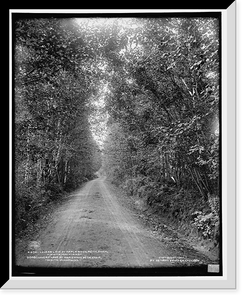
Vintage Photo Print - White Mountains - Lover's Lane at Maplewood
Drawn from the Library of Congress archive, this print depicts Lover's sic Lane at Maplewood, Bethlehem, White Mountains. The Library holds one of the most comprehensive collections of American and...$57.00 -
 Snapshots of the Past
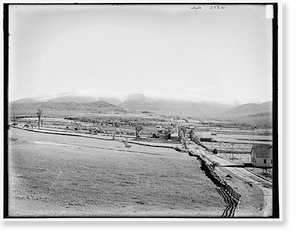
Antique Photo Print - White Mountains - Presidential Range from look
Step back in time with this striking reproduction of Presidential Range from look off, Jefferson, White Mountains. Sourced from the United States Library of Congress.Library of Congress record:...$57.00 -
 Snapshots of the Past
Vintage Building Photo - White Mountains - Forest Hills Hotel
Drawn from the Library of Congress archive, this print depicts Forest Hills Hotel from Franconia Village, White Mountains. The Library holds one of the most comprehensive collections of American and...$57.00 -
 Snapshots of the Past
Vintage Photo Print - White Mountains - On the road to Franconia
Originally preserved in the Library of Congress, this print of On the road to Franconia, White Mountains Classic is now available for your home or office. The Library has preserved this image as part...$57.00 -
 Snapshots of the Past
Antique Photo Print - White Mountains - The Waumbek and cottages
This rare historical print captures The Waumbek and cottages, Jefferson, White Mountains in remarkable detail. Sourced directly from the Library of Congress, it represents an authentic piece of...$57.00 -
 Snapshots of the Past
Historic Photo Print - White Mountains - Presidential Range (2)
Originally preserved in the Library of Congress, this print of Presidential Range from Kilburn Crags, Littleton, White Mountains is now available for your home or office. The Library has preserved...$57.00 -
 Snapshots of the Past
Antique Working Life - White Mountains - Ammonoosuc and Mt. Clay, Mt
Drawn from the Library of Congress archive, this print depicts Ammonoosuc and Mt. Clay, Mt. Pleasant Farm, White Mountains, The. The Library holds one of the most comprehensive collections of...$57.00 -
 Snapshots of the Past
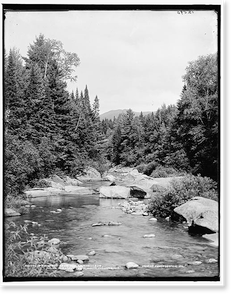
Vintage Industrial - White Mountains - Mt. Monroe from the Ammonoosuc
This rare historical print captures Mt. Monroe from the Ammonoosuc, Mount Pleasant Farm, White Mountains in remarkable detail. Sourced directly from the Library of Congress, it represents an...$57.00